Mammea americana
L.
Mammee Apple, Mammey
iNaturalist· cc-by-nc
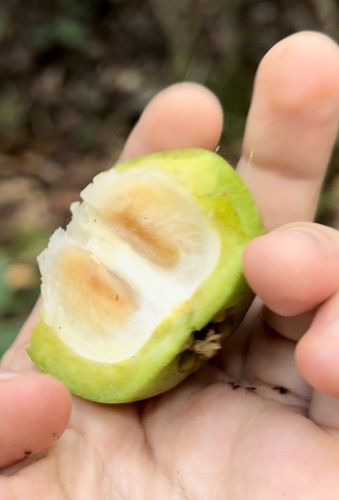
(c) jovanimm, some rights reserved (CC BY-NC)
iNaturalist· cc-by
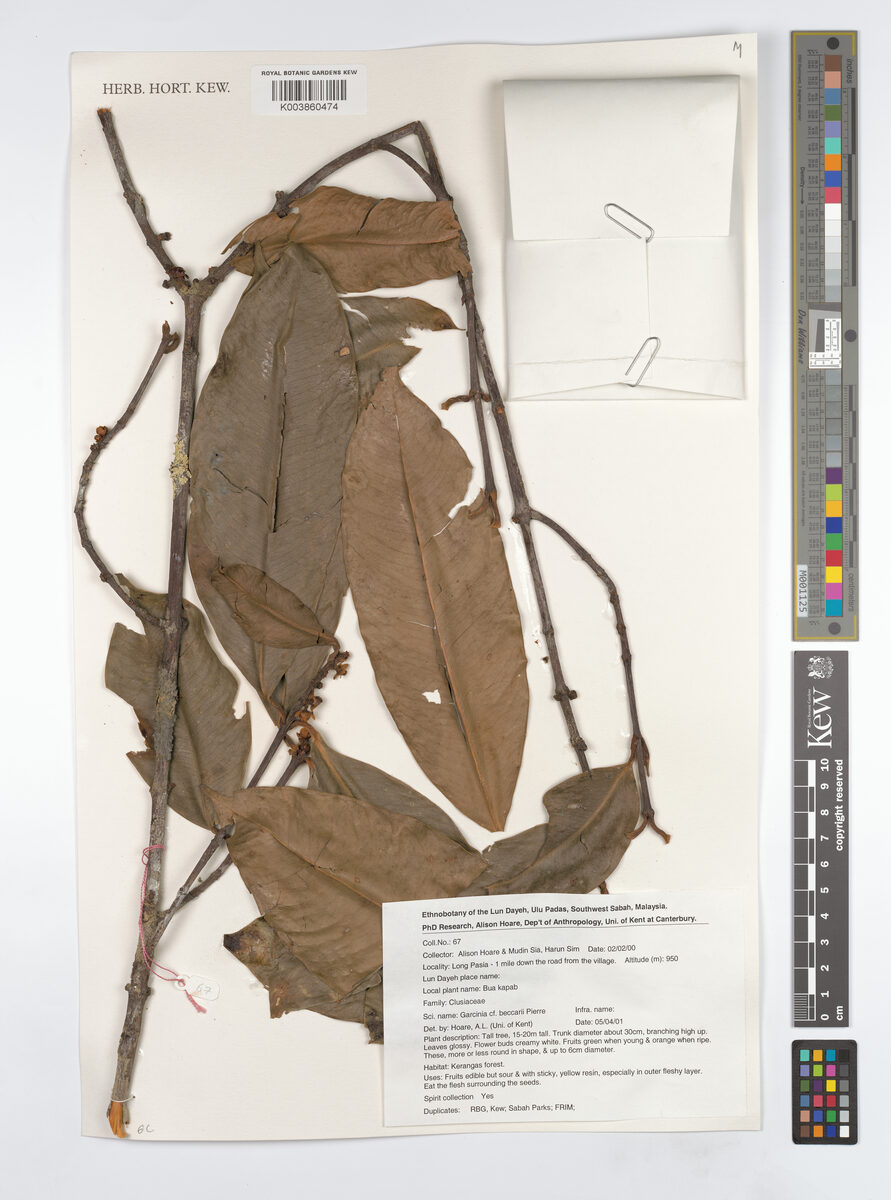
(c) Malcolm Manners, some rights reserved (CC BY)
iNaturalist· cc-by-sa
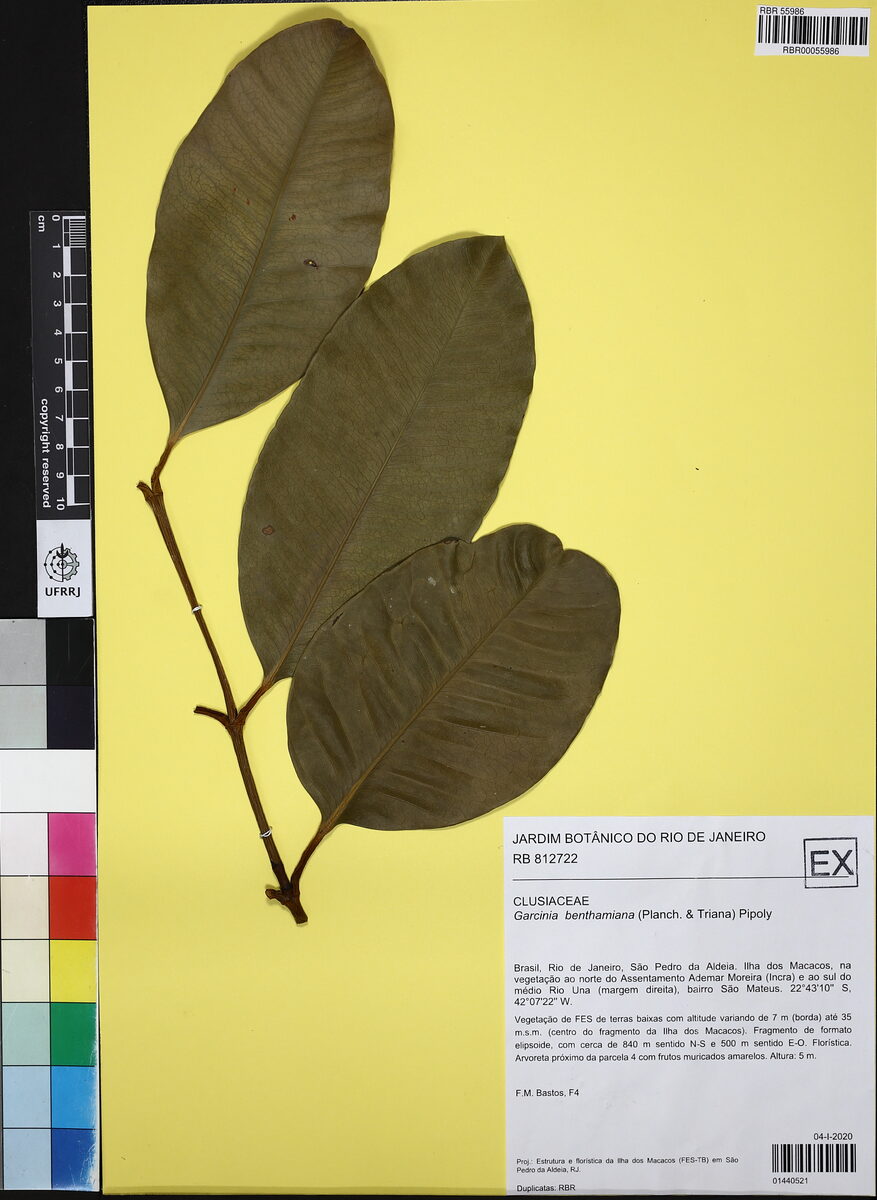
(c) Arria Belli, some rights reserved (CC BY-SA)
Description
Mammea americana is an evergreen Tree growing to 18 m (59ft) by 16 m (52ft) at a medium rate. See above for USDA hardiness. It is hardy to UK zone 10 and is frost tender. It is noted for attracting wildlife. Suitable for: light (sandy), medium (loamy) and heavy (clay) soils and can grow in heavy clay soil. Suitable pH: mildly acid and neutral soils and can grow in very acid and saline soils. It can grow in semi-shade (light woodland) or no shade. It prefers moist soil and can tolerate drought. The plant can tolerates strong winds but not maritime exposure.
Edible Uses
Pectin. Fruit - raw or cooked. A firm, thick flesh with an aromatic flavour similar to apricots. A delicious fruit, it is used as a dessert and can also be made into jams, sauces, pies, tarts etc. The flesh immediately surrounding the 2 - 4 seeds in the fruit is bitter. The fruit is rich in pectin and therefore makes good preserves, these taste remarkably like apricot preserves. The immature green fruit is high in pectin and can be added to pectin-low fruits when making jellies, jams etc. The light brown fruit is a globose to irregular berry, 10 - 20cm in diameter. The fruits can be as large as a child's head and weigh up to 2 kilos. A liqueur is distilled from the fragrant flowers. An alcoholic drink is fermented from the sap of the tree.
Medicinal Uses
Anthelmintic Antidiarrhoeal Digestive Febrifuge Skin Tonic. Uses of mamey in folk medicine include treatment of scalp infections, diarrhoea, digestive and eye problems. The powdered seeds are employed in the treatment of parasitic skin diseases. An infusion of the ground seeds, minus the embryo which is considered convulsant, is employed as an anthelmintic for adults only. The gummy latex from the bark has been used as an insecticide, to extract chiggers and insects from the skin, and to kill ticks and other parasites of dogs and other domestic animals. An aromatic liqueur called Eau de Creole or Crème de Creole, is distilled from the flowers and said to act as a tonic or digestive. An infusion of the fresh or dry leaves is given in cases of intermittent fever. The plant contains coumarins, especially mammeine.
Known Hazards
The bitter tasting seeds in the fruit are poisonous to fish, chicks and some insects.(Seed is poisonous if ingested)
Distribution
Northern S. America to the Caribbean.
Where It Grows
SOUTHERN AMERICA: Antigua and Barbuda, Bahamas, Cuba, Dominica, Dominican Republic, Guadeloupe, Grenada, Haiti, Jamaica, St. Kitts and Nevis, Montserrat, Martinique, Trinidad and Tobago, Trinidad, United States, Puerto Rico, Virgin Islands, U.S., Virgin Islands, U.S., Virgin Islands, U.S., St. Vincent and Grenadines, Virgin Islands (British), Tortola,
Cultivation
Mammee apple is limited to tropical or near tropical moist to wet climates. It grows best in the lowlands, but can succeed at elevations up to 1,000 metres. It grows best in areas where annual daytime temperatures are within the range 24 - 30°c, but can tolerate 12 - 35°c. When dormant, the plant can survive temperatures down to about -2°c, but young growth can be severely damaged at 0°c. It prefers a mean annual rainfall in the range 1,200 - 1,800mm, but tolerates 800 - 2,600mm. Prefers a position in full sun or light shade. Prefers a deep, rich, well-drained sandy loam. Prefers a pH in the range 6 - 6.5, tolerating 5.5 - 8. Trees can produce their first crop in 6 - 10 years from seed. Good trees can produce 300 - 400 fruits per year. There are some named varieties. One report says that the plant is dioecious, others that it is monoecious. In some forms of this plant, the flowers produced are predominantly female and the tree fruits heavily, in other forms there can be a predominance of male flowers and fruit yields are much lower. Flowering Time: Late Spring/Early Summer. Bloom Color: White/Near White. Spacing: 20-30 ft. (6-9 m).
Propagation
Seeds are the usual means of propagation and they germinate in 1 - 4 months with a 97% rate. Seeds sprout readily in leaf-mulch under the tree. Grown under light shade, seedlings reach 40 - 50cm and are ready to out-plant 3 - 5 months after sowing.. Greenwood cuttings with bottom heat.
Other Uses
Containers Dye Fuel Furniture Gum Hair Insecticide Latex Pectin Plant breeding Repellent Soil stabilization Tannin Wood. Large shade tree. Large fruiting tree, Street tree. Public open space. Agroforestry Uses: The large spreading lateral roots prevent soil erosion. Other Uses The juice of the seed leaves an indelible stain. The bark contains tannin. When twisted into the shape of a cone, the leaves are used as pots for planting tobacco seedlings and protect the young plants from root-destroying insects. The bark contains a pale yellow latex that exudes from points of damage. It has been used as an insecticide. All parts of the plant have insecticidal properties; infusions of the powdered seeds and gum from the bark and green fruit rind are used as insecticides to kill ticks, fleas and jiggers. Mammee leaves are wrapped around young tomato plants when setting them in the ground to protect them from mole crickets and cutworms. Various extracts from the fruit, bark, leaves or roots are toxic to moths, beetle larvae and also to bugs. Seed extracts are toxic to fish, chicks and hogs The heartwood is reddish or purple-brown; the sapwood much lighter in colour. Texture is medium; the grain is fine in one report, whilst another says that it is frequently interlocked and irregular; the surface of this attractive wood often is flecked with small, dark, oily, exudations. The wood is hard; heavy; strong; fairly resistant to decay but very susceptible to termites. Air-seasoning is moderate in rate but very difficult, and the amount of degrade is considerable. It is easy to work; has an attractive grain and polishes well; planing, turning, boring, and mortising are good; shaping and resistance to screw sjjlitting are excellent ; and sanding is poor. The wood is useful in cabinetwork, it is valued for pillars, rafters, decorative features of fine houses, interior sheathing, turnery and posts. The wood is used for fuel.
Also Known As
Mammee Apple, Mammey, Abricote, Abricot d'Amerique, Mamey de Santo Domingo, Mammee, abrico, abricoteiro, abricotier d'amérique, abricotier des antilles, abricó, abricó-de-são-domingos, abricó-do-pará, abricó-selvagem, albricoque, mamey, mamey apple, mammee-apple, mammiapfel, mammiäpple, mammy-apple, santo domingo apricot, south american apricot, tropical-apricot.