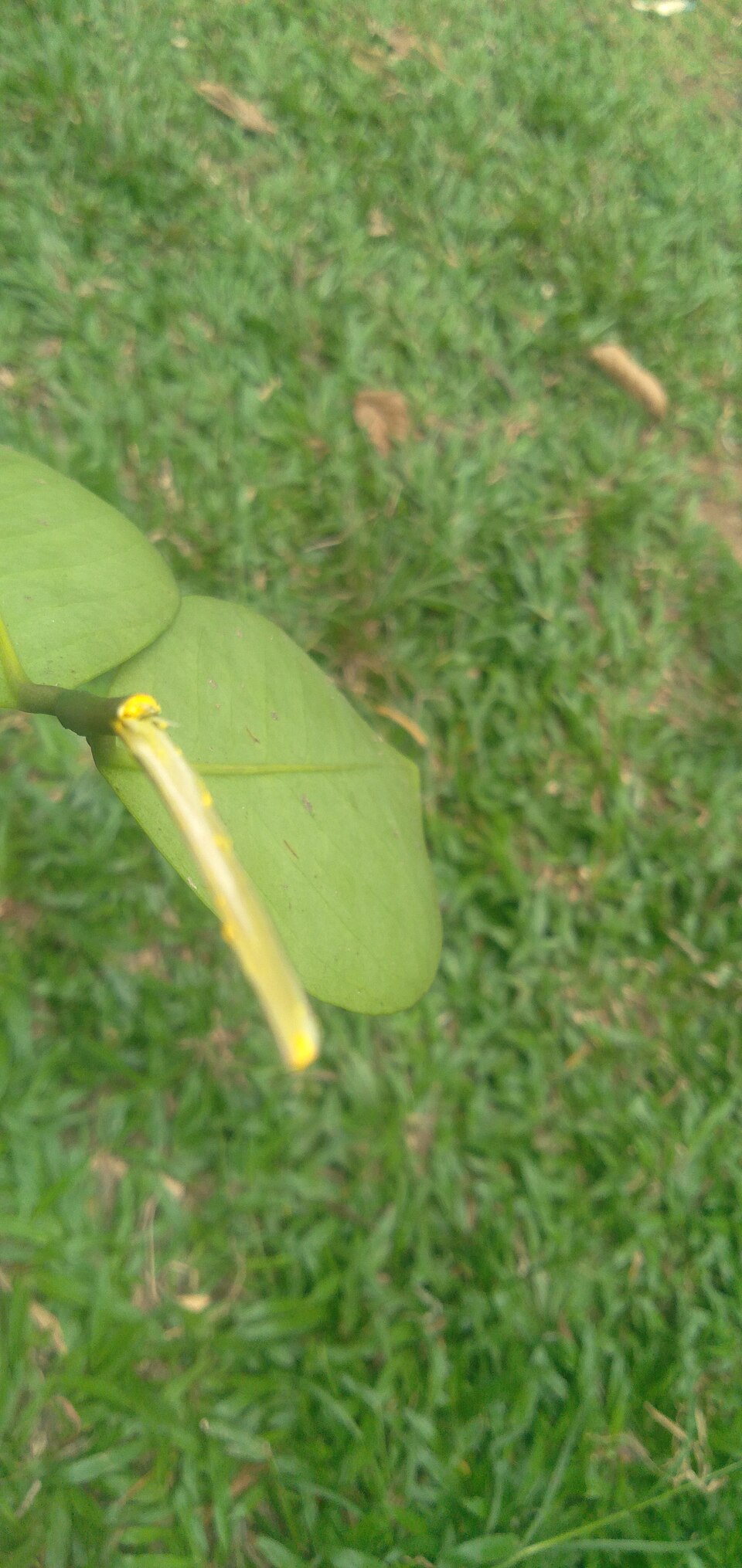
Garcinia binucao
(Blanco) Choisy
Binukau
wikimedia· cc-by-sa
Wikimedia Commons - Lokalpedia
gbif· cc-by
Royal Botanic Gardens, Kew
Summary
Source: WikipediaGarcinia binucao is a species of flowering plant in the Clusiaceae family. It is commonly known as binukaw, takway or batuan, is a species of Garcinia endemic to the Philippines. It is not cultivated, though its edible fruits are harvested from the wild for use as a souring agent in some Filipino dishes.
Description
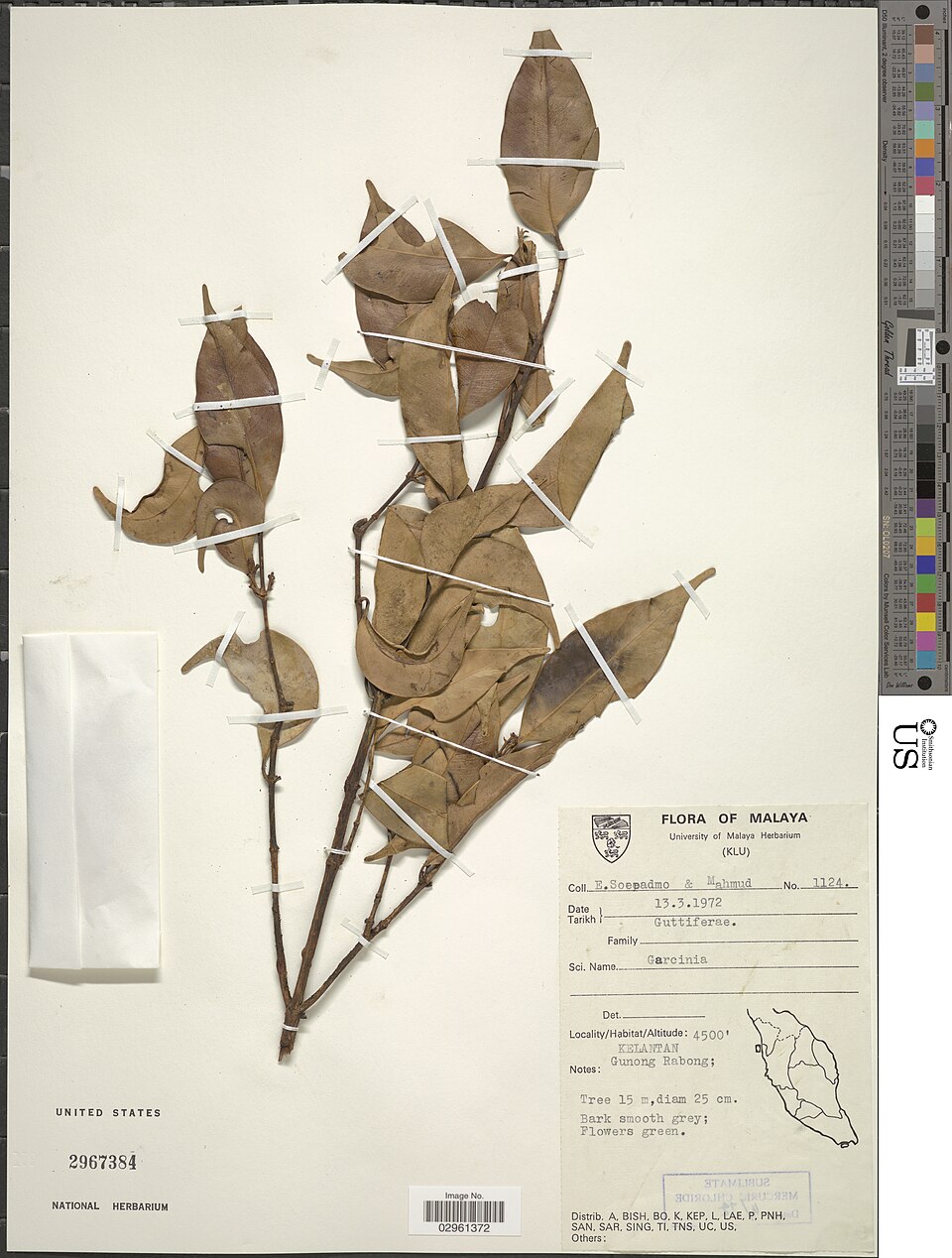
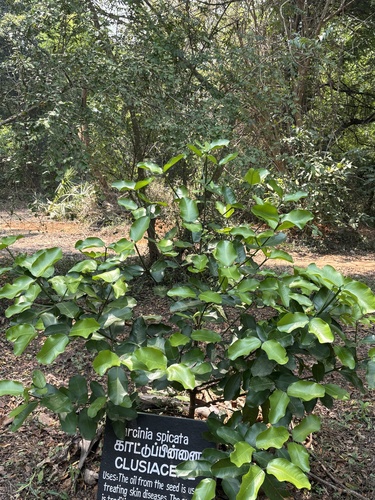
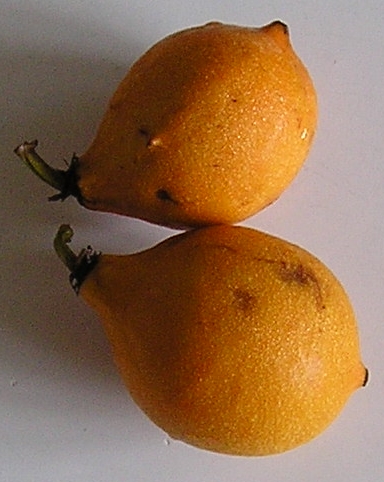
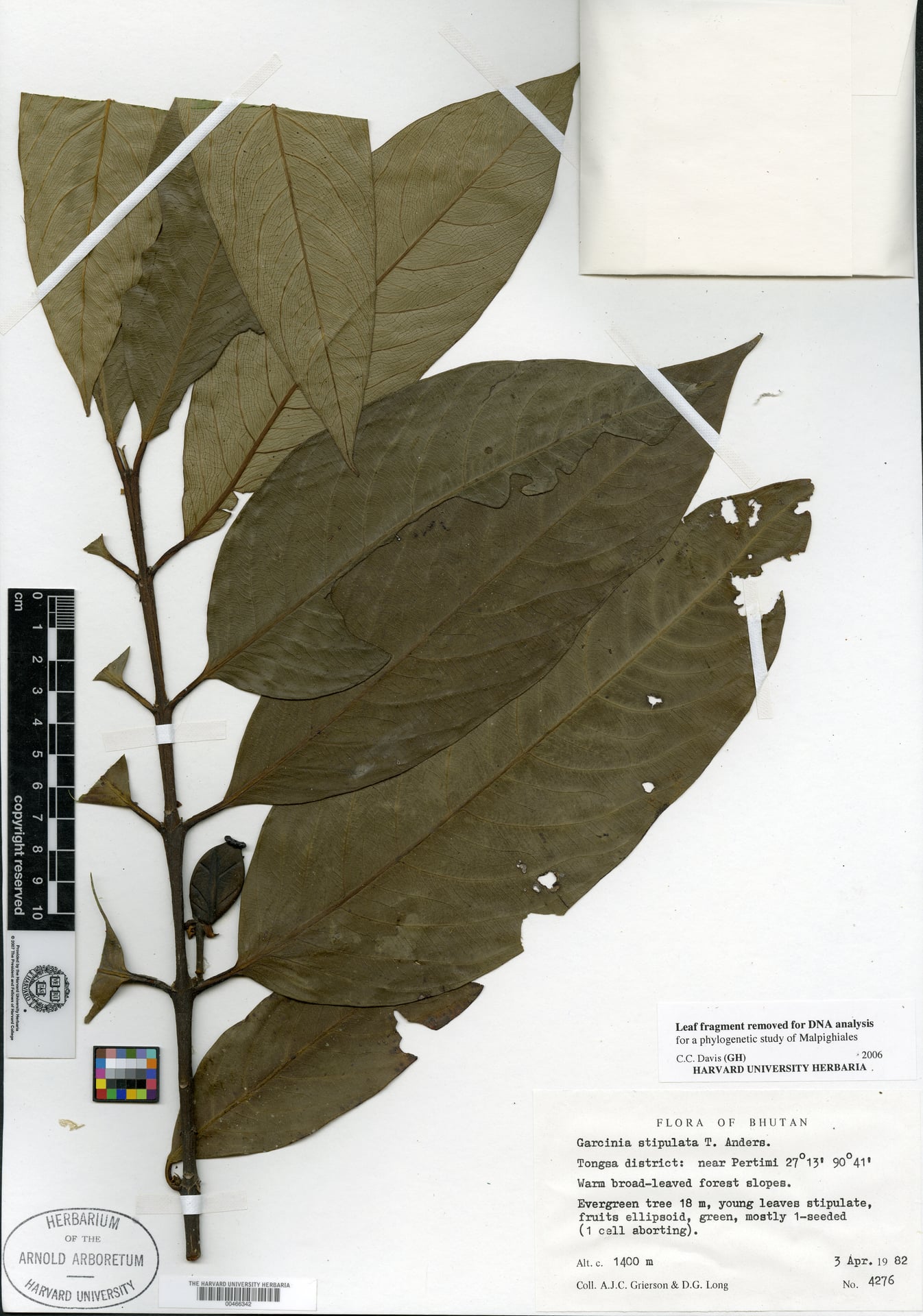
A small tree. It grows 25 cm long. The trunk is 40 cm across. The leaves are opposite, leathery and smooth. The flowers are small, red and borne in clusters. The fruit are yellowish 4 cm across and somewhat rounded. They have a firm outer covering and several seeds.
Edible Uses
The sour fruits are edible and can be eaten raw. They are also commonly used as a souring agent in traditional Filipino dishes like sinigang, Kadyos, baboy, kag langka, and cansi. Because cultivation of the fruit is limited to the western Visayas, it has also been sold in powder or paste form, or as jams or other sauces for easier distribution elsewhere in the Philippines. 'Takway' is called "pansit ng bukid" since it grows almost anywhere in the fields. In Iloilo, it is called "palutpot" or "runners" of root crops or taro. As culinary ingredient, it combines with coconut milk, like ginataang alimango. In Davao City, paksiw na takway is blended with mora moro or mackerel scad (galunggong).
Traditional Uses
The fruit is eaten raw or with fish.
This uses section is brief — help expand it
Distribution
A tropical plant. Common and widely distributed in the Philippines throughout Luzon and the Visayas growing in primary forests at low and high altitudes.
Where It Grows
Asia, Cuba, Indochina, Indonesia, Pacific, Philippines*, SE Asia, Vietnam, West Indies,
Cultivation
Plants can be grown by seeds.
Propagation
Seed - we have no specific information on this species, but the seed of most members of the genus can be slow to germinate, even if sown fresh, often taking 6 months or more.
Other Uses
The wood is useful for light constructions.
Notes
There are about 300 Garcinia species. Possibly now Garcinia gummi-gutta
Synonyms
Also Known As
Batuan, Balakut, Balokok, Pohon manggis binakaw
References (15)
- Alegado, A. M. & De Guzman, R. B., 2014, Indigenous food crops of the Aetas tribe in the Philippines and their traditional methods of food preparation. in Promotion of Underutilized Indigenous Food Resources for Food Security and Nutrition in Asia and Pacific. FAO. Bangkok p 160
- Arora, R. K., 2014, Diversity in Underutilized Plant Species - An Asia-Pacific Perspective. Bioversity International. p 72
- Barcelo, R., 2015, Phytochemical Screening and Antioxidant Activity of Edible Wild Fruits in Benguet, Cordillera Administrative Region, Philippines. Electronic Journal of Biology, 2015, Vol.11(3): 80-89
- Brown, W.H., 1920, Wild Food Plants of the Philippines. Bureau of Forestry Bulletin No. 21 Manila. p 116
- Chua-Barcelo, R. T., 2014, Ethnobotanical survey of edible wild fruits in Benguet, Cordillera administrative region, the Philippines. Asian Pac. J. Trop. Biomed. 4(Suppl. 1):S525-S538
Show all 15 references Hide references
- Coronel, R.E., 1982, Fruit Collections in the Philippines. IBPGR Newsletter p 6
- Descr. Guttif. Inde 34. 1849
- Ferns, Useful Tropical Plants
- Lacuna-Richman, C., 2006, The use of non-wood forest products by migrants in a new settlement: experiences of a Visayan community in Palawan, Philippines. Journal of Ethnobiology and Ethnomedicine. 2:36
- Miguel, E., et al, 1989, A checklist of the cultivated plants of Cuba. Kulturpflanze 37. 1989, 211-357
- Monsalud, M.R., Tongacan, A.L., Lopez, F.R., & Lagrimas, M.Q., 1966, Edible Wild Plants in Philippine Forests. Philippine Journal of Science. p 478
- PROSEA (Plant Resources of South East Asia) handbook, Volume 2, 1991, Edible fruits and nut. p 177
- Sukarya, D. G., (Ed.) 2013, 3,500 Plant Species of the Botanic Gardens of Indonesia. LIPI p 298
- Ulian, T., et al, 2020, Unlocking plant resources to support food security and promote sustainable agriculture. Plants, People, Planet. 2020;2:421–445.
- World Checklist of Useful Plant Species 2020. Royal Botanic Gardens, Kew