Galactites tomentosus
Moench
Galactites, Purple milk thistle
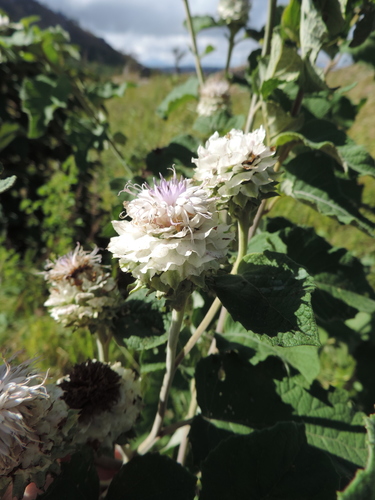
iNaturalist· cc-by-nc-sa
(c) Hans-Jürgen Becker, some rights reserved (CC BY-NC-SA)
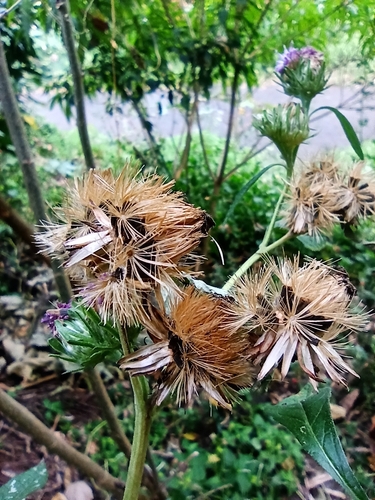
iNaturalist· cc-by-nc
(c) chrisi_01, some rights reserved (CC BY-NC)
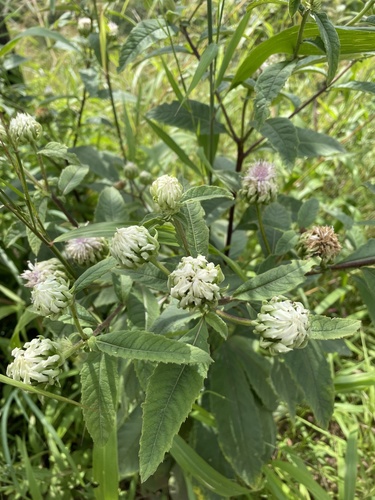
iNaturalist· cc-by
(c) John Lyden, some rights reserved (CC BY), uploaded by John Lyden
Summary
Source: WikipediaGalactites tomentosus, the purple milk thistle, is a biennial herbaceous plant belonging to the genus Galactites of the Asteraceae family.
Description
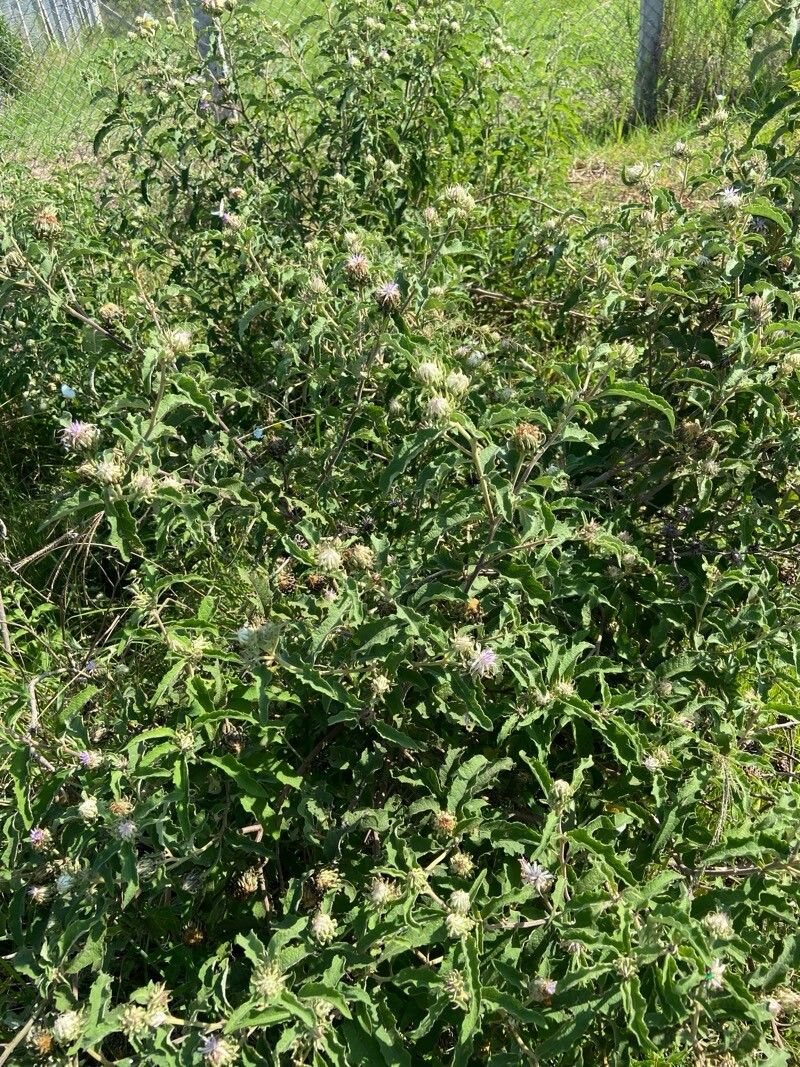
An annual daisy family thistle plant. It forms mounded bushes. It grows 100 cm tall and spreads 100 cm wide. The leaves near the base are 20 cm long. They have deep lobes and spines at the tips. The leaves are white and woolly underneath. The leaves have leaflets along the stalk. The flowers are in mauve-purple heads. These are 15-20 mm across. They can occur singly or in branched clusters. The outer florets are larger than the inner and are spreading. The flower bracts narrow suddenly into a spine.
Edible Uses
It is an edible plant.
Traditional Uses
It is eaten when young, cooked with salt and oil. It is used in pizzas and soups. The tender flower stems are eaten.
This uses section is brief — help expand it
Distribution
It is a warm temperate to subtropical plant. They suit sunny coastal areas. They need well drained soil. It grows naturally on stony and sandy soils. It suits hardiness zones 8-11.
Where It Grows
Australia, Europe, France, Greece, Italy, Mediterranean, Portugal, Sicily, Spain, Turkey, Türkiye,
Cultivation
Plants can be grown from seed and transplanted.
Production
They grow quickly.
Notes
There are 3 Galactites species.
Synonyms
Also Known As
Cardo, Cardu, Gardu mele, Scarlina
References (11)
- Biscotti, N. et al, 2018, The traditional food use of wild vegetables in Apulia (Italy) in the light of Italian ethnobotanical literature. Italian Botanist 5:1-24
- Blamey, M and Grey-Wilson, C., 2005, Wild flowers of the Mediterranean. A & C Black London. p 453
- Blanco-Salas, J., et al, 2019, Wild Plants Potentially Used in Human Food in the Protected Area “Sierra Grande de Hornachos” of Extremadura (Spain). Sustainability 2019, 11, 456
- Cundall, P., (ed.), 2004, Gardening Australia: flora: the gardener's bible. ABC Books. p 623
- Hedrick, U.P., 1919, (Ed.), Sturtevant's edible plants of the world. p 322
Show all 11 references Hide references
- Lim, T. K., Edible Medicinal and Non-Medicinal Plants Volume 7 Flowers
- Motti, R. et al, 2009, Traditional Plant Use in the Phlegraean Fields Regional Park (Campania, Southern Italy). Human Ecology 37:775-782
- Nimis, P. L., et al, 2015, A guide to the vascular plants of the temporary ponds of Sardinia (Italy) p 134
- Pasta, S., et al, 2020, An Updated Checklist of the Sicilian Native Edible Plants: Preserving the Traditional Ecological Knowledge of Century-Old Agro-Pastoral Landscapes. Frontiers in Plant Science. Volume 11|Article 388
- Plants for a Future database, The Field, Penpol, Lostwithiel, Cornwall, PL22 0NG, UK. http://www.scs.leeds.ac.uk/pfaf/
- Signorini, M. A., et al, 2009, Plants and traditional knowledge: An ethnobotanical investigation on Monte Ortobene (Nuoro, Sardinia). Journal or Ethnobiology and Ethnomedicine, 5:6