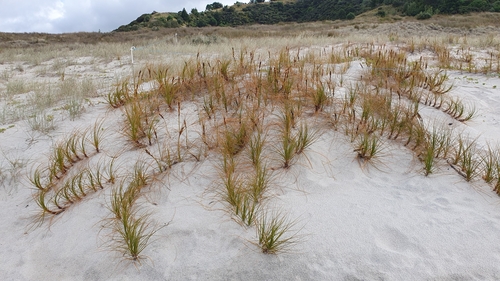
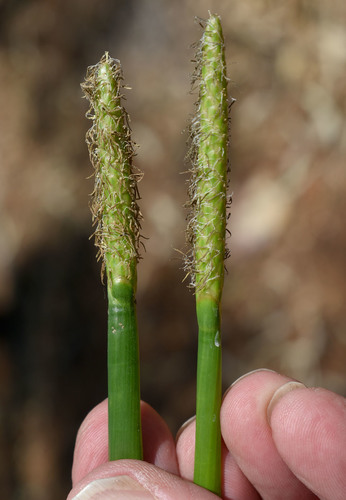
Gahnia sieberiana
Kunth.
Red-fruit Saw-sedge, Ginger nut sedge
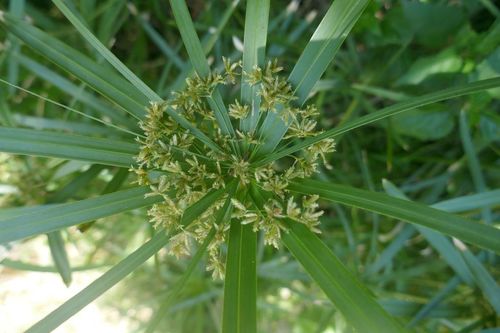
iNaturalist· cc-by-nc
(c) sarahansell, some rights reserved (CC BY-NC)
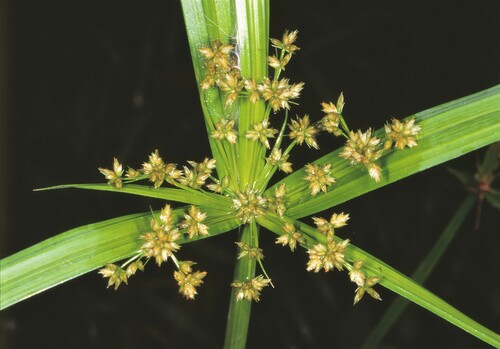
iNaturalist· cc-by-nc
(c) Lorraine Phelan, some rights reserved (CC BY-NC), uploaded by Lorraine Phelan
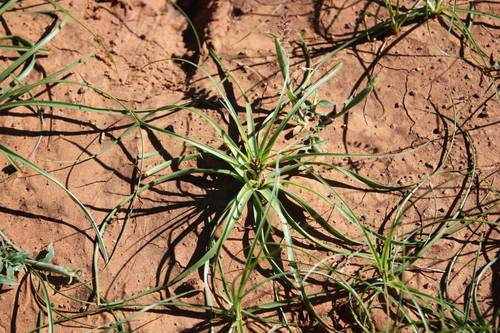
iNaturalist· cc-by-nc
(c) Lise Kool, some rights reserved (CC BY-NC), uploaded by Lise Kool
Summary
Source: WikipediaGahnia sieberiana, commonly known as the red-fruit saw-sedge, is a tussock-forming perennial plant in the family Cyperaceae, endemic to Australia. It is a widespread plant that favours damp sunny sites. Many insect larvae have been recorded feeding on the red-fruit saw-sedge. It may grow over 2 metres (6 ft 7 in) tall. Gahnia sieberiana was described by German botanist Carl Sigismund Kunth in 1837. It is one of the many species named in honour of the Bohemian collector, Franz Wilhelm Sieber. Gahnia sieberiana grows as a tall strappy tussock to 2 metres (6 ft 7 in) high and wide, with rough flat leaves. The leaf margins have tiny serrations that are sharp and can cut the hands of those handling the plant. The tall black flowers grow in spikes from the centre of the plant and can rise another metre above the clump, appearing in spring and summer. They are followed by shiny red or red-brown round nuts, which measure 2.5 to 4.0 mm (0.1 to 0.2 in) long, 1.5 to 2.0 mm (0.1 to 0.1 in) in diameter. Gahnia sieberiana is found across eastern Australia, from Tasmania to North Queensland, as well as Malesia, from sea level to an altitude of 1,200 m (3,900 ft). It is found on clay and sandy soils. Seeds appear to germinate after bushfire. The caterpillars of the dingy grass-skipper (Toxidia peron), montane sedge-skipper (Oreisplanus perornata), silver sedge-skipper (Hesperilla crypsargyra), flame sedge-skipper (Hesperilla idothea), golden-haired sedge-skipper (Hesperilla chrysotricha), heath sand-skipper (Antipodia chaostola), sword-grass brown (Tisiphone abeona) and northern sword-grass brown (Tisiphone helena) feed on the leaves. For Australian gardens, Gahnia sieberiana has been suggested as a native replacement for pampas grass (Cortaderia selloana), which is a noxious weed there. Cultivation is hampered by difficulties in propagation by seed. Clumps can be divided to make more plants.
Description
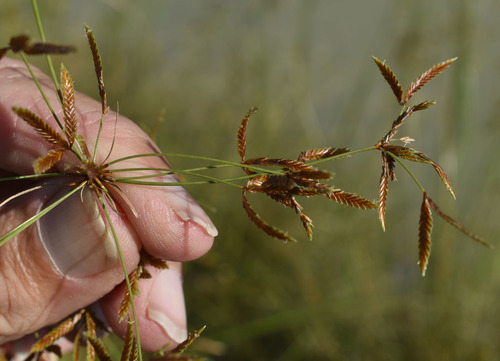
A sedge or herb. It forms clumps and keeps growing from year to year. The stalks are 3 m long. They are slender. The leaves are 2 m long by 2 cm wide. They are flattened but often rolled and rough and have a channel on the upper surface. The flowering stalks are 60 cm long. The branches spread. There is a bract near each branch. The flower stalks are pale brown. There are many small spikelets. The flowers are cream. The nut is about 0.4 cm across. They are red-brown and shiny.
Edible Uses
The seeds are pounded into flour and eaten, and the leaf bases are consumed as food.
Traditional Uses
The seeds are pounded into flour and eaten. The leaf bases are eaten.
This uses section is brief — help expand it
Distribution
It is a temperate plant. It also grows in the tropics. It grows in a range of places and in different soils. The soils should be moist. It can withstand dry periods, once established. It can tolerate heavy shade and grow in full sun. It is hardy to frost and can tolerate waterlogging. It suits hardiness zones 8-9. Tasmanian Herbarium.
Where It Grows
Australia*, New Caledonia, Pacific, Papua New Guinea, PNG, Tasmania*,
Cultivation
Plants are grown from seed. Seed germinate irregularly.
Notes
There are about 30-40 Gahnia species.
Synonyms
Also Known As
Tall saw-sedge
References (14)
- Bodkin, F., 1991, Encyclopedia Botanica. Cornstalk publishing, p 483
- Botanical gardens sign (As Gahnia clarkei)
- Caton, J.M. & Hardwick, R. J., 2016, Field Guide to Useful Native Plants from Temperate Australia. Harbour Publishing House. p 322 (As Gahnia clarkei)
- Cherikoff V. & Isaacs, J., The Bush Food Handbook. How to gather, grow, process and cook Australian Wild Foods. Ti Tree Press, Australia p 186, 195
- Cundall, P., (ed.), 2004, Gardening Australia: flora: the gardener's bible. ABC Books. p 622
Show all 14 references Hide references
- Edible and Useful Native Plants (off internet)
- Elliot, W.R., & Jones, D.L., 1992, Encyclopedia of Australian Plants suitable for cultivation. Vol 4. Lothian. p 326
- Haslam, S., 2004, Noosa's Native Plants. Noosa Integrated Catchment Assn. Inc. p 75
- Hibbert, M., 2002, The Aussie Plant Finder 2002, Florilegium. p 107
- Hinton, B & B., 1982, A Wilderness in Bloom. Wildflowers of tropical Australia. p 57
- Jackes, B.R., 2001, Plants of the Tropics. Rainforest to Heath. An Identification Guide. James Cook University. p 49
- Sainty, G.R. & Jacobs, S.W.L., 1981, Waterplants of New South Wales. Water Resources Commission. NSW p 139
- Tasmanian Herbarium Vascular Plants list p 62
- Woolmore, E et al, 2002, King Island Flora: A Field Guide. p 83