Bolboschoenus fluviatilis
(Torr.) Sojak
Marsh club rush, River bulrush, Kukuraho, Purua grass
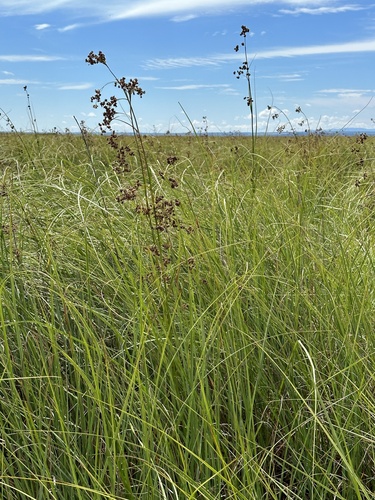
iNaturalist· cc-by-nc
(c) Jeff Skrentny, some rights reserved (CC BY-NC), uploaded by Jeff Skrentny
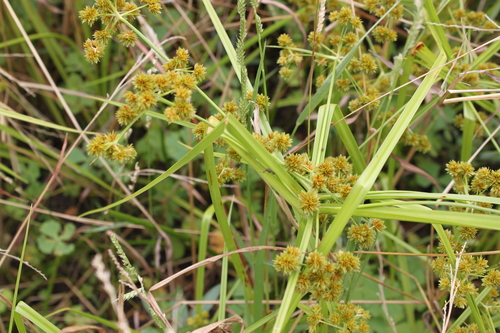
iNaturalist· cc-by
(c) Jeremy Atherton, some rights reserved (CC BY), uploaded by Jeremy Atherton
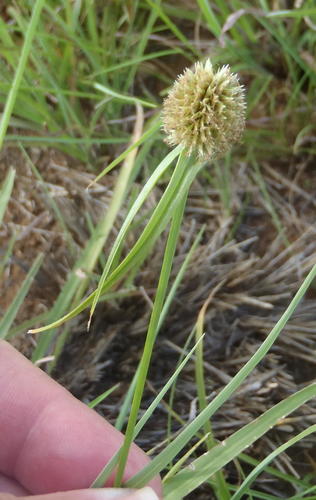
iNaturalist· cc-by-nc
(c) xalopez19, some rights reserved (CC BY-NC), uploaded by xalopez19
Summary
Source: WikipediaBolboschoenus fluviatilis, the river bulrush, is a species of flowering plant in the sedge family, Cyperaceae. Its range includes Australia, New Zealand, New Caledonia, Canada, the United States, and northeastern Mexico. B. fluviatilis and its fruits are important as food sources for waterfowl such as geese, ducks, bitterns, and swans. It also provides cover and nesting sites for these and other species of birds, as well as small mammals. Like other Bolboschoenus species, B. fluviatilis has strong tubers and rhizomes which help to stabilize intertidal habitats by preventing erosion.
Description
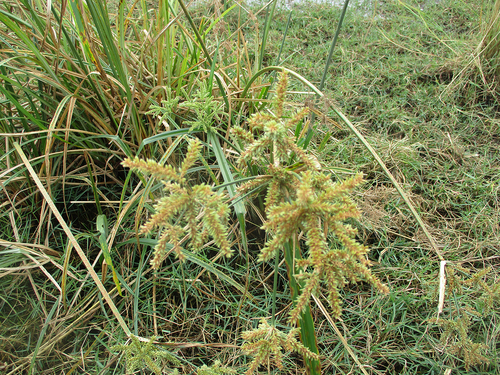
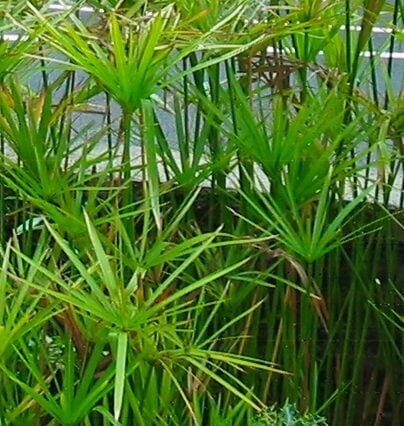
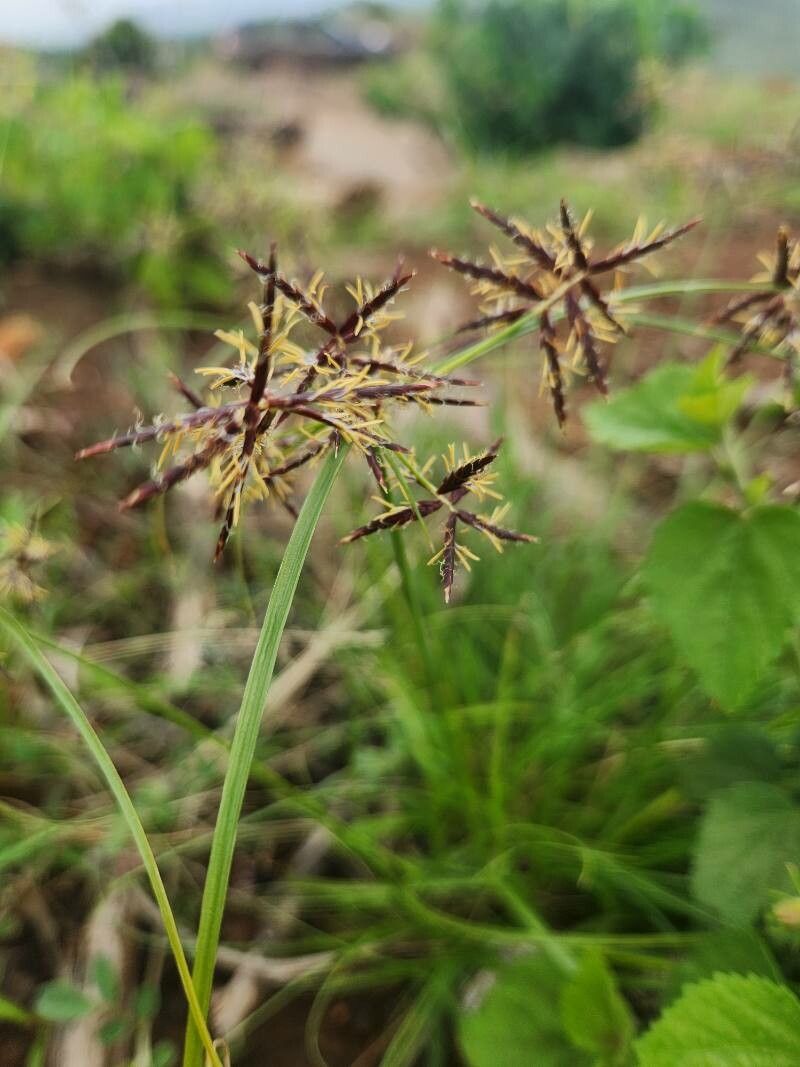
A sedge or rush which keeps growing from year to year. It has a thick underground stem or rhizome. These grow in clumps and have grass like leaves and solid stalks. It is creeping and forms tubers. The leaves are long and tapering. They are 30-50 cm long and 4-15 mm wide at the base. The stem is 3 sided. It is 1-1.5 m tall. It has leaves along its length. The flowering head is open and has leaf like bracts underneath it. These are longer than the flowering head. The spikelets have many flowers. They are oval and 2.5 cm long. The flower has 6-9 rays with the outer ones larger and getting smaller towards the centre. The flowers contain both sexes. The nut is 3 sided and 4 mm long.
Edible Uses
The underground tubers are eaten, as are the roots and stems.
Traditional Uses
The underground tubers are eaten.
This uses section is brief — help expand it
Distribution
Mostly temperate. It grows in shallow water along creeks. It can grow away from water in high rainfall areas. It does not spread into deep water.
Where It Grows
Asia, Australia*, Japan, Korea, New Zealand, North America, USA,
Notes
There are about 16 Bolboschoenus species. The Cyperaceae or sedges are rush or grass like herbs. They grow in moist places.
Synonyms
References (13)
- Cherikoff V. & Isaacs, J., The Bush Food Handbook. How to gather, grow, process and cook Australian Wild Foods. Ti Tree Press, Australia p 194
- Crowe, A., 1997, A Field Guide to the Native Edible Plants of New Zealand. Penguin. p 101
- Duke, J.A., 1992, Handbook of Edible Weeds. CRC Press. p 176 (As Scirpus fluvialatus)
- Flora of Australia Volume 49, Oceanic Islands 1, Australian Government Publishing Service, Canberra. (1994) p 433
- Kiple, K.F. & Ornelas, K.C., (eds), 2000, The Cambridge World History of Food. CUP p 1740 (As Scirpus fluviatilis)
Show all 13 references Hide references
- Lim, T. K., 2015, Edible Medicinal and Non Medicinal Plants. Volume 9, Modified Stems, Roots, Bulbs. Springer p 16
- Low, T., 1991, Wild Food Plants of Australia. Australian Nature FieldGuide, Angus & Robertson. p 52
- Manual 527. 1848
- Plants for a Future database, The Field, Penpol, Lostwithiel, Cornwall, PL22 0NG, UK. http://www.scs.leeds.ac.uk/pfaf/ (As Scirpus fluvialatus)
- Romanowski, N., 2007, Edible Water Gardens. Hyland House. p 93
- Sainty, G.R. & Jacobs, S.W.L., 1981, Waterplants of New South Wales. Water Resources Commission. NSW p 145 (As Scirpus fluvialatus)
- Simpson, D. A. & Inglis, C. A., 2001, Cyperaceae of Economic, Ethnobotanical and Horticultural Importance: A checklist. Kew Bulletin Vol. 56, No. 2 (2001), pp. 257-360
- Tasmanian Herbarium Vascular Plants list p 64 (Bolboschoenus medianus)