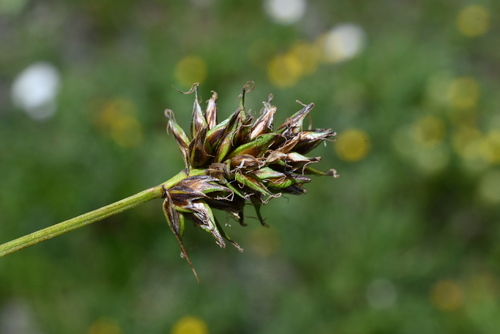
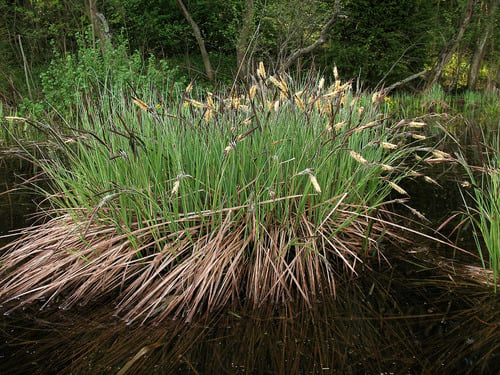
Bolboschoenus maritimus
(L.) Palla
Sea club-rush, Seaside bulrush
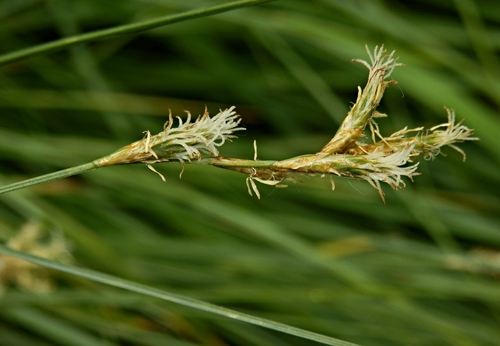
iNaturalist· cc-by
(c) W. Terry Hunefeld, some rights reserved (CC BY), uploaded by W. Terry Hunefeld
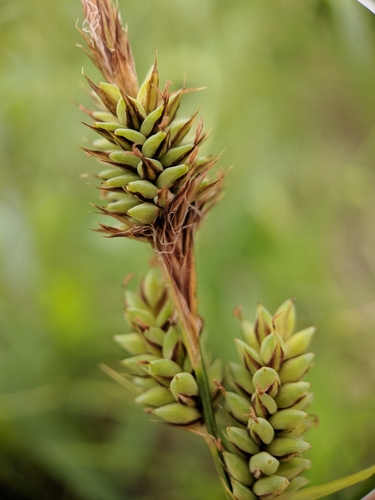
iNaturalist· cc-by-nc
(c) vladimir_epiktetov, some rights reserved (CC BY-NC), uploaded by vladimir_epiktetov
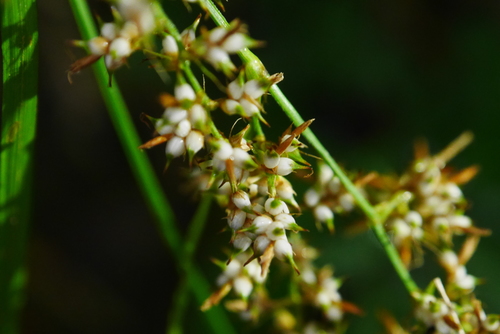
iNaturalist· cc-by-nc
(c) Almantas Kulbis, some rights reserved (CC BY-NC), uploaded by Almantas Kulbis
Summary
Source: WikipediaBolboschoenus maritimus is a species of flowering plant from family Cyperaceae. Common names for this species include sea clubrush, cosmopolitan bulrush, alkali bulrush, saltmarsh bulrush, and bayonet grass. It is found in seaside wetland habitats over much of the world. It is widespread across much of temperate and subtropical Africa, Asia, Europe, North America, South America and various islands.
Description
A herb or sedge. It has underground stems or rhizomes. It keeps growing from year to year. There is a small round tuber at the end of the rhizomes. The stalks are 25-50 cm tall and they are 3 angled. The leaves are narrow and 2-6 mm wide.
Edible Uses
Edible Uses & Rating: Corms, seeds, and pollen are all edible. Rating: 5/5—among the best sedges for human food. Taste & Kitchen Notes: Corms are mild, earthy, and potato-like; easily roasted or ground for flour. Seeds nutty when toasted. Seasonality: Corms harvestable in autumn–winter; seeds in late summer. The tubers are dried and powdered and used as baby feed in Kerala, India [2-6]. Traditional/Indigenous Use Summary: Corms and seeds were major prehistoric staples in Eurasia and North America. Used as a famine and staple food.
Traditional Uses
The starchy root tubers can be cooked and eaten as a vegetable or used to extract starch. The central stem can be processed into flour.
This uses section is brief — help expand it
Medicinal Uses
The roots of Bolboschoenus maritimus have been used in China as an astringent and diuretic [2-6].
Distribution
It is a Mediterranean plant. It can grow in salty soils. It can grow in arid places. It occurs in wet areas on salty soils near coasts. It grows in the Sahara. In Argentina it grows from sea level to 500 m above sea level.
Where It Grows
Afghanistan, Africa, Argentina, Asia, Australia, Britain, Central Asia, Chile, Eswatini, Europe, Hungary, India, Indochina, Ireland, Israel, Japan, Kazakhstan, Kyrgyzstan, Laos, Luxembourg, Mali, Mauritania, Mediterranean, Middle East, Mongolia, Morocco, North Africa, North America, Pakistan, Russia, SE Asia, Senegal, Slovenia, South America, Southern Swaziland, Taiwan, Tajikistan, Tasmania, Turkmenistan, USA, Uzbekistan, West Africa,
Propagation
Seed, Division
Other Uses
The leaves are used for making mats, and as the edging of woven mats and used to warp for sandals as well as warps and twining wefts for making clothing. The rhizomes form a habitat for beneficial bacteria that give these plants excellent water filtering properties [2-6]. Special Uses
Other Information
It is a famine food.
Synonyms
Also Known As
Azlaf, Csatak, Obmorska srpica, Smar, Zsiku, Zsiok, Zsioka
References (10)
- Denes, A., et al, 2012, Wild plants used for food by Hungarian ethnic groups living in the Carpathian Basin. Acta Societatis Botanicorum Poloniae 81 (4): 381-396
- Irving, M., 2009, The Forager Handbook, A Guide to the Edible Plants of Britain. Ebury Press p 345
- Lim, T. K., 2015, Edible Medicinal and Non Medicinal Plants. Volume 9, Modified Stems, Roots, Bulbs. Springer p 16
- Long, C., 2005, Swaziland's Flora - siSwati names and Uses http://www.sntc.org.sz/flora/
- Moerman, D. F., 2010, Native American Ethnobotany. Timber Press. p 522 (As Scirpus maritimus)
Show all 10 references Hide references
- Nassif, F., & Tanji, A., 2013, Gathered food plants in Morocco: The long forgotten species in Ethnobotanical Research. Life Science Leaflets 3:17-54
- Royal Botanic Gardens, Kew (1999). Survey of Economic Plants for Arid and Semi-Arid Lands (SEPASAL) database. Published on the Internet; http://www.rbgkew.org.uk/ceb/sepasal/internet [Accessed 16th April 2011] (As Scirpus maritimus)
- Simpson, D. A. & Inglis, C. A., 2001, Cyperaceae of Economic, Ethnobotanical and Horticultural Importance: A checklist. Kew Bulletin Vol. 56, No. 2 (2001), pp. 257-360
- Urgamal, M., Oyuntsetseg, B., Nyambayar, D. & Dulamsuren, Ch. 2014. Conspectus of the vascular plants of Mongolia. (Editors: Sanchir, Ch. & Jamsran, Ts.). Ulaanbaatar, Mongolia.
- World Checklist of Useful Plant Species 2020. Royal Botanic Gardens, Kew