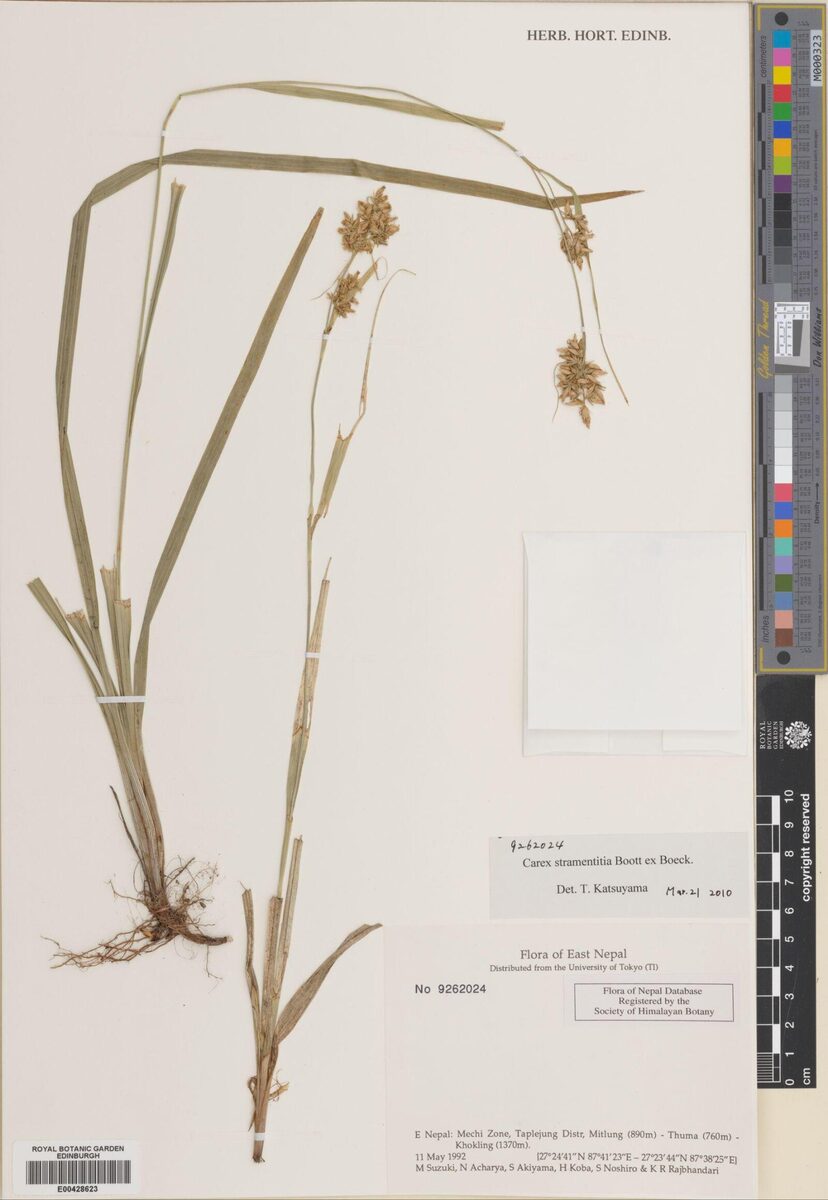
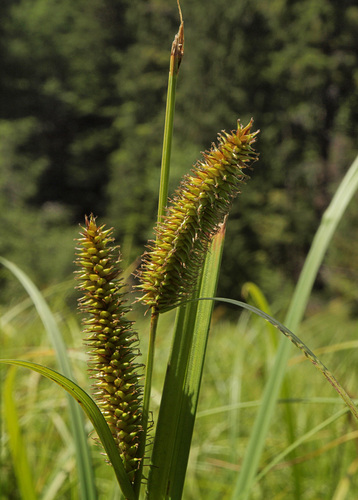
Gahnia grandis
(Labill.) S.T. Blake
Saw-sedge, Cutting grass
iNaturalist· cc-by-nc
(c) Phil Collier, some rights reserved (CC BY-NC), uploaded by Phil Collier
iNaturalist· cc-by-nc
(c) jimmy_cordwell, some rights reserved (CC BY-NC)
Summary
Source: WikipediaGahnia grandis is a tussock-forming perennial plant found in southeastern mainland Australia and Tasmania. Originally described by botanist Jacques Labillardière as Scleria grandis in 1800, it was placed in its current genus by S. T. Blake in 1969. In Tasmania, Gahnia is the most widely seen genus, with seven native species. Six of these species are very large, erect graminoids with sharp-edged leaves resembling a razor, hence the common names cutting grass and cutty grass.
Description
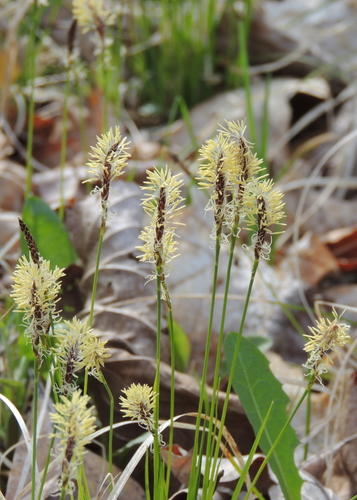
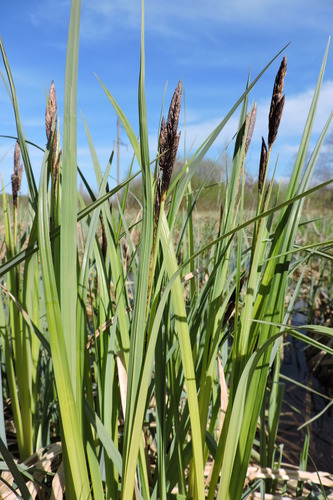
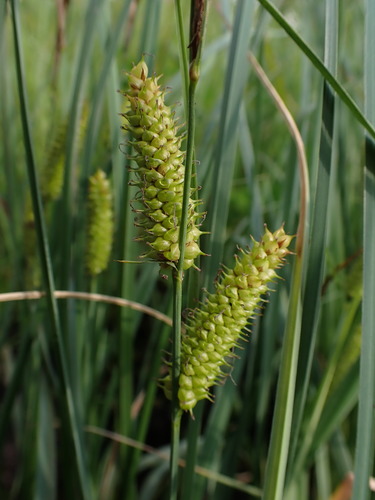
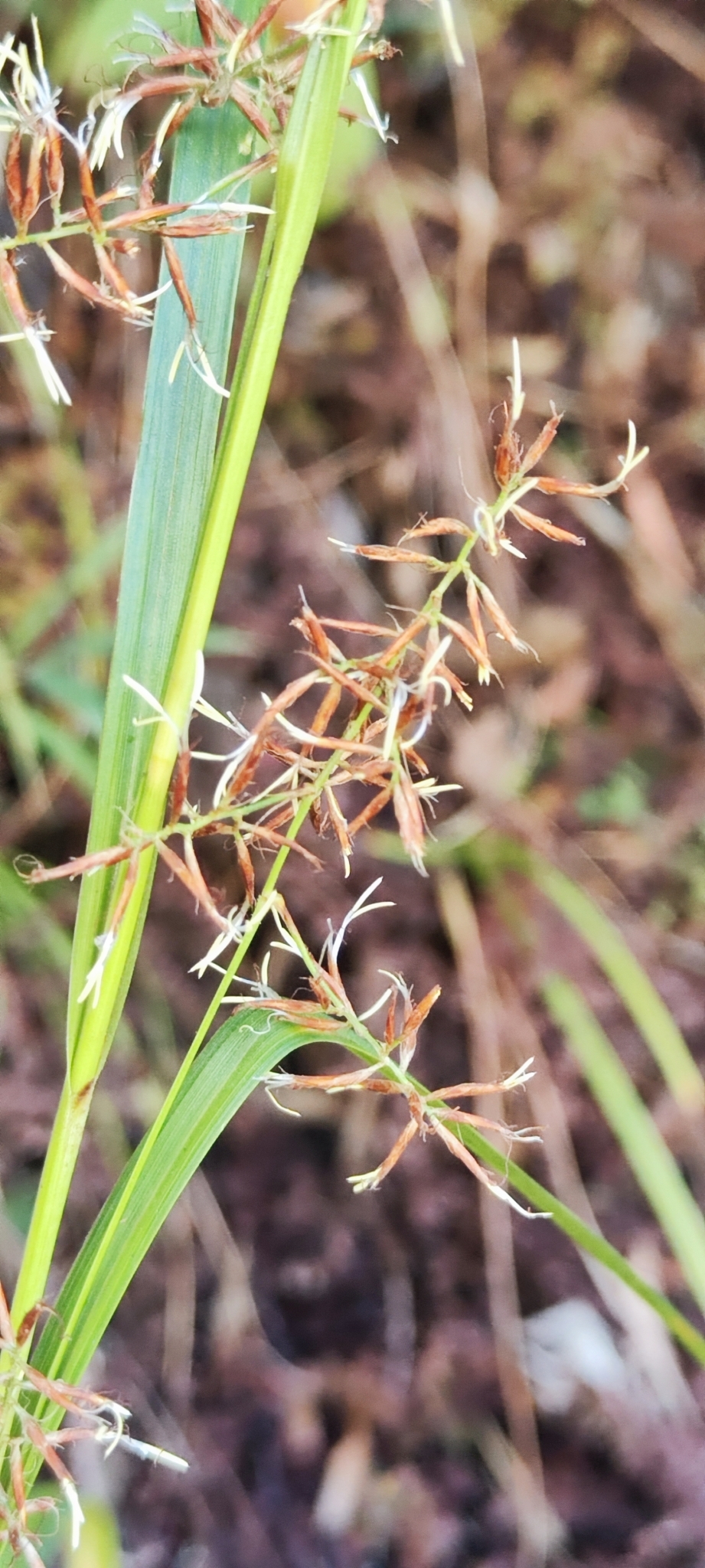
A sedge. It forms clumps and keeps growing from year to year. It grows 1.5-2.5 m high and spreads 2-3 m wide. The stems are slender and 2.5 m long. The leaves are 2.5 m long and narrow. They are like grass. They have a rough, saw edge and a channel on top. The flower stalk is 60 cm long. It is black. The branches can be erect or drooping. The spikelets are small. They have 2 flowers. These are cream and the seed or nut is 0.3 cm long and brown.
Edible Uses
Cutting grass has traditionally been used by indigenous peoples and Aboriginal Islanders for basket-weaving and rope-making. The nuts were pounded and ground into flour to make bread, and the young bases of plants growing in wetter locations may be eaten. Seed heads provide an attractive ornamental and decorative element. Gahnia species may also be used to attract birds and butterflies. The plants provide safe habitat for nesting birds, butterflies, caterpillars and other insects and animals, including threatened species like the eastern barred bandicoot. With financial support from the World Wide Fund for Nature (WWF), in late 2007 the Hobart City Council, the Threatened Species Network (TSN), the Tasmanian Parks and Wildlife Services, and the Tasmanian Department of Primary Industries and Water released a primary school education package and organized a teacher training workshop aimed at encouraging community participation in efforts for the conservation of the eastern barred bandicoot. The initiative highlighted the need to conserve Gahnia grandis and other native vegetation. Gahnia grandis tolerates damp soil, drought, full sun or shade, and moderate frost up to −4 °C (25 °F), allowing use in various locations. It is planted to improve soil fertility, because Gahnia grandis helps prevent soil erosion. This species is also planted along roadsides, and surrounding farmland, as a natural protective boundary for marsupials and to provide insect habitat. After drying, it can be used as fire fuel. It may be used to make craft objects, wooden furniture, baskets, ornaments, decorative artwork, and furniture items. It is also used decoratively in vases and flower pots, and can be planted as an ornamental garden species.
Traditional Uses
The leaf buds are eaten.
This uses section is brief — help expand it
Distribution
It grows in damp places. It grows in temperate places. It can be in lower alpine vegetation. Tasmanian Herbarium. Arboretum Tasmania.
Where It Grows
Australia*, Tasmania*,
Cultivation
Planst can be grown from seed or by division of the clump.
Notes
There are about 30-40 Gahnia species.
Synonyms
References (10)
- Cameron, M., (Ed.) 1981, A Guide to Flowers & Plants of Tasmania. Reed p 76
- Cherikoff V. & Isaacs, J., The Bush Food Handbook. How to gather, grow, process and cook Australian Wild Foods. Ti Tree Press, Australia p 195
- Collier, P., 1992, Rainforest Plants of Tasmania. Plant Identikit. Society for growing Australian Plants. Tasmania. p 46
- Elliot, W.R., & Jones, D.L., 1992, Encyclopedia of Australian Plants suitable for cultivation. Vol 4. Lothian. p 325
- Hibbert, M., 2002, The Aussie Plant Finder 2002, Florilegium. p 107
Show all 10 references Hide references
- IRVINE, 1957,
- Kirkpatrick, J., 1997, Alpine Tasmania, An Illustrated guide to the flora and vegetation. Oxford, p 141
- Simpson, D. A. & Inglis, C. A., 2001, Cyperaceae of Economic, Ethnobotanical and Horticultural Importance: A checklist. Kew Bulletin Vol. 56, No. 2 (2001), pp. 257-360
- Tasmanian Herbarium Vascular Plants list p 62
- Woolmore, E et al, 2002, King Island Flora: A Field Guide. p 83