Schoenoplectus lacustris
(L. ) Palla
Great bulrush, Club-rush, Roundstem bulrush
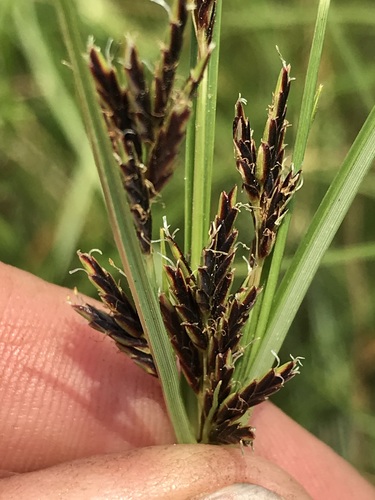
iNaturalist· cc-by-nc
(c) Petr Kosachev, some rights reserved (CC BY-NC), uploaded by Petr Kosachev
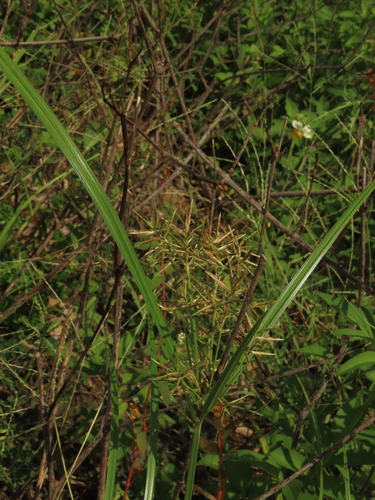
iNaturalist· cc-by-nc
(c) Tony Bean, some rights reserved (CC BY-NC)
iNaturalist· cc-by-nc
(c) Tony Bean, some rights reserved (CC BY-NC)
Summary
Source: WikipediaSchoenoplectus lacustris, the common club-rush, is a species of club-rush (genus Schoenoplectus) that grows in fresh water across Europe, much of Asia, and with a disjunct population in southern Africa.
Description
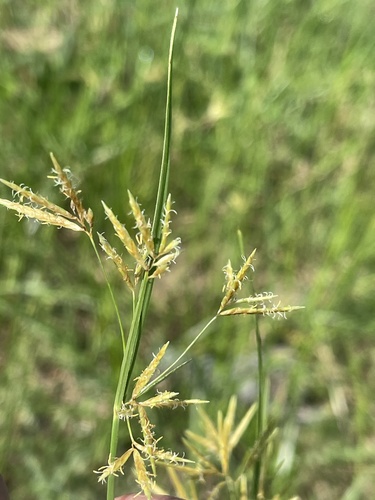
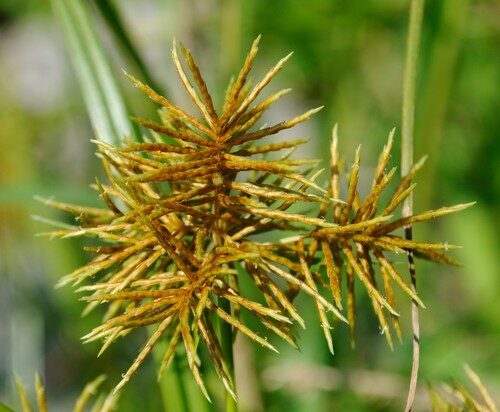
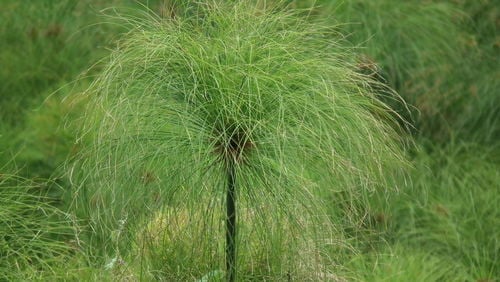
A sedge. These grow in clumps and have grass like leaves and solid stalks. It grows in large beds in swamps. It has a strong rhizome which creeps along the soil surface. The stems are erect and dark green. They can be 2.7 m high and 1.5 cm wide. The flower is a brown spikelet at the top of the stem.
Traditional Uses
The shoots are eaten raw or cooked. The pollen can be collected and mixed with meal to make bread. The seeds are ground into a meal and used for bread. The rhizomes are eaten or made into bread.
Distribution
It grows in temperate to tropical areas. It grows in ponds and slow moving water. It suits hardiness zones 4-11.
Where It Grows
Afghanistan, Asia, Australia, Britain, Canada, Central Asia, China, Europe, Georgia, India, Indochina, Iran, Japan, Laos, Luxembourg, Middle East, Myanmar, North America, Northeastern India, Pakistan, SE Asia, Slovenia, Tajikistan, Turkey, Türkiye, USA,
Other Information
Shoots are sold in local markets.
Synonyms
Also Known As
Jezerski biček, Kouna, Tule
References (18)
- Ambasta S.P. (Ed.), 2000, The Useful Plants of India. CSIR India. p 560
- Cundall, P., (ed.), 2004, Gardening Australia: flora: the gardener's bible. ABC Books. p 1324 (As Schoenoplectus lacustris)
- Duke, J.A., 1992, Handbook of Edible Weeds. CRC Press. p 178
- Facciola, S., 1998, Cornucopia 2: a Source Book of Edible Plants. Kampong Publications, p 90
- Hedrick, U.P., 1919, (Ed.), Sturtevant's edible plants of the world. p 598
Show all 18 references Hide references
- http://www.botanic-gardens-ljubljana.com/en/plants
- Jain et al, 2011, Dietary Use and Conservation Concern of Edible Wetland Plants at Indo-Burma Hotspot: A Case Study from Northeast India. Journal of Ethnobiology and Ethnomedicine 7:29 p 8
- Kermath, B. M., et al, 2014, Food Plants in the Americas: A survey of the domesticated, cultivated and wild plants used for Human food in North, Central and South America and the Caribbean. On line draft. p 790
- Kuhnlein, H. V. and Turner, N. J., 1991, Traditional Plant Foods of Canadian Indigenous Peoples. Food and Nutrition in History and Anthropology Volume 8. Gordon and Breach. p 41 (As Scirpus lacustris)
- Lim, T. K., 2015, Edible Medicinal and Non Medicinal Plants. Volume 9, Modified Stems, Roots, Bulbs. Springer p 75
- Plants for a Future database, The Field, Penpol, Lostwithiel, Cornwall, PL22 0NG, UK. http://www.scs.leeds.ac.uk/pfaf/
- READ,
- Saunders, C.F., 1948, Edible and Useful Wild Plants. Dover. New York. p 25
- Simpson, D. A. & Inglis, C. A., 2001, Cyperaceae of Economic, Ethnobotanical and Horticultural Importance: A checklist. Kew Bulletin Vol. 56, No. 2 (2001), p. 334
- Slocum, P.D. & Robinson, P., 1999, Water Gardening. Water Lilies and Lotuses. Timber Press. p 101
- Sp. pl. 1:48. 1753
- UPHOF,
- World Checklist of Useful Plant Species 2020. Royal Botanic Gardens, Kew