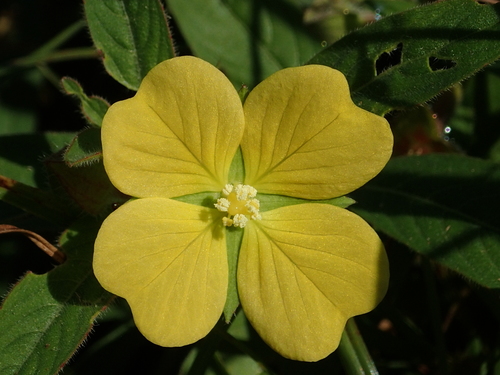
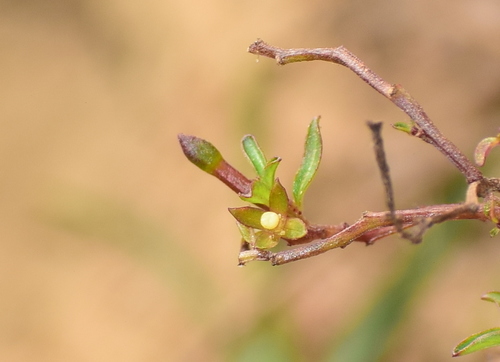
Fuchsia microphylla
Kunth
Small-leafed Fuchsia
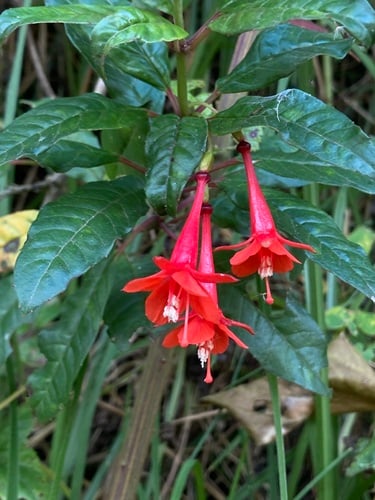
iNaturalist· cc-by
(c) agujaceratops, some rights reserved (CC BY)
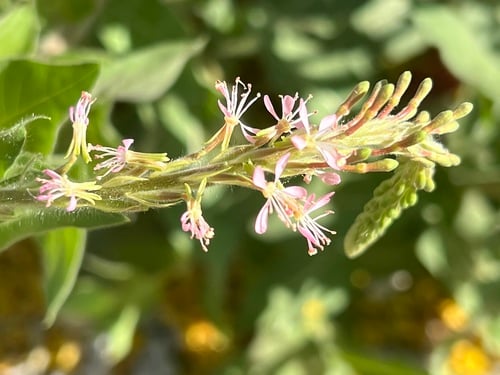
iNaturalist· cc-by
(c) Neptalí Ramírez Marcial, some rights reserved (CC BY), uploaded by Neptalí Ramírez Marcial
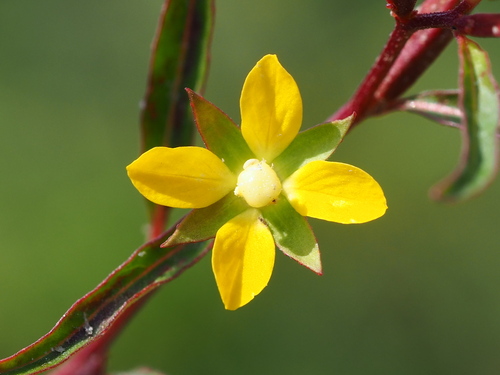
iNaturalist· cc-by-nc
(c) Jason J. Dombroskie, some rights reserved (CC BY-NC)
Summary
Source: WikipediaFuchsia microphylla, also known as small leaf fuchsia and small-leaved fuchsia, is a flowering shrub in the family Onagraceae. The specific epithet (microphylla) was named for the plant's small (micro) leaves (phylla).
Description
A bushy shrub. It can also be a climber. It grows 0.6-5 m high. The leaves are opposite and sword shaped. They have a pointed tip and base. The edges of the leaves can be smooth or have teeth. The flowers are white to red-purple tubes.
Edible Uses
The fruit is eaten raw and is a juicy berry with a pleasant flavour, though it is usually rather small. One report notes fruits up to 1.5cm in diameter, though this is considerably larger than is typically observed.
Medicinal Uses
None known.
Distribution
A tropical plant. It suits hardiness zones 8-11. Hobart Botanical Gardens.
Where It Grows
Australia, Belize, Central America, Costa Rica, El Salvador, Guatemala, Honduras, Mexico, Nicaragua, North America, Panama, Tasmania,
Cultivation
Succeeds in any fertile well-drained circum-neutral soil. Succeeds in a good loam if sand and leafmold are added. Plants grow best in cool summer conditions with good light. A plant at Heligan gardens in Cornwall is thriving and fruiting well in the fairly deep shade of a woodland garden. This species is hardy in many parts of Britain according to some reports, though others say that it is best grown in a greenhouse. A plant growing in a sheltered position outside a greenhouse at Oxford Botanical Gardens seems to be hardy there. Since Oxford experiences lots of frosts and usually some snow in the winter, this suggests that it is possible to grow this species in many parts of Britain, especially if grown against a wall. Plants seem to be immune to the predations of rabbits. A good bee plant. A polymorphic species, a number of sub-species are recognised.
Propagation
Sow seed as soon as it is ripe, though spring sowing is also possible. Surface sow in pots in a warm greenhouse, keeping the compost consistently moist. Germination should occur within 6 weeks. Prick seedlings out into individual pots once large enough to handle and grow on under glass for at least the first winter. Plant out in late spring or early summer after the last expected frosts. Inter-nodal greenwood cuttings 5–8cm long taken in May/June root quickly and easily with a high success rate. Overwinter rooted cuttings under glass in their first year before planting out. Inter-nodal half-ripe wood cuttings taken in July/August are equally straightforward — treat as for greenwood cuttings. Cuttings generally root successfully at any point during the growing season.
Other Uses
None known.
Notes
There are about 100 Fuchsia species.
References (6)
- Cundall, P., (ed.), 2004, Gardening Australia: flora: the gardener's bible. ABC Books. p 616
- Etherington, K., & Imwold, D., (Eds), 2001, Botanica's Trees & Shrubs. The illustrated A-Z of over 8500 trees and shrubs. Random House, Australia. p 338
- Hibbert, M., 2002, The Aussie Plant Finder 2002, Florilegium. p 106
- F. W. H. A. von Humboldt et al., Nov. gen. sp. 6:82[folio]; 6:103[quarto], t. 534. 1823
- Plants for a Future database, The Field, Penpol, Lostwithiel, Cornwall, PL22 0NG, UK. http://www.scs.leeds.ac.uk/pfaf/
Show all 6 references Hide references
- Reis, S. V. and Lipp, F. L., 1982, New Plant Sources for Drugs and Foods from the New York Botanical Garden herbarium. Harvard. p 218