Oenothera lamarckiana
Ser.
gbif· cc-by-nc
Jon McIntyre
gbif· cc-by-nc
Michael Orgill
gbif· cc-by-nc
patnelson
Description
Oenothera lamarckiana is a BIENNIAL growing to 1 m (3ft 3in). It is not frost tender. It is in flower from July to August. The species is hermaphrodite (has both male and female organs) and is pollinated by Lepidoptera (Moths & Butterflies), bees. The plant is self-fertile. It is noted for attracting wildlife. Suitable for: light (sandy) and medium (loamy) soils, prefers well-drained soil and can grow in nutritionally poor soil. Suitable pH: mildly acid, neutral and basic (mildly alkaline) soils. It cannot grow in the shade. It prefers dry or moist soil.
Edible Uses
Young leaves. No more details are given.
Distribution
Europe to Eastern N. America.
Where It Grows
NORTHERN AMERICA: United States (Alabama, Florida, Kentucky (c. (introd.?)), Mississippi (east), North Carolina, South Carolina, Tennessee)
Cultivation
Prefers a dryish well-drained sandy loam and full sun. Heavy clay soils may induce winter rots. Succeeds in poor soils. There is some confusion over this name. says that it is a synonym of O. grandiflora. Ait. whilst O. lamarkiana De. Vries non Ser. is given as a synonym for O. glazioviana. The flowers open in the evening, they are richly scented and are very attractive to moths.
Propagation
Seed - sow in situ from late spring to early summer.
Synonyms
More from Onagraceae
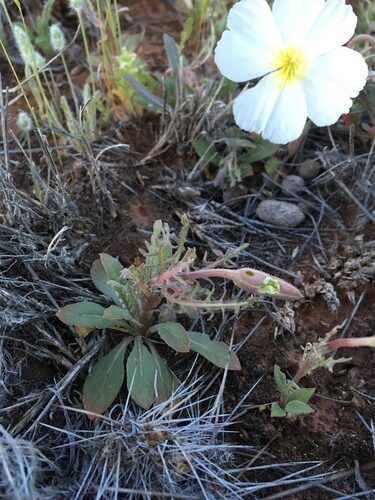
Oenothera albicaulis
Whitest Evening Primrose
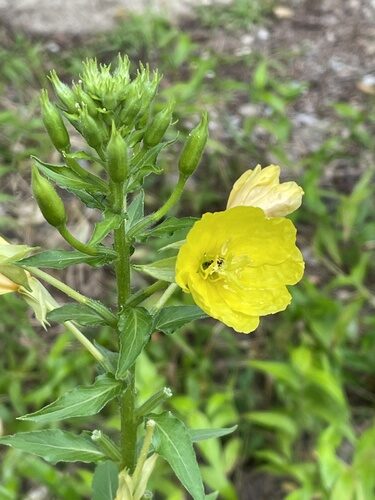
Oenothera biennis
Evening Primrose, Sun Drop, Common evening primrose
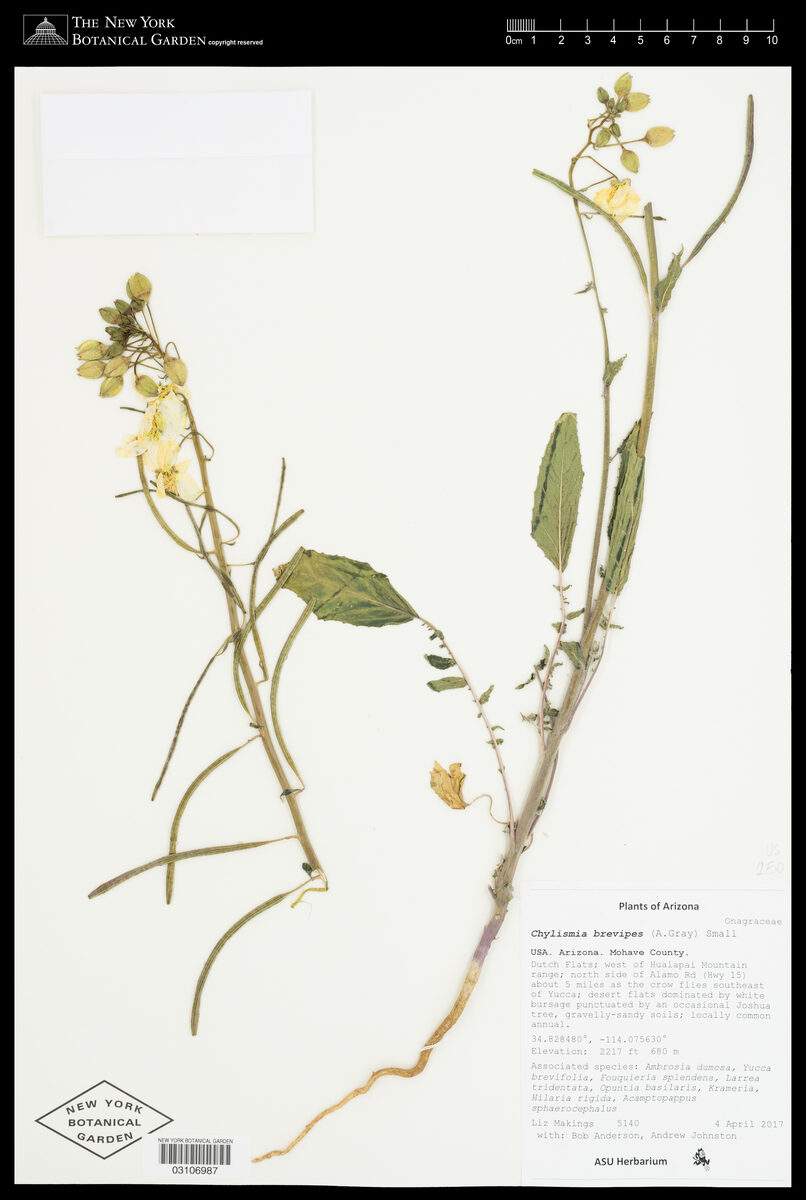
Oenothera brevipes
Golden Suncup
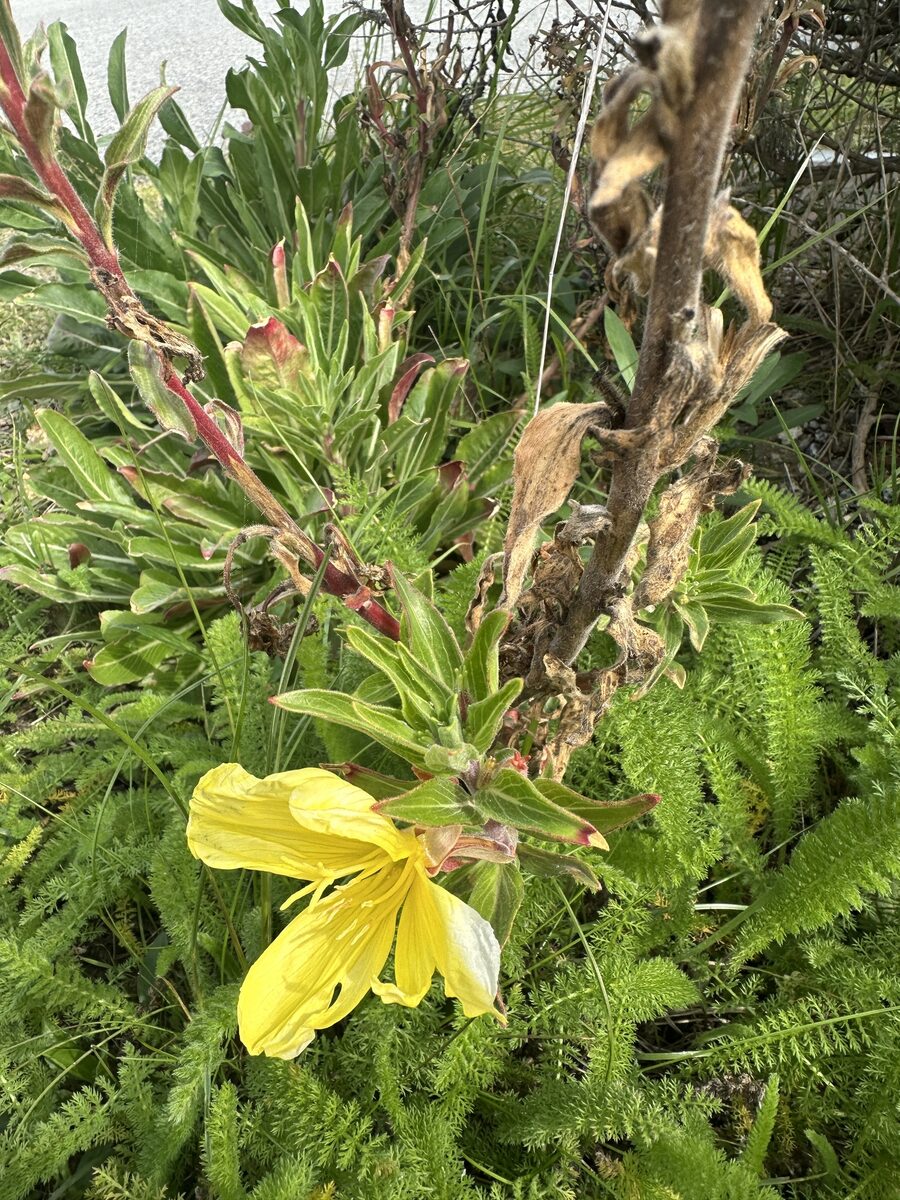
Oenothera elata hookeri - (Torr.&A.Gray.)W. Dietr.&W.L.Wagner.
Hooker's Evening Primrose
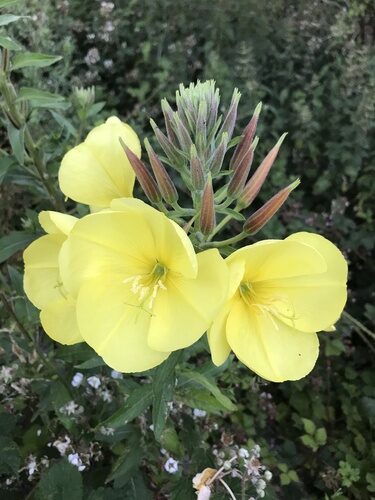
Oenothera glazioviana
Large-Flower Evening Primrose, Redsepal evening primrose
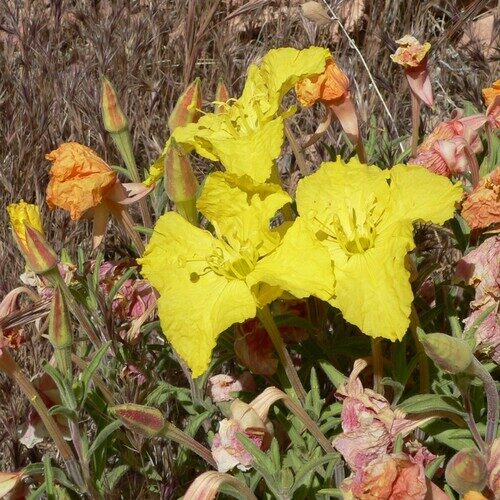
Oenothera lavandulifolia
Lavender Sundrops