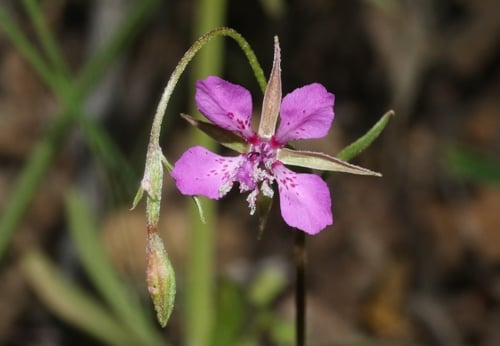
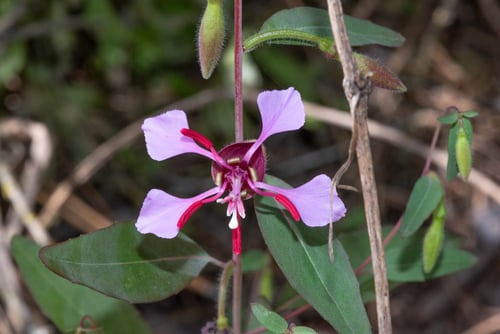
Fuchsia corymbiflora
Ruiz. & Pav.
Peruvian Fuschia, Peruvian Berrybush, Vine fuchsia
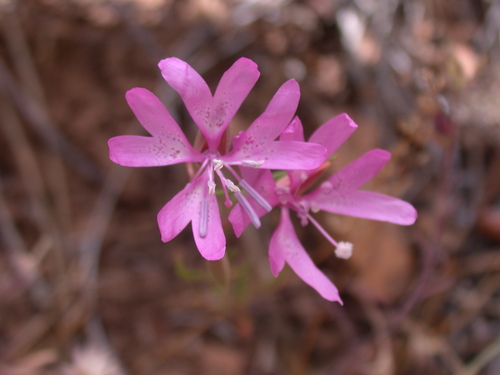
iNaturalist· cc-by-nc
(c) peberry, some rights reserved (CC BY-NC)
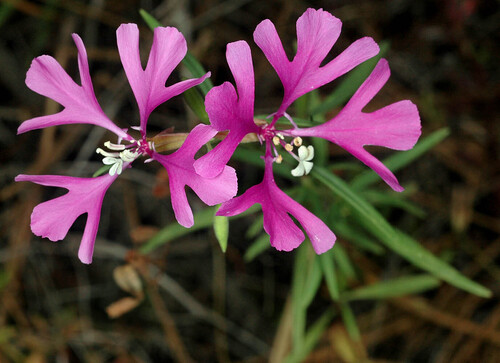
iNaturalist· cc-by-nc
(c) Gianlucca Monteverde C., some rights reserved (CC BY-NC)
Summary
Source: WikipediaFuchsia corymbiflora is a species of shrub in the family Onagraceae. It is endemic to Peru, and was first introduced to the Royal Botanical Gardens, Kew in 1840. This species is often confused with F. boliviana, which it closely resembles. On close inspection. most plants in cultivation identified as F. corymbiflora turn out to be the latter. The most immediately visible distinction is that the sepals of F. boliviana initially become spreading at anthesis but soon fully reflex back against the tube. The sepals of F. corymbiflora, on the hand, spread at anthesis but remain in a more angled position. They do not fully reflex.
Description
A semi-climbing shrub. It can grow to 4 m long. The stems arch over. Leaves are opposite and oblong or sword shaped. They are large and hairy. They are 8-10 cm long and 10 cm wide. The flowers are decorative and trumpet shaped. They are scarlet and 6-7 cm long. They are produced in long clusters. The fruit are purple berries. They are 1.2 cm long by 1 cm wide. The fruit is edible.
Edible Uses
The fruit is eaten raw and is a juicy berry that tastes of ripe figs. It is very pleasant with no noticeable aftertaste, which sets it apart from many other fuchsia fruits. Individual fruits measure up to 12mm long and 10mm wide.
Traditional Uses
The sweet tasty fruit are eaten.
This uses section is brief — help expand it
Medicinal Uses
None known.
Distribution
A tropical plant. They grow best in light shade in wamer places and full sun in coller places. The soil should be fertile and moist. Soils should be acidic. It cannot tolerate frost. It suits hardiness zones 9-11.
Where It Grows
Andes, Argentina, Australia, Bolivia, Colombia, Ecuador, Mexico, Peru, South America, Tasmania,
Cultivation
Succeeds in any fertile well-drained circum-neutral soil. Requires a moist position. Prefers semi-shade and a sheltered site. Succeeds in a good loam if leafmold and sand are added. This species requires a minimum winter temperature of 5°c in order to succeed, it does well in a cool conservatory. Plants have survived outdoors on our trial ground in Cornwall since 1992, with no losses even in colder winters. The plants die down in late autumn and will start to regrow during mild spells in the winter and spring. This new growth is usually killed by the next period of cold weather, but this does not seem to cause lasting damage, the plants growing away well in late spring. It is a good idea to apply a good mulch of organic matter as soon as the plant dies down, so that the roots are protected from any periods of severe cold. Plants seem to be immune to the predations of rabbits. A good bee plant.
Propagation
Sow seed as soon as it is ripe, though spring sowing is also possible. Surface sow in pots in a warm greenhouse, keeping the compost consistently moist. Germination should occur within 6 weeks. Prick seedlings out into individual pots once large enough to handle and grow on under glass for at least the first winter. Plant out in late spring or early summer after the last expected frosts. Inter-nodal greenwood cuttings 5–8cm long taken in May/June root quickly and easily with a high success rate. Overwinter rooted cuttings under glass in their first year before planting out. Inter-nodal half-ripe wood cuttings taken in July/August are equally straightforward — treat as for greenwood cuttings. Cuttings generally root successfully at any point during the growing season. The plant has a tuberous root system and produces suckers, which can be removed and potted up at any point in the growing season. Keep these under glass for at least their first winter.
Other Uses
None known.
Other Information
The fruit are sold in local markets.
Notes
There are about 100 Fuchsia species.
Synonyms
Also Known As
Arete, Fucsia
References (12)
- Crandall, C & Crandall, B., 1996, Flowering Fruiting and Foliage vines. Sterling. p 90
- Cundall, P., (ed.), 2004, Gardening Australia: flora: the gardener's bible. ABC Books. p 616
- Fl. peruv. 3:87, t. 325. 1802
- Flowerdew, B., 2000, Complete Fruit Book. Kyle Cathie Ltd., London. p 173
- Fouqué, A., 1972, Espèces fruitières d'Amérique tropicale. Institut français de recherches fruitierès outre-mer
Show all 12 references Hide references
- Glowinski, L., 1999, The Complete Book of Fruit Growing in Australia. Lothian. p 183
- Hedrick, U.P., 1919, (Ed.), Sturtevant's edible plants of the world. p 321
- John, L., & Stevenson, V., 1979, The Complete Book of Fruit. Angus & Robertson p 136
- Lyle, S., 2006, Discovering fruit and nuts. Land Links. p 217
- Plants for a Future database, The Field, Penpol, Lostwithiel, Cornwall, PL22 0NG, UK. http://www.scs.leeds.ac.uk/pfaf/
- Segura, S., et al, 2018, The edible fruit species in Mexico. Genet Resour Crop Evol (2018) 65:1767–1793
- World Checklist of Useful Plant Species 2020. Royal Botanic Gardens, Kew