Fuchsia boliviana
Carrière
Bolivian Fuchsia
iNaturalist· cc-by-nc-nd
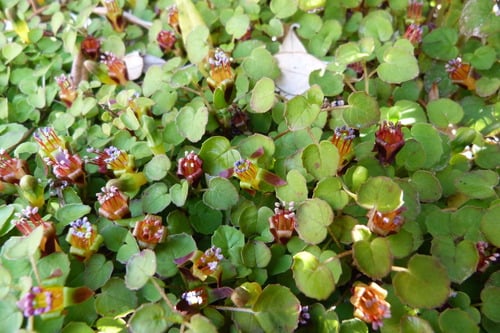
(c) David W K Foster, some rights reserved (CC BY-NC-ND), uploaded by David W K Foster
iNaturalist· cc-by-nc
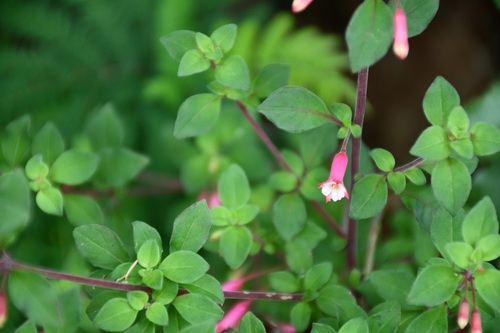
(c) mariaangelicasuarezgonzalez, some rights reserved (CC BY-NC)
Summary
Source: WikipediaFuchsia boliviana is a species of Fuchsia native to southern Peru, Bolivia and northern Argentina.
Description
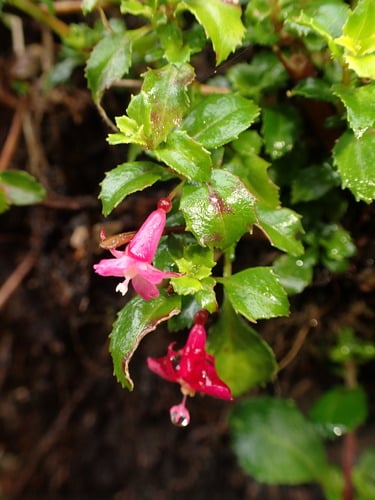
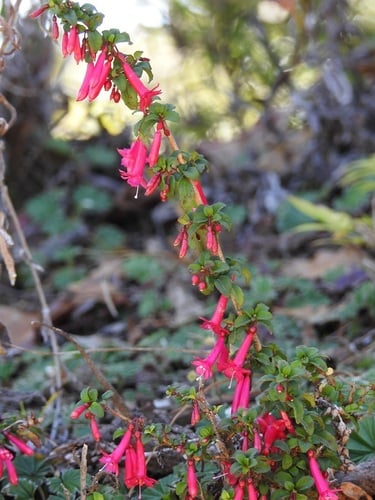
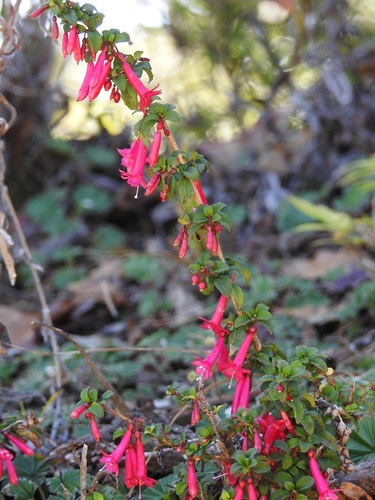
An erect shrub or small tree. It grows to 3.5 m high. The leaves are soft and grey green. Sometimes the veins are reddish. They grow in rings of three. They are narrowly oval or egg shaped. They have a pointed tip and there are teeth along the edge. The flowers hang down and occur in clusters as long scarlet tubes. The fruit is edible.
Edible Uses
The fruit is eaten raw and is a juicy berry with a sweetish, pleasant flavour. Individual fruits can grow up to 25mm long.
Traditional Uses
The ripe fruit are eaten raw.
This uses section is brief — help expand it
Medicinal Uses
None known.
Distribution
A tropical plant. It is frost tender. In Argentina it grows between 500-3,000 m above sea level. It suits hardiness zones 9-11. Melbourne Botanical Gardens.
Where It Grows
Andes, Argentina, Australia, Bolivia*, Central America, Colombia, Ecuador, Guatemala, Hawaii, Mexico, North America, Pacific, Peru*, South America*, St Helena, USA, Venezuela,
Cultivation
Succeeds in any fertile well-drained circum-neutral soil. Requires a good open humus-rich soil and a moist partially shady position in the summer. A fast-growing plant. Plants are not very hardy outdoors in Britain. They are susceptible to frost damage at temperatures of 0°c, though they can be grown outdoors in the summer, then lifted and potted up in the greenhouse for the winter. They can succeed outdoors in the mildest areas of the country if they are given the protection of a wall. A plant in a sheltered wall garden at Trengwainton in Cornwall was 2 metres tall and flowering very freely in August 1995, though there was little fruit set. Plants are evergreen so long as the temperature remains above 4°c. Plants are very susceptible to whitefly when grown in a greenhouse. This species is closely related to F. corymbiflora. Plants seem to be immune to the predations of rabbits. A good bee plant. This species has a long tubular flower and is pollinated by humming birds in the wild.
Propagation
Sow seed as soon as it is ripe, though spring sowing is also possible. Surface sow in pots in a warm greenhouse, keeping the compost consistently moist. Germination should occur within 6 weeks. Prick seedlings out into individual pots once large enough to handle and grow on under glass for at least the first winter. Plant out in late spring or early summer after the last expected frosts. Inter-nodal greenwood cuttings 5–8cm long taken in May/June root quickly and easily with a high success rate. Overwinter rooted cuttings under glass in their first year before planting out. Inter-nodal half-ripe wood cuttings taken in July/August are equally straightforward — treat as for greenwood cuttings. Cuttings generally root successfully at any point during the growing season.
Other Uses
None known.
Notes
There are about 106 Fuchsia species. There are also 1000's of hybrids and cultivated varieties.
Synonyms
Also Known As
Aretillo, Fucsia
References (14)
- Altschul, S.V.R., 1973, Drugs and Foods from Little-known Plants. Notes in Harvard University Herbaria. Harvard Univ. Press. Massachusetts. no. 3106 (var. puberulenta)
- Cundall, P., (ed.), 2004, Gardening Australia: flora: the gardener's bible. ABC Books. p 615
- Etherington, K., & Imwold, D., (Eds), 2001, Botanica's Trees & Shrubs. The illustrated A-Z of over 8500 trees and shrubs. Random House, Australia. p 337
- Fouqué, A., 1972, Espèces fruitières d'Amérique tropicale. Institut français de recherches fruitierès outre-mer
- Hibbert, M., 2002, The Aussie Plant Finder 2002, Florilegium. p 104
Show all 14 references Hide references
- Kermath, B. M., et al, 2014, Food Plants in the Americas: A survey of the domesticated, cultivated and wild plants used for Human food in North, Central and South America and the Caribbean. On line draft. p 376
- Lopez-Diago, D. & Garcia, N., 2021, Wild edible fruits of Colombia. Biota ColomBiana 22 (2) p 46
- Plants for a Future database, The Field, Penpol, Lostwithiel, Cornwall, PL22 0NG, UK. http://www.scs.leeds.ac.uk/pfaf/
- Rev. Hort. 49:150. 1877
- Roa, J. A. G. & Boada, D. S. G., 2018, Fundación para el Fortalecimiento de la Fruticultura y Plantas Alimenticias no Convencionales en Colombia.
- Segura, S., et al, 2018, The edible fruit species in Mexico. Genet Resour Crop Evol (2018) 65:1767–1793
- Staples, G.W. and Herbst, D.R., 2005, A tropical Garden Flora. Bishop Museum Press, Honolulu, Hawaii. p 445
- Young, J., (Ed.), 2001, Botanica's Pocket Trees and Shrubs. Random House. p 397
- www.tradewindsfruit.com