Alcea rosea
L.
Hollyhock
iNaturalist· cc-by-nc
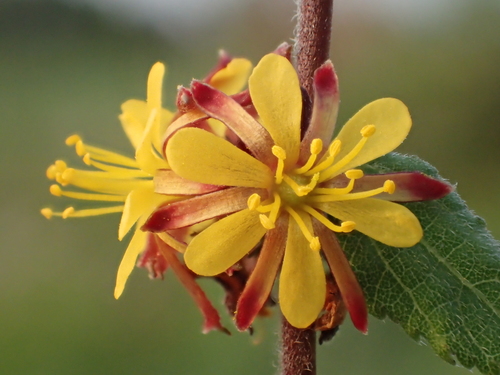
(c) Σάββας Ζαφειρίου (Savvas Zafeiriou), some rights reserved (CC BY-NC), uploaded by Σάββας Ζαφειρίου (Savvas Zafeiriou)
iNaturalist· cc-by-nc
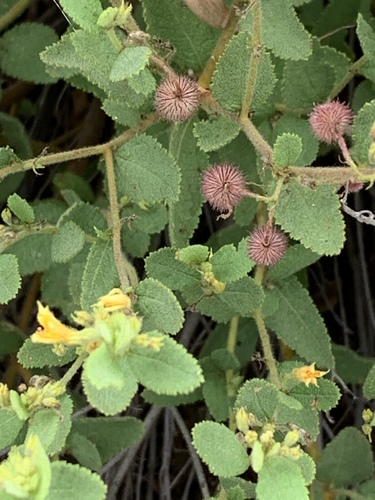
(c) sasenova, some rights reserved (CC BY-NC)
iNaturalist· cc-by-nc
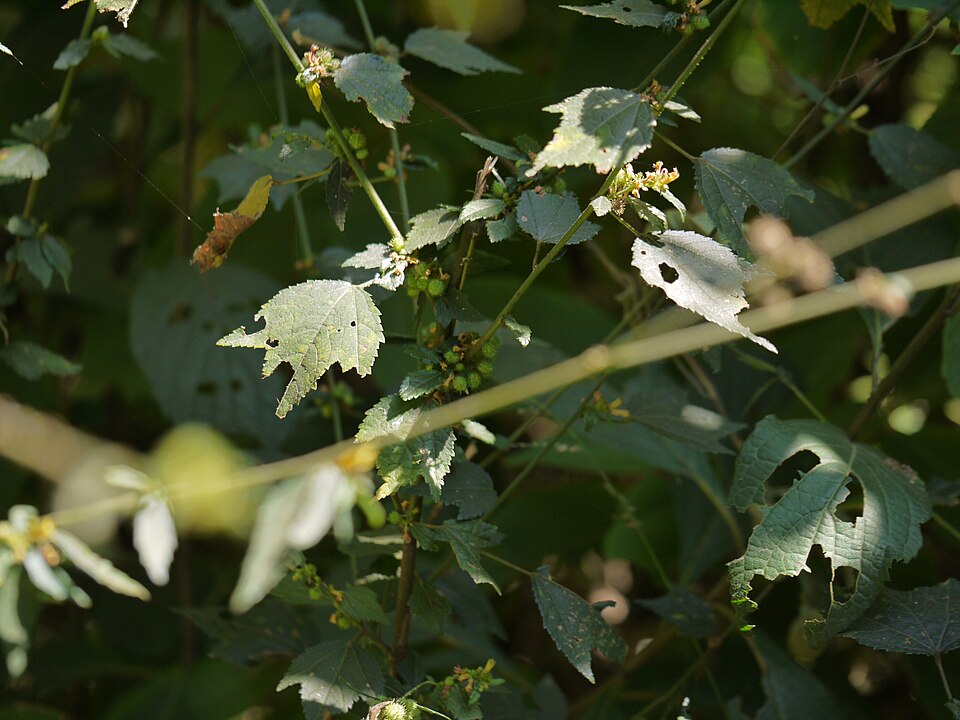
(c) Σάββας Ζαφειρίου (Savvas Zafeiriou), some rights reserved (CC BY-NC), uploaded by Σάββας Ζαφειρίου (Savvas Zafeiriou)
Summary
Source: WikipediaAlcea rosea, the common hollyhock, is an ornamental dicot flowering plant in the family Malvaceae. It was imported into Europe from southwestern China during, or possibly before, the 15th century. William Turner, a herbalist of the time, gave it the name "holyoke" from which the English name derives.
Description
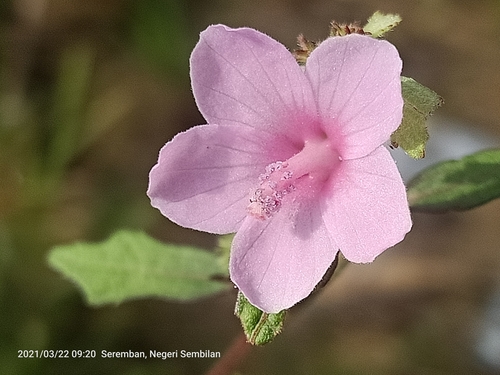
A short lived perennial plant. It grows for about 2 years. It grows 1.5-2.5 m high and spreading to 60 cm wide. The stem is erect, leafy and flowering. The leaf stalks are 5-15 cm long. The leaf blade is nearly round and 6-16 cm across. There are 5-7 lobes arranged like fingers on a hand. The lobes are triangular. The flowers are in the axils of leaves. They are bowl shaped. The petals are crinkled. Flowers are red, purple, pink, white, yellow and black and 6-10 cm across.
Edible Uses
Young leaves can be eaten raw or cooked, though their mild flavour and unpleasant texture make them among the less palatable greens available; they work best chopped finely and added to salads or used as a pot-herb. The inner portion of young stems can be eaten raw. Flower petals and buds are edible raw and make a colourful addition to salads. The root yields a nutritious starch, and the petals can be brewed into a refreshing tea.
Traditional Uses
The young leaves are eaten raw or cooked. The leaves are used for sarma in Turkey. They are rolled around a filling of rice or minced meat. The inner portion of the young stems is eaten raw. The flowers buds and petals are added raw to salads. An edible starch can be made from the root. The flower petals can be used for tea. They are also boiled in water to make sweet juice.
Medicinal Uses
The flowers are demulcent, diuretic and emollient, and are useful in treating chest complaints. A decoction improves blood circulation and is used for constipation, dysmenorrhoea and haemorrhage. Flowers are harvested when open and dried for later use. The shoots are used to ease difficult labour. The root is astringent and demulcent — crushed and applied as a poultice to ulcers, and taken internally for dysentery. In Tibetan medicine, the roots and flowers are considered to have a sweet, acrid taste and neutral potency, used to treat kidney and womb inflammations, vaginal and seminal discharge, and loss of appetite. The seed is demulcent, diuretic and febrifuge.
Distribution
It is a temperate plant. Plants are frost hardy. Plants can tolerate temperatures down to about -15°C. It grows best in a sheltered sunny position and in a heavy rich soil. It will grow in most soils. It is resistant to frost but sensitive to drought. The soil should be well drained. It suits hardiness zones 3-10. In Yunnan.
Where It Grows
Africa, Albania, Algeria, Argentina, Asia, Australia, Austria, Balkans, Bangladesh, Bosnia, Britain, Bulgaria, Canary Is., Central Asia, Chile, China, Cuba, Cyprus, Czech Republic, Dominican Republic, East Africa, Ecuador, Egypt, El Salvador, Europe, France, Germany, Greece, Guatemala, Haiti, Himalayas, Hungary, India, Indochina, Iraq, Italy, Japan, Korea, Kurdistan, Laos, Libya, Middle East, Morocco, Mozambique, Nepal, New Zealand, North Africa, North America, Northeastern India, Oman, Pakistan, Portugal, Puerto Rico, Romania, SE Asia, Serbia, Slovenia, Spain, Southern Africa, South America, Spain, Switzerland, Tajikistan, Tasmania, Thailand, Tibet, Trinidad-Tobago, Tunisia, Turkey, Türkiye, Turkmenistan, Ukraine, Uzbekistan, USA, Venezuela, Vietnam, West Indies, Winward Is., Yugoslavia, Zimbabwe,
Cultivation
Plants can be grown from seed, division of the clump or by cuttings. Seeds germinate in 2-3 weeks at 20°C. To avoid frosts seeds are sown indoors 8 weeks before the last frost. The seed are sown 6 mm deep. It should be pruned back after flowering.
Propagation
Sow seed in April/May or August/September, either in pots or in situ. Seed germinates readily in about 2–3 weeks at 20°C. Prick seedlings out into individual pots when large enough and plant out during summer. The plant can also be propagated by division after flowering — use only rust-free specimens — by root cuttings taken in December, or by basal cuttings taken at almost any time of year.
Other Uses
Stem fibres, approximately 1.9mm long, are used in papermaking. Stems are harvested in late summer, stripped of leaves, steamed to loosen fibres, then cooked with lye for 2 hours and ball-milled for 3 hours or pounded with mallets, producing a light tan paper. The flowers are used as an ingredient in 'Quick Return' herbal compost activator, a dried and powdered herbal blend added to compost heaps to accelerate bacterial activity and shorten composting time. The seeds contain 12% drying oil. The red anthocyanin pigment in the flowers serves as a litmus indicator, and a brown dye can be obtained from the petals.
Notes
There are about 60 Alcea species. This one is used in medicine.
Synonyms
Also Known As
Dulhatma, Malva real, Malvavisco, Mandinhhong, Rožlin, Rubeerwa, Shu kui, Sichuan Kui, Thucquy
References (26)
- Ambasta S.P. (Ed.), 2000, The Useful Plants of India. CSIR India. p 33 (As Althaea rosea)
- Benvenuti, S. & Mazzoncini, M., 2021, The Biodiversity of Edible Flowers: Discovering New Tastes and New Health Benefits. Frontiers in Plant Science Article 569499.
- Bircher, A. G. & Bircher, W. H., 2000, Encyclopedia of Fruit Trees and Edible Flowering Plants in Egypt and the Subtropics. AUC Press. p 21 (As Althaea rosea)
- Bodkin, F., 1991, Encyclopedia Botanica. Cornstalk publishing, p 72 (As Althaea rosea)
- Bremness, L., 1994, Herbs. Collins Eyewitness Handbooks. Harper Collins. p 145
Show all 26 references Hide references
- Brown, D., 2002, The Royal Horticultural Society encyclopedia of Herbs and their uses. DK Books. p 110
- Burnie, G.(Ed.), 2003, Annuals and Bulbs. The Gardener's Handbooks. Fog City Press p 116
- Cordero, S. E., Abello, L. A., & Galvez, F. L., 2017, Plantas silvestres comestibles y medicinales de Chile y otras partes del mundo. CORMA p 137
- Cundall, P., (ed.), 2004, Gardening Australia: flora: the gardener's bible. ABC Books. p 123
- Dogan, Y., et al, 2015, Of the importance of a leaf: the ethnobotany of sarma in Turkey and the Balkans. Journal of Ethnobiology and Ethnomedicine, 11:56
- Dashorst, G.R.M., and Jessop, J.P., 1998, Plants of the Adelaide Plains & Hills. Botanic Gardens of Adelaide and State Herbarium. p 102
- Facciola, S., 1998, Cornucopia 2: a Source Book of Edible Plants. Kampong Publications, p 147
- Flora of Pakistan. www.eFloras.org
- Hedrick, U.P., 1919, (Ed.), Sturtevant's edible plants of the world. p 47 (As Althaea rosea)
- Joyce, D., 1998, The Garden Plant Selector. Ryland, Peters and Small. p 312
- Kew Plants of the World Online
- Lamberton, K (Ed.), 2004, The Australian gardening encyclodepia. Murdoch Books, NSW Australia. p 155
- Liu, Yi-tao, & Long, Chun-Lin, 2002, Studies on Edible Flowers Consumed by Ethnic Groups in Yunnan. Acta Botanica Yunnanica. 24(1):41-56 (As Althaea rosea)
- Mahklouf, M. H., 2019, Ethnobotanical Study of Edible Wild Plants in Libya. European Journal of Ecology. 5(2): 30-40
- McMakin, P.D., 2000, Flowering Plants of Thailand. A Field Guide. White Lotus. p 27 (As Althaea rosea)
- Plants for a Future database, The Field, Penpol, Lostwithiel, Cornwall, PL22 0NG, UK. http://www.scs.leeds.ac.uk/pfaf/
- Plants of Haiti Smithsonian Institute http://botany.si.edu/antilles/West Indies
- Redzic, S. J., 2006, Wild Edible Plants and their Traditional Use in the Human Nutrition in Bosnia-Herzegovina. Ecology of Food and Nutrition, 45:189-232 (As Althaea rosea)
- Redzic, S., 2010, Use of Wild and Semi-Wild Edible Plants in Nutrition and Survival of People in 1430 Days of Siege of Sarajevo during the War in Bosnia and Herzegovina (1992–1995). Coll. Antropol 34 (2010) 2:551-570
- Valder, P., 1999, The Garden Plants of China. Florilegium. p 349
- Vermeulen, N, 1998, The Complete Encyclopedia of Herbs. Rebo Publishers. p 31