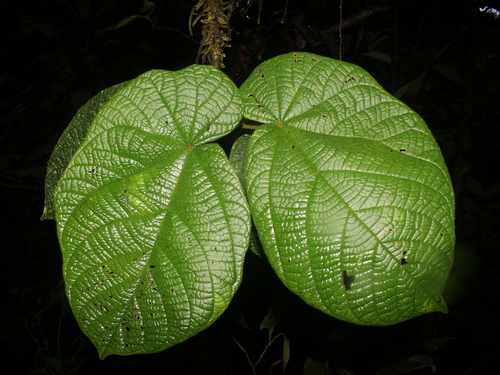
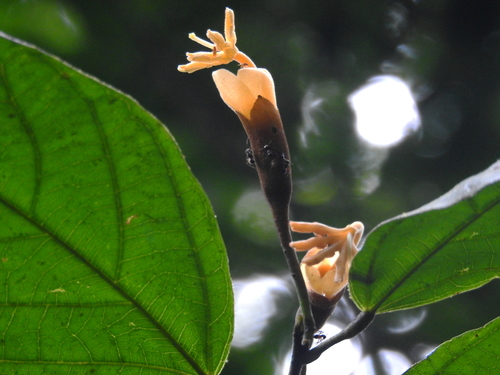
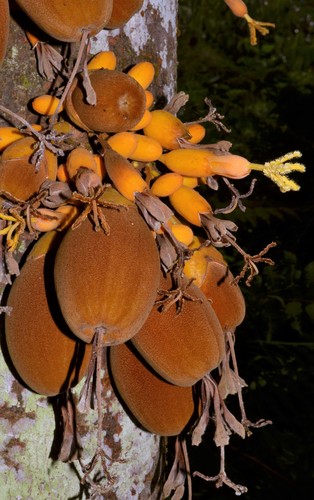
Triumfetta tomentosa
Bojer ex Bouton
Tomentose burbark
iNaturalist· cc-by-nc-sa
(c) 潘立傑 LiChieh Pan, some rights reserved (CC BY-NC-SA)
iNaturalist· cc-by-nc
(c) Troos van der Merwe, some rights reserved (CC BY-NC)
Description
Triumfetta tomentosa is a tropical shrub in the Malvaceae family that grows 3 m tall with stems 4-7 mm across, found from sea level to 2,400 m elevation.
Edible Uses
The stem and green bark are a source of mucilage used for making slimy soups and sauces. The mucilage is often used as baby food and for young children not yet able to eat coarse starchy foods. Because of its high energy value, the soup is often the first dish given to women who have delivered a child. It is also used as appetizer. The mucilage is extracted by softening the bark in hot water, followed by kneading it in a small amount of clean water. During kneading, the mucilage is released into the water, which is then added to stews to make them sticky. Bark peeled from the stem can be stored for later use.
Traditional Uses
The stems and green bark are used ti make soup and sauces.
This uses section is brief — help expand it
Medicinal Uses
The leaves are astringent, A decoction is used in the treatment of dysentery. A decoction of the leaf is used for washing the stomach after childbirth. The powdered dry leaf is made into a paste and applied as a poultice on burns. Mixed with castor oil, it is rubbed into the skin in the treatment of scabies.
Distribution
It is a tropical plant. It grows from sea level to 2,400 m above sea level.
Where It Grows
Africa, Botswana, East Africa, Ethiopia, Mauritius, Mozambique, Namibia, Sierra Leone, Sudan, Zambia, Zimbabwe,
Cultivation
A plant of the dry to moist areas of the tropics, where it can be found at elevations up to 2,400 metres. The plant responds well to coppicing. The stems can be harvested annually for their fibre. Stems for mucilage are harvested by cutting them just above ground level when they are 75 - 100 cm long. They are prepared by removing all leaves and the terminal part where the stem has a diameter of less than 1cm. The resulting sticks are either taken to the homestead or tied into bundles and brought to the market.
Propagation
Seed - When cultivated for the mucilage in the stems, cuttings of 15 - 20cm long are taken from the top end of the harvested stems. Since the crop does not perform well under direct sunlight, the cuttings are usually planted in the shade of a tree. They are planted in a circle with a spacing of 10 - 15cm. If the cutting is not planted straight upward, adventitious roots may develop, causing a reduced capacity to produce slime. Therefore, some farmers tie the cuttings to a taller plant, e.g. plantain, to ensure that they grow upright.
Other Uses
A fibre obtained from the bark of the lower part of the stem is widely used in tropical Africa for making very good, strong rope and string. It is also used for tying in hut construction, weaving mats etc. The wood is used as fuel.
Notes
Also put in the Sparmanniaceae and Tiliaceae families.
References (3)
- Fern, K. Useful Tropical Plants
- PROTA
- World Checklist of Useful Plant Species 2020. Royal Botanic Gardens, Kew