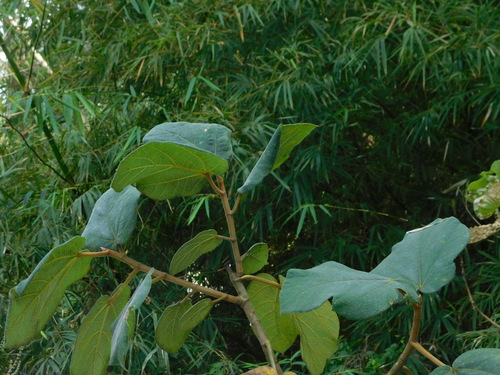
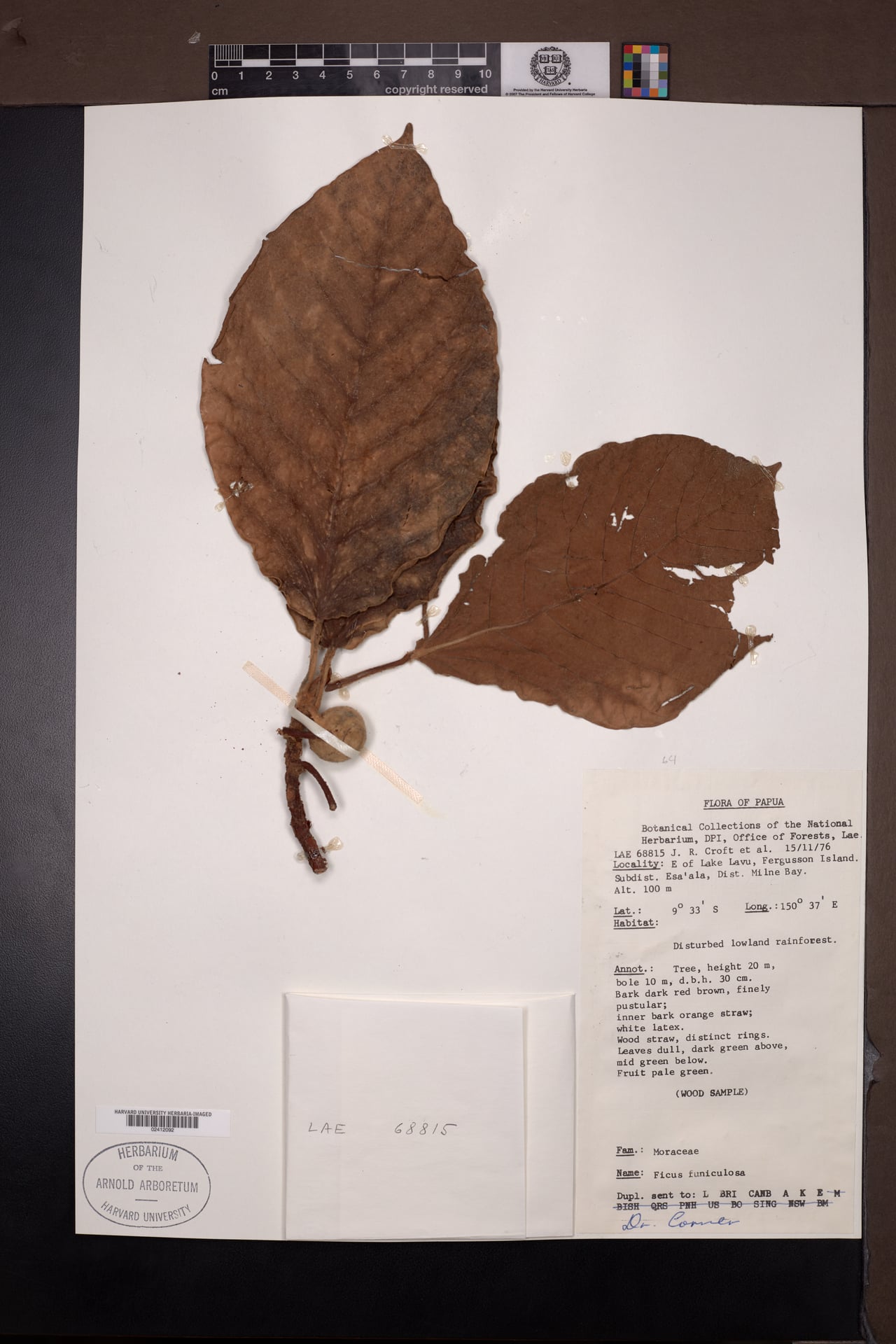
Ficus thonningii
Blume
Common wild fig, Strangler fig
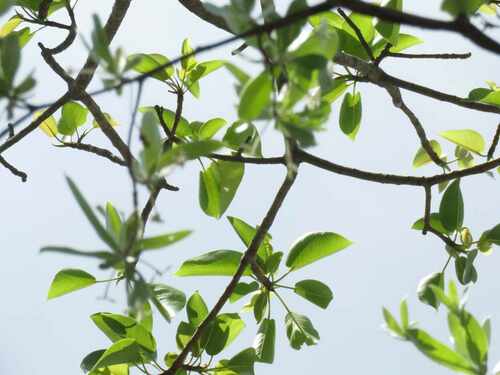
iNaturalist· cc-by-nc-sa
(c) Marco Schmidt, some rights reserved (CC BY-NC-SA)
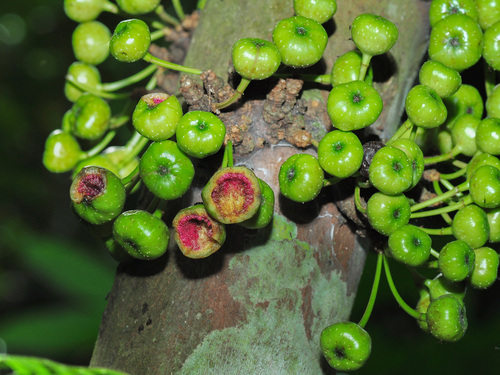
iNaturalist· cc-by-nc
(c) Mitiku Muanenda, some rights reserved (CC BY-NC)
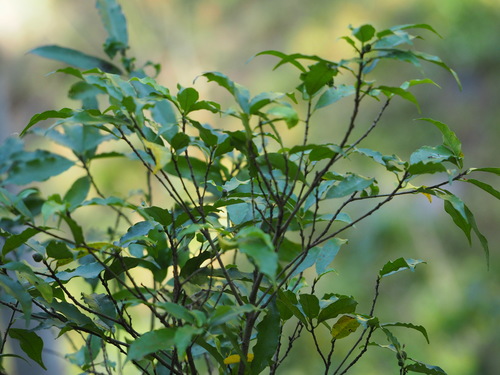
iNaturalist· cc-by-nc
(c) muhammad_salihu, some rights reserved (CC BY-NC)
Summary
Source: WikipediaFicus thonningii is a species of Ficus. It is native to Africa. It is commonly known as Mugumo to the Agikuyu or the Strangler Fig in common English. Recent phylogenetic analysis suggests it may be a species complex. The species has diverse economic and environmental uses across many farming and pastoral communities in Africa. In some dryland areas in Africa for example, it is a very good source of dry season livestock fodder, because it produces highly nutritious foliage in large amounts all year round. Parts of the plant edible for livestock include, leaves, twigs and barks, and their nutritional value varies with season.
Description
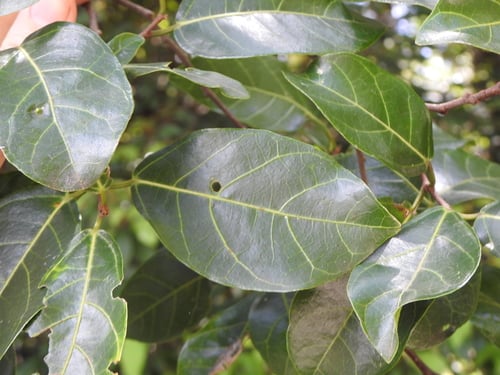
A fig. It is a tree which can lose its leaves during the dry season of the year. It is often a strangler fig on oil palm. It grows up to 12-25 m high. It can grow in soil or attached to other plants. It can be a climber. It can have buttresses or have several stems. The crown is dark and rounded and spreading. The bark is smooth and grey. The leafy twigs are 2-8 mm thick. The leaves are arranged in spirals. The leaves vary. They are often oval. The leaves are 3-12 cm long by 2-6 cm wide. There are 7-12 pairs of side veins. The young leaves are pale and hairy underneath. The fig fruit are about 1 cm across. The fruit often occur in pairs in the axils of the leaves. They become purple-red when ripe.
Edible Uses
The figs are eaten raw, especially by children, and are also used for jams, jellies, and alcoholic drinks. The leaves are eaten raw in salads and are commonly consumed in Senegal.
Traditional Uses
The fig fruit are eaten raw. They are also used for jams and jellies and for alcoholic drinks. The leaves are eaten raw in salads.
This uses section is brief — help expand it
Medicinal Uses
The bark is important in local medicine, and it is used in treating colds, sore throat, dysentery, wounds, constipation, nosebleed and to stimulate lactation. Extracts of the bark are used in baths as a treatment of nervous illnesses, tuberculosis, paralysis and leprosy. The latex is used for wound fever. The milky latex is dropped into the eye to treat cataracts. An infusion of the root and fibre is taken orally to help prevent abortion. The powdered root is taken in porridge to stop nosebleed.
Distribution
A tropical plant. It grows in wet and dry upland forest. It also grows in open grassland, woodland and swamp forest and along rivers. It can be on the edges of mangroves. It grows in the Sahel. It grows in areas with a 700-1800 mm rainfall. It grows in savannah forest often on stony hills in West Africa. It grows between 1,000-2,500 m altitude. It is drought tolerant. It can grow in arid places. It suits hardiness zones 7-9.
Where It Grows
Africa, Angola, Australia, Benin, Botswana, Burkina Faso, Cameroon, Cape Verde, Central Africa, Central African Republic, CAR, Congo DR, Congo R, Djibouti, East Africa, Eritrea, Eswatini, Ethiopia, Ghana, Guinea, Guinée, Guinea-Bissau, Kenya, Madagascar, Malawi, Mali, Mozambique, Namibia, Niger, Nigeria, Rwanda, Sahel, Sao Tome and Principe, Senegal, Sierra Leone, Somalia, South Africa, Southern Africa, South Sudan, Swaziland, Tanzania, Uganda, West Africa, Zambia, Zimbabwe,
Cultivation
It can be grown from seed or from cuttings. The fruit are dried and the seeds removed. As well the fruit can be soaked in cold water for a day then turned inside out to remove the seeds. Cuttings 15 cm long by 1 cm wide are suitable. It can also be grown from large branches 2-3 m long by 10 cm wide.
Propagation
Seed - germinates best at a temperature around 20°c. Air layering. Trees are commonly planted using 20 - 50 cm long cuttings from which most of the leaves have been removed. Rooted cuttings are planted in the nursery and kept moist; but inserting cuttings directly in the field is also feasible. Grows easily from large cuttings that are left in the shade for a few days to dry before planting. River sand should be placed at the bottom of the planting hole, to prevent the bottom of the truncheon from rotting. It grows quickly into a fair-sized tree but is sensitive to cold winds. In the colder regions, young plants must be protected for the first 2-3 years.
Other Uses
Bark cloth is obtained by cutting out a strip or cylinder of bark, which causes the tree to produce a fine, matted covering of red, slender roots over the wound. An excellent cloth. Bark fibre is used for making mats. The twined bark produces a strong rope, which is mostly used for fastening bundles of firewood before they are carried to the homestead for fastening slates onto a roof. A considerable amount of useful latex is produced by the tree. The wood is creamy brown, has a fairly uniform structure, is light (510 kg/cubic m), soft to moderately hard, with a rough texture, tough, strong, easy to work; it finishes smoothly and holds nails firmly. Its durability is low, and it is easily attacked by termites. Branches are used for firewood. Large cuttings can be planted close to each other to form living fences and to help control erosion. The leaf litter helps in the improvement of the nutrient status and water-holding capacity of the soil. The tree has an aggressive root system and should not be planted in a small garden or near buildings, swimming pools or paths.
Production
It is fast growing. Often fruit are infested with insects.
Other Information
The fruit are eaten raw especially by children. The fruit are popular. The leaves are commonly eaten in Senegal.
Notes
There are about 800-1000 Ficus species. They are mostly in the tropics. There are 120 Ficus species in tropical America.
Nutrition
| Part | Moisture | kJ | kcal | Protein | Vit A | Vit C | Iron | Zinc |
|---|---|---|---|---|---|---|---|---|
| Fruit | 77.1 | 318 | 76 | 3 | — | — | 10 | — |
| Fruit | 77.9 | 209 | 50 | 1.3 | — | 2.6 | 1 | 0.3 |
Synonyms
Also Known As
Belene, Bongo, Bupok, Cediya, Chaqerta, Chibeha, Dambi, Di kikilik, Doobaali, Doubaley, Dubalae, Dubale, Ebule, Gerina, Gewone wildevy, Gulgosi, Ibule, I-mara, Kachele, Kanyanguni, Ka pva, Kwonkwia, Lauro, Lodo, Looro, Loro, Mbelen, Mkuu, Mokumo, Moumo, Mugumo, Ndibale, Ndan, Ndubali, Nsanda, Ol-endeti, Ordenai, Oretiti, Pwoo, Shawri-wabi, Tinaita, Uncuine, Wuurdonaa, Yasin
References (58)
- Abbiw, D.K., 1990, Useful Plants of Ghana. West African uses of wild and cultivated plants. Intermediate Technology Publications and the Royal Botanic Gardens, Kew. p 47 (As Ficus iteophylla)
- Achigan-Dako, E, et al (Eds), 2009, Catalogue of Traditional Vegetables in Benin. International Foundation for Science.
- Addis, G., Asfaw, Z & Woldu, Z., 2013, Ethnobotany of Wild and Semi-wild Edible Plants of Konso Ethnic Community, South Ethiopia. Ethnobotany Research and Applications. 11:121-141
- Addis, G., et al, 2013, The Role of Wild and Semi-wild Edible Plants in Household Food Sovereignty in Hamer and Konso Communities, South Ethiopia. Ethnobotany Research & Applications. 11:251-271
- Anywar, G., et al, 2014, Wild Plants Used as Nutraceuticals from Nebbi District, Uganda. European Journal of medicinal Plants. 4(6):641-660
Show all 58 references Hide references
- Asfaw, Z. and Tadesse, M., 2001, Prospects for Sustainable Use and Development of Wild Food Plants in Ethiopia. Economic Botany, Vol. 55, No. 1, pp. 47-62
- Batawila, K., et al, 2007, Diversite et gestion des legumes de cueillete au Togo. African Journal of Food, Agriculture, Nutrition and Development 7( 3& 4): 66
- Burkill, H. M., 1985, The useful plants of west tropical Africa, Vol. 4. Kew. (As Ficus dekdekena)
- Cundall, P., (ed.), 2004, Gardening Australia: flora: the gardener's bible. ABC Books. p 604
- Dalziel, J. M., 1937, The Useful plants of west tropical Africa. Crown Agents for the Colonies London.(As Ficus iteophylla)
- Dharani, N., 2002, Field Guide to common Trees & Shrubs of East Africa. Struik. p 113
- Diarra, N. et al, 2016, Etude ethnobotanique des plantes alimentaires utilisées en période de soudure dans les régions Sud du Mali. Int. J. Biol. Chem. Sci. 10(1): 184-197
- Diouf, M., et al, Leafy Vegetables in Senegal. Bioversity webite (As Ficus iteophylla)
- Emire, A., et al, 2021, Ethnobotanical Study of Wild Edible Fruit Tree and Shrub Species in Adola Rede and Odo Shakiso Midland Districts of Guji Zone, Southern Ethiopia. Int. J. Adv. Res. Biol. Sci. (2021). 8(12): 96-109
- FAO, 1988, Traditional Food Plants, FAO Food and Nutrition Paper 42. FAO Rome p 284
- FAO, 1988, Traditional Food Plants, FAO Food and Nutrition Paper 42. FAO Rome p 282 (As Ficus iteophylla)
- Feyssa, D. H., et al, 2011, Seasonal availability an consumption of wild edible plants in semiarid Ethiopia; Implications to food security and climate change adaptation. Journal of Horticulture and Forestry 3(5): 138-149
- Flora Zambesiaca. http://apps.kew.org/efloras
- Food Composition Tables for use in Africa FAO http://www.fao.org/infoods/directory No. 920 (As Ficus iteophylla)
- Fowler, D. G., 2007, Zambian Plants: Their Vernacular Names and Uses. Kew. p 48 (As Ficus burkei and Ficus dekdekena)
- Gueye, M. & Meissa, D., 2007, Traditional Leafy Vegetables in Senegal: Diversity and medicinal Uses. Afr. J. Trad. CAM (2007) 4 (4): 469 – 475 (Also as Ficus iteophylla)
- Ibrahim, H. A., et al, 2012, Ethnobotanical Survey of the Wild Edible Food Plants Consumption among Local Communities in Kano State, North-Western, Nigeria, International Journal of Science and Technology. Vol. 2. No. 10 p 716
- INFOODS:FAO/INFOODS Databases
- Jardin, C., 1970, List of Foods Used In Africa, FAO Nutrition Information Document Series No 2.p 137 (As Ficus iteophylla)
- Latham, P., 2004, Useful Plants of Bas-Congo province. Salvation Army & DFID p 130
- Long, C., 2005, Swaziland's Flora - siSwati names and Uses http://www.sntc.org.sz/flora/ (As Ficus burkei)
- Lulekal, E., et al, 2011, Wild edible plants in Ethiopia: a review on their potential to combat food insecurity. Afrika Focus - Vol. 24, No 2. pp 71-121
- Mannheimer, C. A. & Curtis. B.A. (eds), 2009, Le Roux and Muller's Field Guide to the Trees and Shrubs of Namibia. Windhoek: Macmillan Education Namibia. p 18
- Maroyi, A. & Cheikhyoussef, A., 2017, Traditional knowledge of wild edible fruit in southern Africa: A comparative use patterns in Namibia and Zimbabwe. Indian Journal of Traditional Knowledge. 16(3): 385-392
- Mashile, S. P., et al, 2019, Indigenous fruit plants species of the Mapulana of Ehlanzeni district in Mpumalanga province, South Africa. South African Journal of Botany 122 (2019) 180–183
- Masters, T., 2021, Traditional food plants of the upper Aswa River catchment of northern Uganda—a cultural crossroads. Journal of Ethnobiology and Ethnomedicine (2021) 17:24
- Maundu, P. et al, 1999, Traditional Food Plants of Kenya. National Museum of Kenya. 288p
- Maydell, H. von, 1990, Trees and shrubs of the Sahel: their characteristics and uses. Margraf. p 281
- Maydell, H. von, 1990, Trees and shrubs of the Sahel: their characteristics and uses. Margraf. p 277 (As Ficus iteophylla)
- Mbuya, L.P., Msanga, H.P., Ruffo, C.K., Birnie, A & Tengnas, B., 1994, Useful Trees and Shrubs for Tanzania. Regional Soil Conservation Unit. Technical Handbook No 6. p 272
- Mengistu, F. & Hager, H., 2008, Wild Edible Fruit Species Cultural Domain, Informant Species Competence and Preference in Three Districts of Amhara Region, Ethiopia. Ethnobotany Research & Applications 6:487-502
- Moksia, F., et al, 2019, Diversity and Socio-Economic Value of Wild Edible Plants in the Mounts Mandara Region, Cameroon. International Journal of Sciences. Vol. 8:10
- Mutie, F. M., et al, 2023, Important Medicinal and Food Taxa (Orders and Families) in Kenya, Based on Three Quantitative Approaches. Plants 2023, 12, 1145
- Ojelel, S., et al, 2019, Wild edible plants used by communities in and around selected forest reserves of Teso-Karamoja region, Uganda. Journal of Ethnobiology and Ethnomedicine (2019) 15:3
- Peters, C. R., O'Brien, E. M., and Drummond, R.B., 1992, Edible Wild plants of Sub-saharan Africa. Kew. p 152
- Purseglove, J.W., 1968, Tropical Crops Dicotyledons, Longmans. p 389
- Regassa, T., et al, 2014, Ethnobotany of Wild and Semi-Wild Edible Plants of Chelia District, West-Central Ethiopia. Science, Technology and Arts Research Journal. 3(4): 122-134
- Roodt, V., 1998, Trees & Shrubs of the Okavango Delta. Medicinal Uses and Nutritional value. The Shell Field Guide Series: Part 1. Shell Botswana. p 25
- Royal Botanic Gardens, Kew (1999). Survey of Economic Plants for Arid and Semi-Arid Lands (SEPASAL) database. Published on the Internet; http://www.rbgkew.org.uk/ceb/sepasal/internet [Accessed 4th May 2011]
- Ruiters-Welcome, A. K., 2019, Food plants of southern Africa. Ph.D. thesis. Univ. of Johannesburg p 80
- Rumphia 2:17. 1838
- Tebkew, M., et al, 2018, Uses of wild edible plants in Quara district, northwest Ethiopia: implication for forest management. Agriculture and Food Security (2018) 7:12
- Tredgold, M.H., 1986, Food Plants of Zimbabwe. Mambo Press. p 101
- van Wyk, B, van Wyk, P, and van Wyk B., 2000, Photographic guide to Trees of Southern Africa. Briza. p 159
- Vivien, J., & Faure, J.J., 1996, Fruitiers Sauvages d'Afrique. Especes du Cameroun. CTA p 222
- von Katja Rembold, 2011, Conservation status of the vascular plants in East African rain forests. Dissertation Universitat Koblenz-Landau p 167
- Wehmeyer, A. S, 1986, Edible Wild Plants of Southern Africa. Data on the Nutrient Contents of over 300 species
- Welcome, A. K. & Van Wyk, B.-E., 2019, An inventory and analysis of the food plants of southern Africa. South African Journal of Botany 122 (2019) 136–179
- White, F., Dowsett-Lemaire, F. and Chapman, J. D., 2001, Evergreen Forest Flora of Malawi. Kew. p 392
- World Checklist of Useful Plant Species 2020. Royal Botanic Gardens, Kew
- www.figweb.org
- www.worldagroforestrycentre.org/treedb/
- www.zimbabweflora.co.zw 2011