Ficus nota
(Blanco) Merrill
Rough-leaved fig
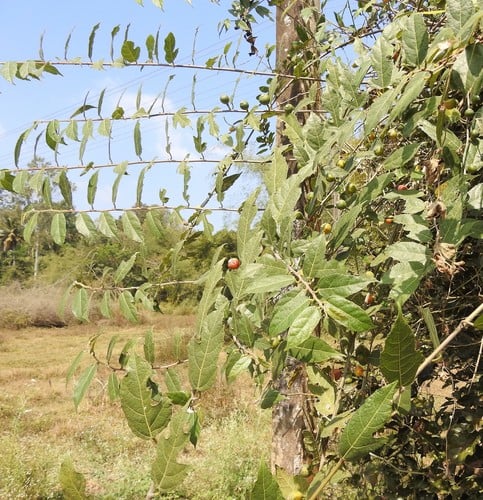
iNaturalist· cc-by-nc
(c) Mark David, some rights reserved (CC BY-NC), uploaded by Mark David
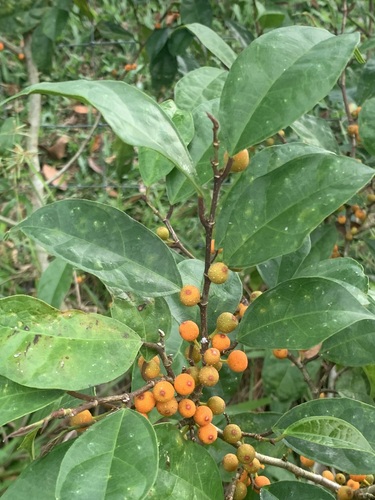
iNaturalist· cc-by-nc
(c) Mark David, some rights reserved (CC BY-NC), uploaded by Mark David
iNaturalist· cc-by-nc
(c) Mark David, some rights reserved (CC BY-NC), uploaded by Mark David
Summary
Source: WikipediaFicus nota is a species of flowering plant in the family Moraceae. It is commonly known as tibig or sacking tree, is a species of fig tree found near water in low altitudes. Tibig is native to the Philippines. They are also found in parts of northern Borneo in Malaysia.The tree can grow up to 9 meters high. It is primarily dispersed by birds which eat the fruits and excrete the seeds. The fruits are also edible to humans, although they are rather bland. They are usually eaten with sugar and cream in the Philippines. The young leaves are also eaten as a vegetable.
Description
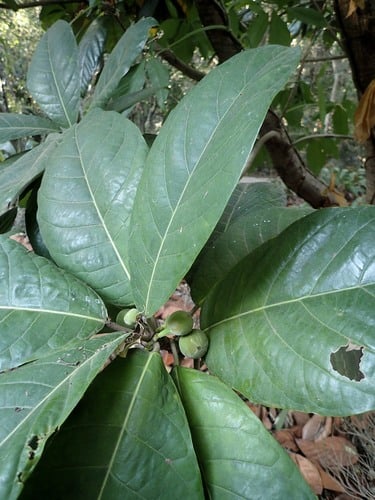
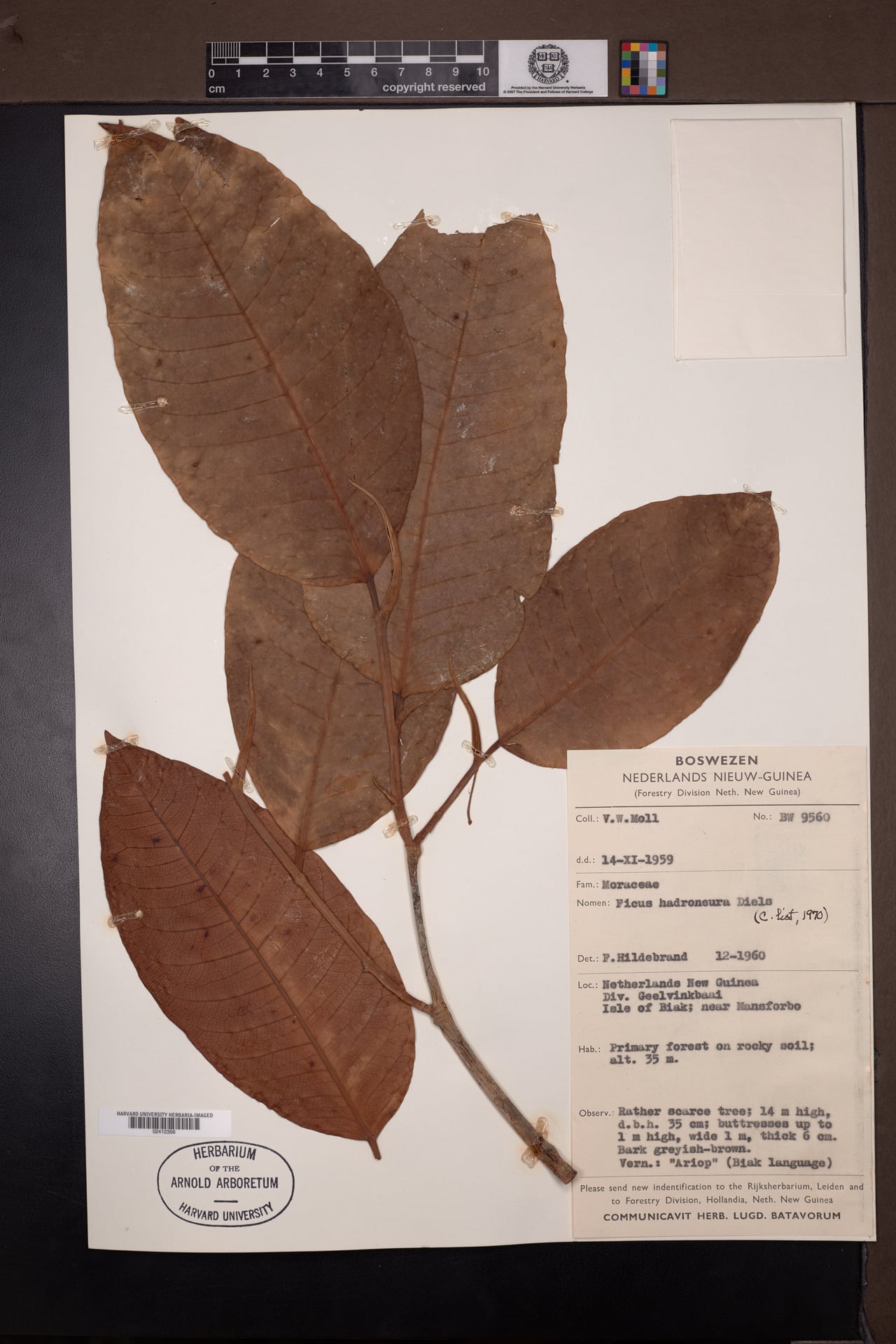
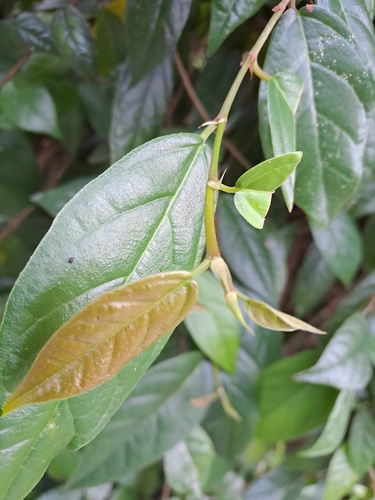
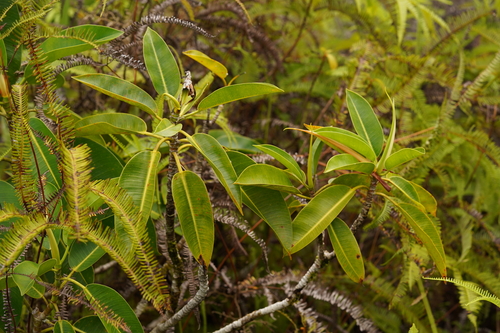
A fig. It is a spreading tree 4 to 8 m high. The leaves are oblong and 15 to 35 cm long by 10 to 12 cm wide. The base of the leaves has rounded lobes which are ear shaped. The figs occur in swollen structures on the trunk and larger branches. They are usually in groups. The fruit is smooth skinned and 2 to 3.5 cm across. They are soft and fleshy when mature.
Edible Uses
The ripe fruit are eaten fresh. Young leaves are cooked as a vegetable. Freshly cut stems yield drinking water.
Traditional Uses
The fruit are eaten when ripe. The young leaves are cooked as a vegetable. The freshly cut stems yield drinking water.
This uses section is brief — help expand it
Distribution
A tropical plant. Occurs in dry woods in grassland areas throughout the islands of the Philippines. Brisbane Botanical Gardens.
Where It Grows
Asia, Australia, Hawaii, Indonesia, Malaysia*, Pacific, Philippines*, SE Asia, USA,
Cultivation
It can be grown by seeds. It can be grown by cuttings.
Production
It flowers throughout the year.
Notes
There are about 800-1000 Ficus species. They are mostly in the tropics. There are 120 Ficus species in tropical America.
Also Known As
Labai, Kik-kik, Tibig
References (8)
- Milow, P., et al, 2013, Malaysian species of plants with edible fruits or seeds and their evaluation. International Journal of Fruit Science. 14:1, 1-27
- Monsalud, M.R., Tongacan, A.L., Lopez, F.R., & Lagrimas, M.Q., 1966, Edible Wild Plants in Philippine Forests. Philippine Journal of Science. p 502
- Philipp. Gov. Lab. Bur. Bull. 17:10. 1904
- Polinag, M. A., 2003, Food from the Wilderness. Department of Environment and Natural Resources. Laguna.
- PROSEA (Plant Resources of South East Asia) handbook, Volume 2, 1991, Edible fruits and nuts.
Show all 8 references Hide references
- Soepadmo, E. and Saw, L. G., 2000, Tree Flora of Sabah and Sarawak. Forestry Malaysia. Volume Three. p 291
- Staples, G.W. and Herbst, D.R., 2005, A tropical Garden Flora. Bishop Museum Press, Honolulu, Hawaii. p 411
- World Checklist of Useful Plant Species 2020. Royal Botanic Gardens, Kew