Ficus superba var. henneana
Miq., (Miq.) Corner
Sandfig, Cedar Fig, Deciduous Fig, Superb Fig
iNaturalist· cc-by-nc
(c) Rene, some rights reserved (CC BY-NC)
iNaturalist· cc-by-nc-sa
(c) Cerlin Ng, some rights reserved (CC BY-NC-SA)
iNaturalist· cc-by-nc
(c) Rene, some rights reserved (CC BY-NC)
Summary
Source: WikipediaFicus superba, also known as sea fig or deciduous fig, is a hemiepiphytic tree of genus Ficus. It is one of the species known as banyans or "strangler figs" because of its potential to grow as a hemi-epiphyte and eventually progress to the strangling habit of species in this subgenus. It is, however, not an obligate hemi-epiphyte and can be found growing as single stemmed trees in forests. It is found in Japan, Taiwan, Australia, and China, as well as various parts of Southeast Asia, such as Thailand, Vietnam, Java, Kalimantan, the Lesser Sunda Islands, Moluccas, Seram Island, and Peninsular Malaysia. According to E.J.H. Corner, if this fig germinates in a boulder field its roots can extend "extraordinary distances, up to several hundred feet" over and between the rocks.
Description
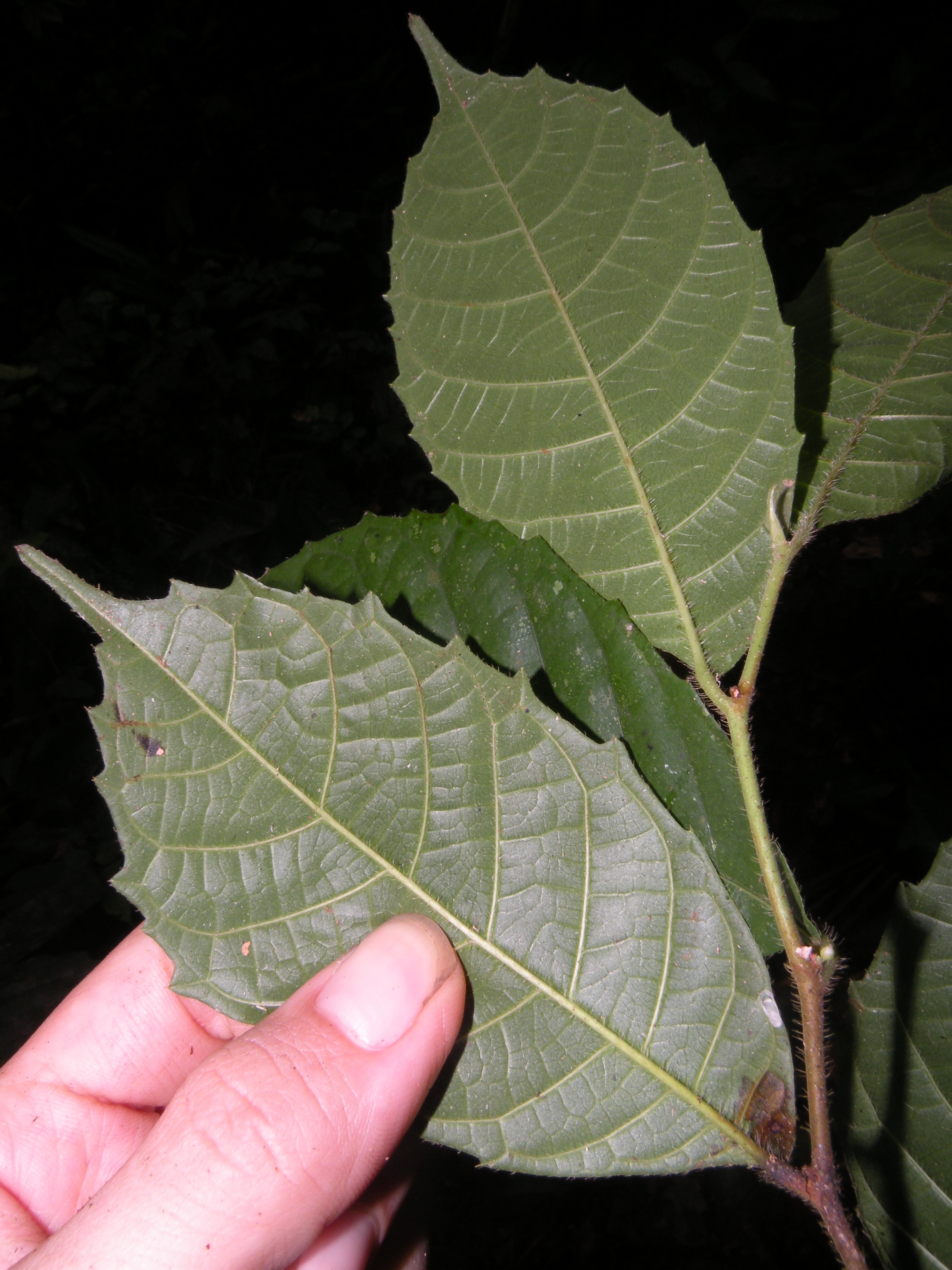
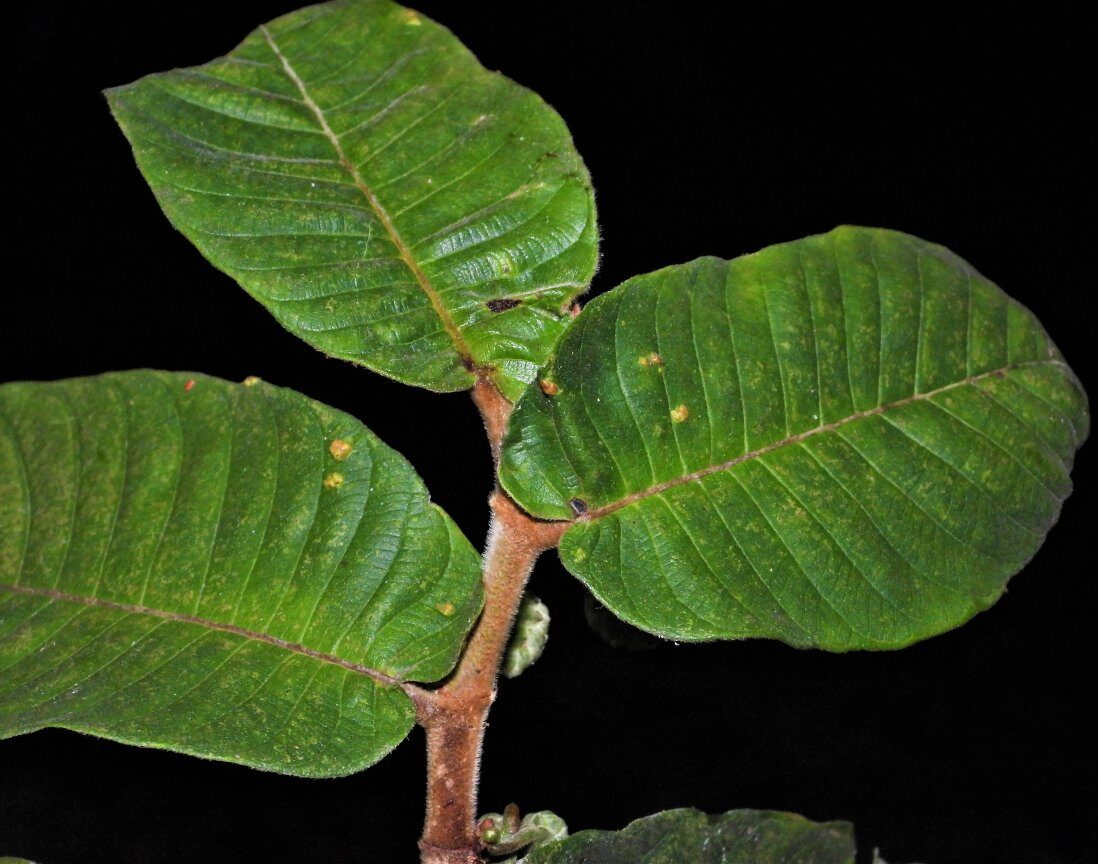
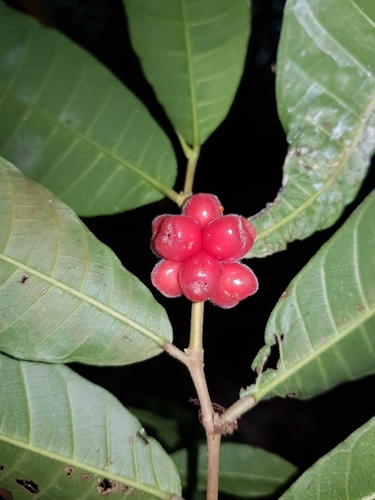
A tree or strangler fig up to 35 m tall. It loses its leaves during the year. The leaves are simple and 7-13 cm long. by 4-8 cm wide. They are smooth. The fruit is 17-25 mm across. They grow singly in the axils of leaves. The fruit ripen from yellow to orange to purple and finally black. They are fleshy. The fruit are edible.
Edible Uses
The young leaves are eaten, and the fruit are edible.
Traditional Uses
The young leaves are eaten.
This uses section is brief — help expand it
Distribution
A tropical plant. They grow in rainforest in Queensland, New South Wales and the Northern Territory in Australia. It needs well drained soil. Adelaide Botanical Gardens.
Where It Grows
Asia, Australia*, Indochina, SE Asia, Vietnam,
Cultivation
Plants can be grown from seed, aerial layers or cuttings. The seed are removed from the fig and mixed with sand before sowing as they are very small. Take the seed from ripe purple fruit.
Notes
There are about 800-1000 Ficus species. They are mostly in the tropics. There are 120 Ficus species in tropical America.
Synonyms
References (15)
- Cooper W & Cooper W T, 1994, Fruits of the Rain Forest. RD Press p 134
- Cooper, W. and Cooper, W., 2004, Fruits of the Australian Tropical Rainforest. Nokomis Editions, Victoria, Australia. p 327
- Cundall, P., (ed.), 2004, Gardening Australia: flora: the gardener's bible. ABC Books. p 604
- Elliot, W.R., & Jones, D.L., 1992, Encyclopedia of Australian Plants suitable for cultivation. Vol 4. Lothian. p 292
- Flora of Australia, Volume 3, Hamamelidales to Casuarinales, Australian Government Publishing Service, Canberra (1989) p 32/33
Show all 15 references Hide references
- Gard. Bull. Singapore 17:376. 1960
- Hibbert, M., 2002, The Aussie Plant Finder 2002, Florilegium. p 102
- Jones D, L, 1986, Ornamental Rainforest Plants in Australia, Reed Books, p 220
- Lazarides, M. & Hince, B., 1993, Handbook of Economic Plants of Australia, CSIRO. p 14
- Levitt, D., 1981, Plants and people. Aboriginal uses of plants on Groote Eylandt. Australian Institute of Aboriginal Studies, Canberra. p 104
- Melzer, R. & Plumb, J., 2011, Plants of Capricornia. Belgamba, Rockhampton. p 210
- Thoa P. T. K., et al, 2013, Biodiversity indices and utilization of edible wild plants: a case study of the Cham Island in Quang Nam Province, Vietnam. Journal of Research in Environmental Science and Toxicology 2(9) :167-174
- Townsend, K., 1994, Across the Top. Gardening with Australian Plants in the tropics. Society for Growing Australian Plants, Townsville Branch Inc. p 215
- Williams, J.B., Harden, G.J., and McDonald, W.J.F., 1984, Trees and shrubs in rainforests of New South Wales and Southern Queensland. Univ. of New England, Armidale. p 66
- Yunupinu Banjgul, Laklak Yunupinu-Marika, et al. 1995, Rirratjinu Ethnobotany: Aboriginal Plant Use from Yirrkala, Arnhem Land, Australia. Northern Territory Botanical Bulletin No 21. Parks and Wildlife Commission of the Northern Territory. p 42.