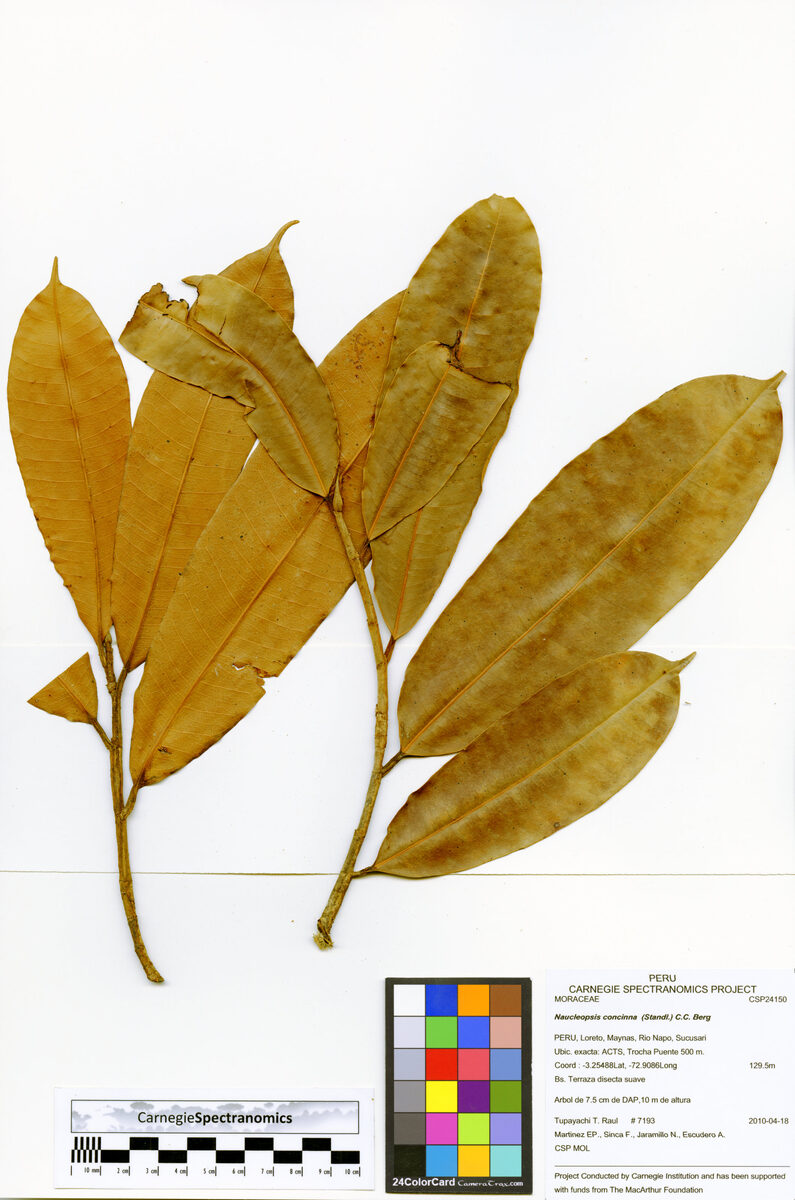
Ficus storckii
Seem
Losilosi, Raranga
gbif· cc-by
The New York Botanical Garden
gbif· cc-by
The New York Botanical Garden
Description
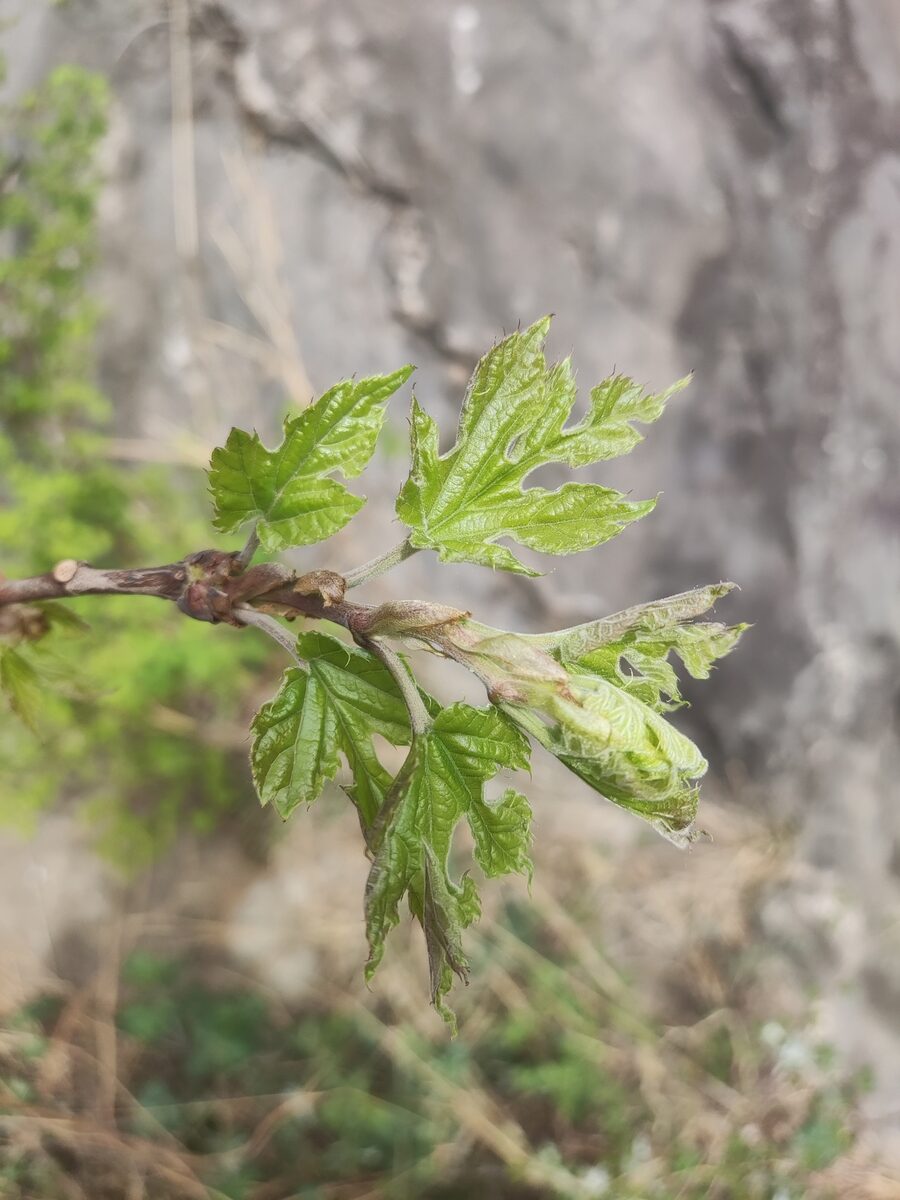
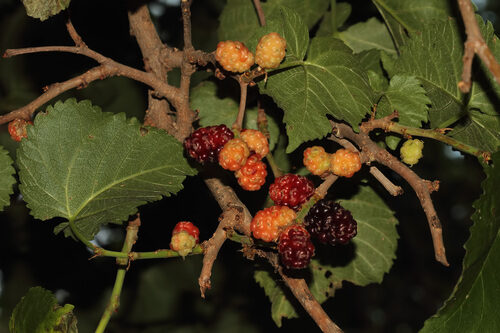
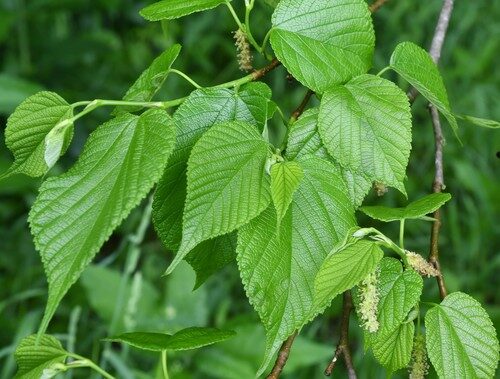
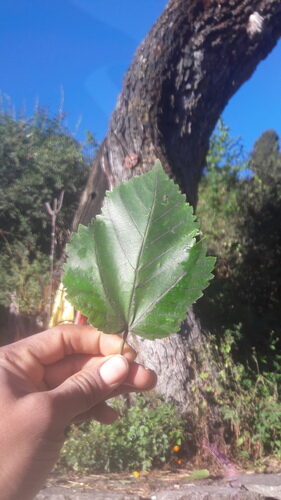
A fig. It is a small tree up to 7 m tall. The trunk is crooked. The young growth is slightly hairy. The leaves are alternate and tapering to a long point with the base rounded. They are up to 15 cm long and 6 cm wide and with three nerves spreading out. The leaves have small teeth around the edge. The leaf stalks are 2-3 cm long. The fruit is round and 1 cm across. They are clustered along the stem. They are dull red.
Edible Uses
Young leaves - cooked and eaten as a vegetable. There is a single record of this use. The edible fruit of this specie of ficus is often at first yellow, and then changes to a bright orange, red, or purple, to 15mm.
Traditional Uses
The leaf is eaten raw. It is sweet.
This uses section is brief — help expand it
Distribution
A tropical plant. They occur in Tonga and Fiji.
Where It Grows
Fiji, Niue, Pacific, Rotuma, Solomon Islands, Tonga, Vanuatu,
Cultivation
Ripe fruits are produced all year round. Fig trees have a unique form of fertilization, each species relying on a single, highly specialized species of wasp that is itself totaly dependant upon that fig species in order to breed. The trees produce three types of flower; male, a long-styled female and a short-styled female flower, often called the gall flower. All three types of flower are contained within the structure we usually think of as the fruit. The female fig wasp enters a fig and lays its eggs on the short styled female flowers while pollinating the long styled female flowers. Wingless male fig wasps emerge first, inseminate the emerging females and then bore exit tunnels out of the fig for the winged females. Females emerge, collect pollen from the male flowers and fly off in search of figs whose female flowers are receptive. In order to support a population of its pollinator, individuals of a Ficus spp. must flower asynchronously. A population must exceed a critical minimum size to ensure that at any time of the year at least some plants have overlap of emmission and reception of fig wasps. Without this temporal overlap the short-lived pollinator wasps will go locally extinct.
Other Uses
The leaves have a rough surface and are sometimes used as a substitute for sandpaper and for scouring pots and pans. The bark is fibrous. We have no specific information for this species, but the fibre is likely to be used for making cordage, possibly cloth and maybe also to make tapa bark cloth. The fibrous branches used to clean teeth. The leaves of some species are used to wrap food for cooking. The wood of plants in this genus is usually of low quality, light in weight, soft and not very durable. It is sometimes used for purposes such as light construction, digging sticks, yam stakes, etc. The wood is also used for fuel and sometimes for making fire by friction.
Notes
2 varieties occur. There are about 800-1000 Ficus species. They are mostly in the tropics. There are 120 Ficus species in tropical America.
Also Known As
Masimasi, Mati pau, Nunu
References (5)
- Altschul, S.V.R., 1973, Drugs and Foods from Little-known Plants. Notes in Harvard University Herbaria. Harvard Univ. Press. Massachusetts. no. 734
- French, B.R., 2010, Food Plants of Solomon Islands. A Compendium. Food Plants International Inc. p 83
- Lebot, V. & Sam, C., Green desert or ‘all you can eat’? How diverse and edible was the flora of Vanuatu before human introductions?. Terra australis 52 p 408
- Smith, A.C., 1981, Flora Vitiensis Nova: A New flora of Fiji, Hawai Botanical Gardens, USA Vol 2 p 181
- Yuncker, T.G., 1959, Plants of Tonga, Bernice P. Bishop Museum, Hawaii, Bulletin 220. p 101