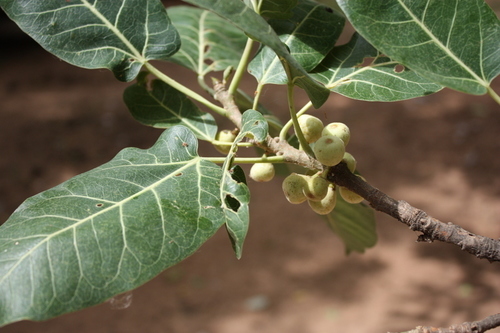
Ficus racemosa
L.
Cluster Fig, Redwooded fig
wikimedia· cc-by-sa
Vanitaiitd (via Wikimedia Commons)
wikimedia· cc-by-sa
Vinayaraj (via Wikimedia Commons)
wikimedia· cc-by-sa
Vickey Chauhan (via Wikimedia Commons)
iNaturalist· cc-by-nc
(c) susanneleonhartsberger, some rights reserved (CC BY-NC)
iNaturalist· cc-by-nc
(c) susanneleonhartsberger, some rights reserved (CC BY-NC)
iNaturalist· cc-by-nc
(c) susanneleonhartsberger, some rights reserved (CC BY-NC)
Summary
Source: WikipediaFicus racemosa, the cluster fig, red river fig or gular (Hindi: गूलर), is a species of plant in the mulberry family Moraceae. It is native to tropical Asia and Australia. It is a fast-growing plant with large, very coarse leaves, attaining the size of a large shrub or even larger in old specimens. A distinctive feature of its growth habit is the cauliflorous nature of its fruiting, where the syconia (figs) grow in dense clusters directly from the trunk and larger branches. The ripe figs are a favourite food of the rhesus macaque, and the plant also serves as a host for the caterpillars of the two-brand crow butterfly (Euploea sylvester) of northern Australia. The species is of cultural importance in Hinduism and Buddhism. The tree is also important to native people of Borneo such as in Sabah, Malaysia, where it is called Nunuk Ragang.
Description
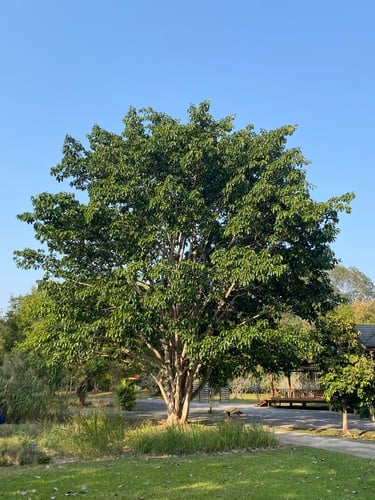
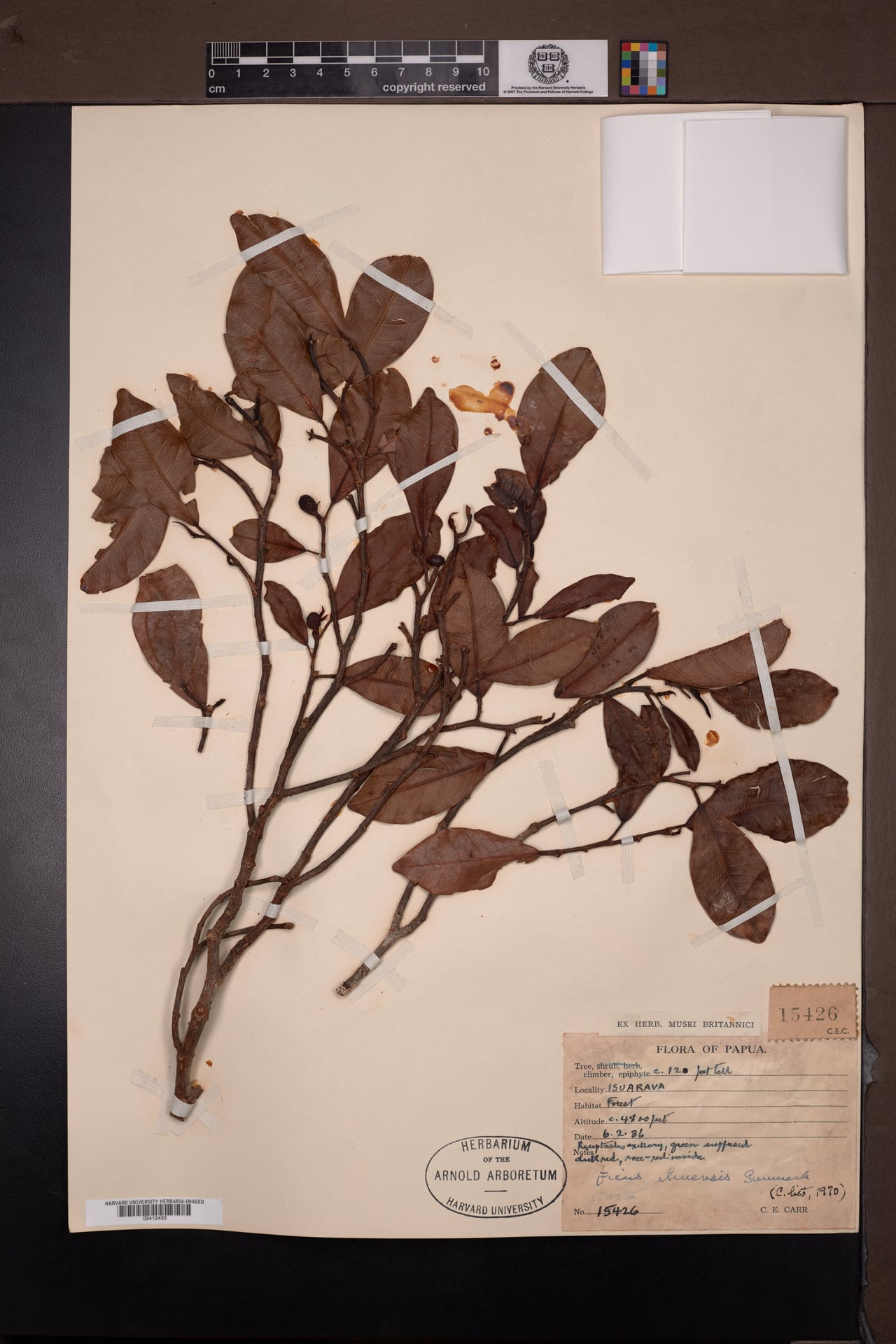
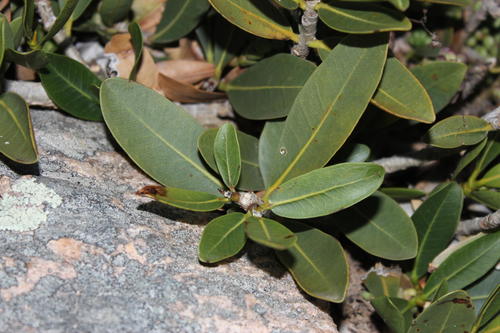
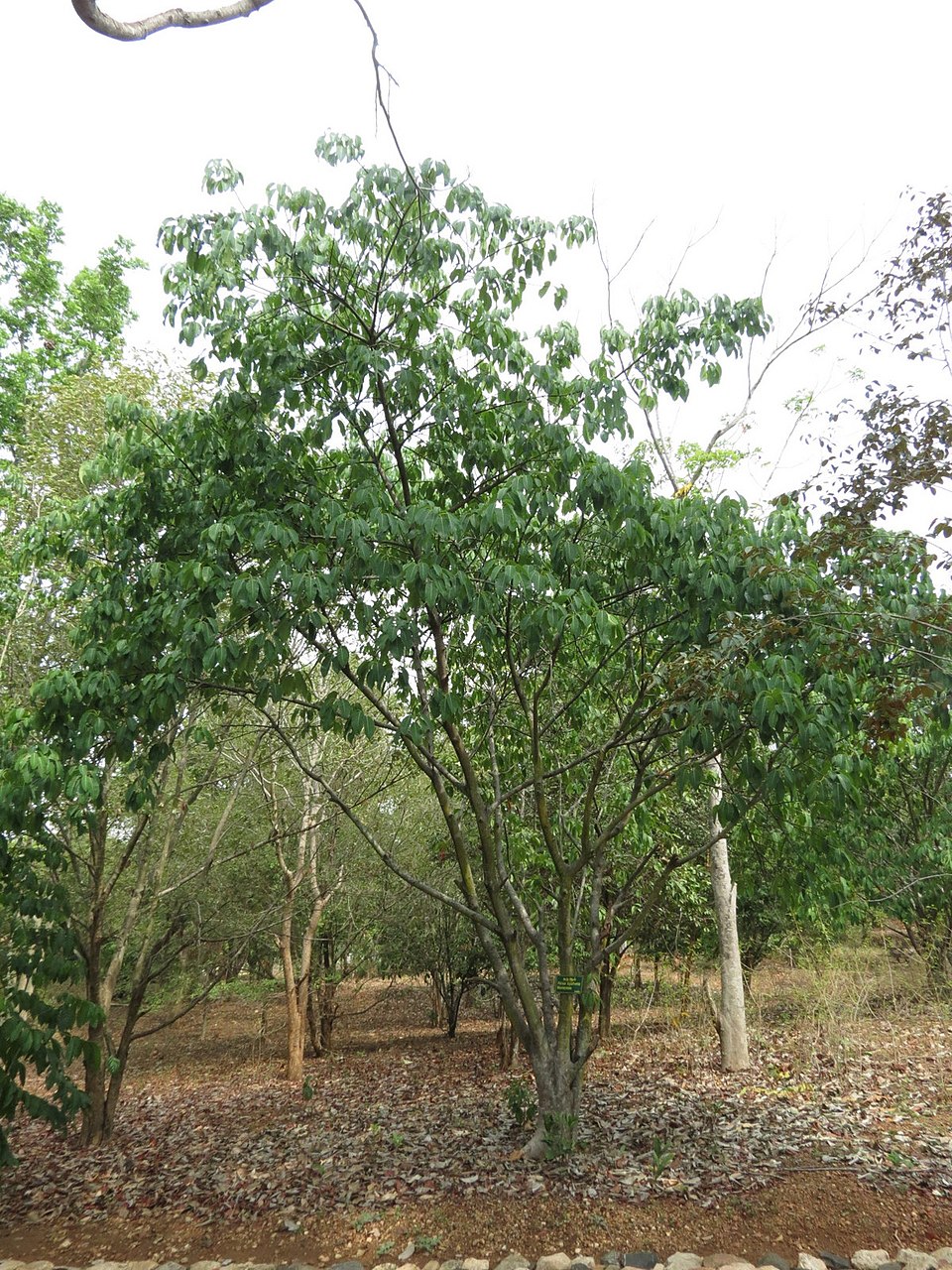
A fig. It is an medium sized evergreen spreading tree. Plants can loose many leaves during the dry season. It grows to 12-20 m high and spreads to 5-10 m across. The trunk can be 60-90 cm across. The stem is erect and branching. There are often buttresses at the base. The bark is smooth and pale grey. It does not have aerial or strangling roots. The leaves are produced alternately. They are oval and taper towards the tip. They are 7-22 cm long and 3-9 cm across. The leaf stalk is 1-6 cm long. Flowers are very small and male and female flowers are enclosed in the fig receptacle. The fruit are large fleshy yellow and red figs. They are 5 cm across. They occur in dense clusters on the trunk and main branches. They are velvety when young and become smooth with age. When ripe they often split open. There are some varieties named based on the hairiness of the young parts. The figs are edible.
Edible Uses
The fruit, up to 25mm in diameter, is eaten raw or cooked. It is sweet but rather insipid and is used in various preserves and side dishes. Unripe fruits are pickled and used in soups. The fruit can also be dried and ground into a flour, then eaten with sugar and milk, and powder from roasted fruits makes a valuable breakfast food. In times of scarcity, unripe fruit is pounded, mixed with flour, and made into cakes. Leaves are eaten as a vegetable, and young shoots can be eaten raw or cooked. The roots can be cut to provide a drinkable liquid used as water.
Traditional Uses
The ripe fruit are eaten fresh. The fruit are usually eaten green as a vegetable. They are also dried and ground into flour and eaten with sugar and milk. The powder from roasted fruits are used as a breakfast cereal. The young leaves are eaten in salads. They are also cooked. The fruit are also used for jam.
Medicinal Uses
The leaves are used in the treatment of diarrhoea. The bark is astringent and is used for haematuria, menorrhagia, and haemoptysis; the fruit is similarly astringent and used for the same conditions. Fruit filled with sugar is considered very cooling. Liquid from cut roots is regarded as a powerful tonic when drunk over several consecutive days. The sap is applied locally in the Bombay region as a remedy for mumps and other inflammatory glandular enlargements, and is also used in the treatment of gonorrhoea. The root is chewed as a treatment for tonsillitis.
Known Hazards
The sap is poisonous and should not be ingested, it can also cause skin irritations so wear gloves when pruning and if you get sap on your skin rinse off immediately with water.
Distribution
It is a tropical plant. It does best in humus rich, moist soil. It needs to be well drained. It suits a sheltered sunny position. It is damaged by drought and frost. It occurs naturally along the banks of lowland freshwater streams in the monsoonal vine forests. It can cope with being flooded for short periods. In Nepal it grows up to 1000 m altitude. In Sikkim it grows between 400-1,000 m above sea level. It suits hardiness zones 9-12. In Yunnan.
Where It Grows
Africa, Andamans, Asia, Australia, Bangladesh, Bhutan, Cambodia, China, East Africa, East Timor, Egypt, Ethiopia, Hawaii, Himalayas, India, Indochina, Indonesia, Laos, Malaysia, Myanmar, Nepal, North Africa, Northeastern India, Pacific, Pakistan, Papua New Guinea, PNG, SE Asia, Sikkim, Singapore, Sri Lanka, Taiwan, Thailand, Timor-Leste, USA, Vietnam,
Cultivation
Succeeds in full sun to partial shade. Succeeds in most soils that are reasonably moist but well-drained. Cluster fig is resistant to fire. Fig trees have a unique form of fertilization, each species relying on a single, highly specialized species of wasp that is itself totaly dependant upon that fig species in order to breed. The trees produce three types of flower; male, a long-styled female and a short-styled female flower, often called the gall flower. All three types of flower are contained within the structure we usually think of as the fruit. The female fig wasp enters a fig and lays its eggs on the short styled female flowers while pollinating the long styled female flowers. Wingless male fig wasps emerge first, inseminate the emerging females and then bore exit tunnels out of the fig for the winged females. Females emerge, collect pollen from the male flowers and fly off in search of figs whose female flowers are receptive. In order to support a population of its pollinator, individuals of a Ficus spp. Must flower asynchronously. A population must exceed a critical minimum size to ensure that at any time of the year at least some plants have overlap of emmission and reception of fig wasps. Without this temporal overlap the short-lived pollinator wasps will go locally extinct.
Propagation
Seed germinates best at around 20°C. Propagation is also possible by air layering or tip cuttings approximately 4–12cm long, taken from lateral branches.
Other Uses
The tree is cultivated to shade coffee trees. Its deep, wide-spreading root system makes it useful for stabilising slopes, gullies, and riverbanks. The leaves provide a valuable mulch. The plant is used as a rootstock for the common fig, Ficus carica. The bark contains tannin. The latex is used in producing water-resistant paper and as a plasticiser for Hevea rubber. The straw-coloured wood is coarse-grained, lightweight, soft, and porous — not durable above ground, though it lasts well under water and is therefore used for well frames. It serves low-quality purposes such as minor construction, cheap furniture, packing cases, mouldings, laundry tubs, and fruit crates. The wood is also used as fuel.
Production
In Australia, fruiting is mainly June to December but can be at other times. In India fruiting is March to August. A tree can produce 100 kg of fruit.
Other Information
The fruit are eaten especially by children. The leaves are sold in local markets.
Notes
There are about 800-1000 Ficus species. They are mostly in the tropics. There are 120 Ficus species in tropical America. Fruit are rich in calcium.
Nutrition
| Part | Moisture | kJ | kcal | Protein | Vit A | Vit C | Iron | Zinc |
|---|---|---|---|---|---|---|---|---|
| Fruit | 81.9 | 351 | 84 | 1.3 | — | 1 | 1.3 | 0.3 |
| Leaves | 85.2 | 147 | 35 | 3.7 | — | 17 | — | — |
Synonyms
Also Known As
Adam, Adumbra, Alarva, Anai, Anjir, Anmanarlinj, Arah, Athi, Attikka, Attimara, Batbar, Bedulo, Blue fig, Channahei, Co dua, Country fig, Cowarah, Crattock, Daduri, Dermi, Dimere, Dimeri, Dimiri, Dhumbru khausa, Dumbre, Dumri, Dumur, Elo, Ge long bie biu, Goolar, Gular, Gullar, Guo de, Jagadumur, Jagana gulo, Jagga damur, Jagya dimoru, Jagya dumur, Jatkala, Jogdumur Ju guo rong, Konangsing, Lelka, Loa, Loa dari, Lo, Loh, Lovear, Lovie thom, Madier, Maduea-uthumpon, Mo luo si, Ongu, Oormal, Oremal, Palak, Pale, Paroa, Pohon ara kalimera, Red river fig, Redwood fig, Rumbal, Stem-fruit fig, Sung, Tak:piang, Tang bule, Tha-phan, Thathesu, Theichang, Thei-chek, Thei thot, Toya, Trimbal, Umar, Umbar, Umber, Umri, Uvring, Plaksha, Kahimal, Kaim, Keol, Pakar, Pakur, Bassari, Dhedumbara, Gandhaumbara, Pepri, Badijuvvi, Jati, Jovi, Kallal, Kurugatti, Suvi, Basari, Juvvi, Kari-basari, Bakri, Chakkila, Chela
References (146)
- Abdel-Hameed, E. S., 2009, Total phenolic contents and free radical scavenging activity of certain Egyptian Ficus species leaf samples. Food Chemistry 114: 1271-1277 (As Ficus glomerata)
- Acharya K. P. and Acharya, R., 2010, Eating from the Wild: Indigenous knowledge on wild edible plants in Parroha VDC of Rupandehi District, Central Nepal. International Journal of Social Forestry. 3(1):28-48
- Ajesh, T. P., et al, 2012, Ethnobotanical Documentation of Wild Edible Fruits used by Muthuvan Tribes of Idukki, Kerala-India. International Journal of Pharma and Bio Sciences 3(3): 479-487
- Ambasta, S.P. (Ed.), 2000, The Useful Plants of India. CSIR India. p 223 (As Ficus lanceolata and Ficus lucescens)
- Anderson, E. F., 1993, Plants and people of the Golden Triangle. Dioscorides Press. p 211
Show all 146 references Hide references
- Angami, A., et al, 2006, Status and potential of wild edible plants of Arunachal Pradesh. Indian Journal of Traditional Knowledge 5(4) October 2006, pp 541-550 (As Ficus glomerata)
- Arinathan, V., et al, 2007, Wild edibles used by Palliyars of the western Ghats, Tamil Nadu. Indian Journal of Traditional Knowledge. 6(1) pp 163-168
- Arora, K., Indigenous Forest Management in the Andaman and Nicobar Islands, India.
- Anon., 2003, Native Plants for the Fitzroy basin. Society for Growing Australian Plants Inc. (Rockhampton Branch) p 56
- Ashton, M. S., et al 1997, A Field Guide to the Common Trees and Shrubs of Sri Lanka. WHT Publications Ltd. pdf p 280
- Baishya, S. Kr., et al, 2013, Survey of Wild Edible Fruits of Dhubri District, Assam, India. Plant Archives Vol 13 (1): 155-158
- Bajpai, O., et al, 2015, Tree species of the Himalayan Terai region of Uttar Pradesh, India: a checklist. Check List 11(4): 1718
- Bandyopadhyay, S. et al, 2009, Wild edible plants of Koch Bihar district, West Bengal. Natural Products Radiance 8(1) 64-72
- Bandyopadhyay, S., et al, 2012, A Census of Wild Edible Plants from Howrah District, West Bengal, India. Proceedings of UGC sponsored National Seminar 2012
- BARC, 2016, State of Biodiversity for Food and Agriculture in Bangladesh. Bangladesh Agricultural Research Council.
- Barkatullah, et al, 2009, Ethnobotanical studies of plants of Charkotli Hills, Batkhela District, Malakand, Pakistan. Front. Biol. China 2009, 4(4): 539–548
- Barkatullah and Ibrar, M., 2011, Plants profile of Malakand Pass Hills, District Malakand, Pakistan. African Journal of Biotechnology Vol. 10 (73) pp. 16521-16535
- Barwick, M., 2004, Tropical and Subtropical Trees. A Worldwide Encyclopedic Guide. Thames and Hudson p 186
- Basha, S. K. M., Ethnobotanical Trees of Sri Lanka Malleswara Wildlife Sanctuary; Eastern Ghats, Andhra Pradesh.
- Bhatia, H., et al, 2018, Traditionally used wild edible plants of district Udhampur, J&K, India. Journal of Ethnobiology and Ethnomedicine (2018) 14:73
- Bohra, N., et al, 2017, Ethnobotany of wild edible plants traditionally used by the local people in the Ramnagar regions from Nainital District, Uttarakhand, India. Biolife 5(1): 12-19
- Bijdr. 444. 1825 (As Ficus lucescens)
- Bodkin, F., 1991, Encyclopedia Botanica. Cornstalk publishing, p 473
- Bole, P.V., & Yaghani, Y., 1985, Field Guide to the Common Trees of India. OUP p 49 (As Ficus glomerata)
- Brahma, S., et al, 2013, Wild edible fruits of Kokrajhar district of Assam, North-East India, Asian Journal of Plant Science and Research 3(6):95-100
- Brock, J., 1993, Native Plants of Northern Australia, Reed. p 189
- Calvert, G., 2010, The Burdekin Delta Tree Guide. Lower Burdekin Landcare Association., Inc., Ayr p 81
- Cao, Y., et al, 2020, Ethnobotanical study on wild edible plants used by three trans-boundary ethnic groups in Jiangcheng County, Pu’er, Southwest China. Journal of Ethnobiology and Ethnomedicine (2020) 16:66
- Cengel, D. J. & Dany, C., (Eds), 2016, Integrating Forest Biodiversity Resource Management and Sustainable Community Livelihood Development in the Preah Vihear Protected Forest. International Tropical Timber Organization p 121
- Chandrakumar, P., et al, 2015, Ethnobotanical studies of wild edible plants of Gond, Halba and Kawar tribes of Salekasa Taluka, Gondia District, Maharashtra State, India. International Research Journal of Pharmacy 6(8)
- Chowdery, T., et al, 2014, Wild edible plants of Uttar Dinajpur District, West Bengal. Life Science Leaflets. 47:pp 20-36 http://lifesciencesleaflets.ning.com
- Cooper, W. and Cooper, W., 2004, Fruits of the Australian Tropical Rainforest. Nokomis Editions, Victoria, Australia. p 326
- Cowie, I, 2006, A Survey of Flora and vegetation of the proposed Jaco-Tutuala-Lore National Park. Timor-Lests (East Timor) www.territorystories.nt/gov.au p 51
- Crawford, I. M., 1982, Traditional Aboriginal Plant Resources in the Kalumburu Area: Aspects in Ethno-economics. Records of the Western Australian Museum Supplement No. 15
- Cribb, A.B. & J.W., 1976, Wild Food in Australia, Fontana. p 35
- Dangol, D. R. et al, 2017, Wild Edible Plants in Nepal. Proceedings of 2nd National Workshop on CUAOGR, 2017.
- Devarkar, V. D., et al, 2011, Dietary and Medicinal Significance of Wild Vegetables from Osmanabad Region, Maharashtra (India). Life sciences Leaflets 11:317-332.
- Eiadthong, W., et al, 2010, Management of the Emerald Triangle Protected Forests Complex. Botanical Consultant Technical Report. p 49
- Elliot, W.R., & Jones, D.L., 1992, Encyclopedia of Australian Plants suitable for cultivation. Vol 4. Lothian. p 290
- Engel, D.H., & Phummai, S., 2000, A Field Guide to Tropical Plants of Asia. Timber Press. p 103
- Facciola, S., 1998, Cornucopia 2: a Source Book of Edible Plants. Kampong Publications, p 155
- Flora of Australia, Volume 3, Hamamelidales to Casuarinales, Australian Government Publishing Service, Canberra (1989) p 52, 51
- Flora of China @ efloras.org Volume 5
- Flora of Pakistan. www.eFloras.org
- Forest Inventory and Planning Institute, 1996, Vietnam Forest Trees. Agriculture Publishing House p 551
- Garde, M., et al, 2003, A Preliminary List of Kundedjnjenghmi Plant Names. Northern Land Council. (Arnhem Land, Australia)
- Gautam, R. S., et al, 2020, Wild Edible Fruits of Nepal. Int. J. Appl. Sci. Biotechnol. Vol 8(3): 289-304
- Haj, F., et al, 2012, Species Diversity and Ethno Botanical Classes of the Flora of Allai Valley District Battagram Pakistan. International Journal of Plant Research 2012, 2(4): 111-123
- Hall, N. et al, 1972, The Use of Trees and Shrubs in the Dry Country of Australia, AGPS, Canberra. p 207
- Hamayun, M., Ethnobotanical Studies of some Useful Shrubs and Trees of District Buner, NWFP, Pakistan
- Hazarika, B. et al. (2020). An overview of the unexplored underutilized fruit crops of Assam, India. Journal of Applied and Natural Science, 12(3): 442 - 453.
- Hibbert, M., 2002, The Aussie Plant Finder 2002, Florilegium. p 102
- Hiddins, L., 1999, Explore Wild Australia with the Bush Tucker Man. Penguin Books/ABC Books. p 135
- Hinton, B & B., 1982, A Wilderness in Bloom. Wildflowers of tropical Australia. p 52
- Hoare, A., 2003, Food use of the Lundayeh SW Sabah. Borneo Research Council. (As var. elongata)
- Hossain, U. & Rahman, A., 2018, Study and quantitative analysis of wild vegetable floral diversity available in Barisal district, Bangladesh. Asian J. Med. Biol. Res. 2018, 4 (4), 362-371
- Jackes, B.R., 2001, Plants of the Tropics. Rainforest to Heath. An Identification Guide. James Cook University. p 66
- Jeeva, S., 2009, Horticultural potential of wild edible fruits used by the Khasi tribes of Meghalaya. Journal or Horticulture and Forestry Vol. 1(9) pp. 182-192 (As Ficus lanceolata)
- Jones D, L, 1986, Ornamental Rainforest Plants in Australia, Reed Books, p 220, 340
- Kachenchart, B., et al, 2008, Phenology of Edible Plants at Sakaerat Forest. In Proceedings of the FORTROP II: Tropical Forestry Change in a Changing World. Bangkok, Thailand.
- Kar, A., et al, 2013, Wild Edible Plant Resources used by the Mizos of Mizoram, India. Kathmandu University Journal of Science, Engineering and Technology. Vol. 9, No. 1, July, 2013, 106-126
- Khan, D. & Shaukat, S.S., 2006, The Fruits of Pakistan: Diversity, Distribution, Trends of Production and Use. Int. J. Biol. Biotech., 3(3):463-499
- Khumgratok, S., Edible Plants in Cultural Forests of Northeastern Thailand. Mahasarakham University Thailand.
- Kiran, K. C., et al, 2019, Diversity and Seasonal Availability of Potential Wild Edible Plants from Vidarbha Region of Maharashtra State, India. Int.J.Curr.Microbiol.App.Sci (2019) 8(2): 1434-1446
- Krishen P., 2006, Trees of Delhi, A Field Guide. DK Books. p 56
- Kunwar, R.M. & Bussmann, R. W., 2006, Ficus (Fig) species in Nepal: a review of diversity and indigenous uses. Lyonia 11(1)
- Lazarides, M. & Hince, B., 1993, Handbook of Economic Plants of Australia, CSIRO. p 114
- Liu, Yi-tao, & Long, Chun-Lin, 2002, Studies on Edible Flowers Consumed by Ethnic Groups in Yunnan. Acta Botanica Yunnanica. 24(1):41-56
- Llamas, K.A., 2003, Tropical Flowering Plants. Timber Press. p 278
- Low, T., 1991, Wild Food Plants of Australia. Australian Nature FieldGuide, Angus & Robertson. p 82
- Low, T., 1992, Bush Tucker. Australia’s Wild Food Harvest. Angus & Robertson. p 6, 63
- Maheshwari, J.K., & Singh, J.P., 1984, Contribution to the Ethnobotany of Bhoxa Tribe of Bijnor and Pauri Garhwal Districts, U.P. J. Econ. Tax. Bot. Vol.5. No.2 pp 253-
- Majumdar, K and Datta, N., 2009, Traditional wild edible fruits for the forest dwellers of Tripura, India. Pleione 3(2) 167-178
- Manandhar, N.P., 2002, Plants and People of Nepal. Timber Press. Portland, Oregon. p 234
- Manju, S., and Sundriyal, R. C., 2001, Wild Edible Plants of the Sikkim Himalaya: Nutritive Values of Selected Species. Economic Botany 55(3): 377-390 (As Ficus glomerata)
- Martin, F.W. & Ruberte, R.M., 1979, Edible Leaves of the Tropics. Antillian College Press, Mayaguez, Puerto Rico. p 206
- Martin, M.A., 1971, Introduction L'Ethnobotanique du Cambodge. Centre National de la Recherche Scientifique. Paris.
- McMakin, P.D., 2000, Flowering Plants of Thailand. A Field Guide. White Lotus. p 56
- Medhi, P. & Borthakur, S. K., 2012, Phytoresources from North Cachur Hills of Assam -3: Edible plants sold at Hflong market. Indian Journal of Natural Products and Resources. 3(1) pp 84-109
- Medhi, P., Sarma, A and Borthakur, S. K., 2014, Wild edible plants from the Dima Hasao district of Assam, India. Pleione 8(1): 133-148
- Mehta, P. S. et al, 2010, Native plant genetic resources and traditional foods of Uttarakhand Himalaya for sustainable food security and livelihood. Indian Journal or Natural products and Resources. Vol 1(1), March 2010 pp 89-96 (As Ficus glomerata)
- Meitei, L. R., et al, 2022, An ethnobotanical study on the wild edible plants used by forest dwellers in Yangoupokpi Lokchao Wildlife Sanctuary, Manipur, India. Ethnobotany Research and Application 23:15
- Melzer, R. & Plumb, J., 2011, Plants of Capricornia. Belgamba, Rockhampton. p 208
- Milson. J., 2000, Trees and Shrubs of north-west Queensland. DPI p 174
- Milow, P., et al, 2013, Malaysian species of plants with edible fruits or seeds and their evaluation. International Journal of Fruit Science. 14:1, 1-27
- Misra S. & Misra M., 2016, Ethnobotanical and Nutritional Evaluation of Some Edible Fruit Plants of Southern Odisha, India. International Journal of Advances in Agricultural Science and Technology, Vol.3 Issue.1, March- 2016, pg. 1-30
- Molla, A., Ethiopian Plant Names. http://www.ethiopic.com/aplants.htm (As Ficus glomerata)
- Mon, A. M., 2020, The uses of fig (Ficus) by five ethnic minority communities in Southern Shan State, Myanmar. Journal of Ethnobiology and Ethnomedicine (2020) 16:55
- Mot So Rau Dai an Duoc O Vietnam. Wild edible Vegetables. Ha Noi 1994, p 170
- Mozhui, R., et al, 2011, Wild edible fruits used by the tribals of Dimapur district of Nagaland, India. Pleione 5(1): 56 - 64.
- Mukhia, P.K., et al, 2013, Wild plants as Non Wood Forest Products used by the rural community of Dagana, a southern foothill district of Bhutan, SAARC Journal, 27 pages
- Norrington, L., & Campbell, C., 2001, Tropical Food Gardens. Bloomings Books. p 89, 101
- Ochse, J.J. et al, 1931, Vegetables of the Dutch East Indies. Asher reprint. p 498 (As Ficus glomerata)
- Paczkowska, G . & Chapman, A.R., 2000, The Western Australian Flora. A Descriptive Calatogue. Western Australian Herbarium. p 332
- Pandey, K. C. & Pande, N., 2016, Ethnobotanical Documentation of Wild Edible Plants used by Gujjar Community of Tarai West Forest Division Ramnagar, Nainital, India, Current World Environment. Vol. 11(3), 808-818
- Pasha, M. K. & Uddin, S. B., 2019, Minor Edible Fruits of Bangladesh. Bangladesh J. Plant Taxon. 26(2): 299–313 (Also as Ficus lanceolata)
- Paul, A., 2013, Minor and uncultivated fruits of Eastern India, 2nd International Symposium on Minor Fruits and Medicinal Plants
- Pegu, R., et al, 2013, Ethnobotanical study of Wild Edible Plants in Poba Reserved Forest, Assam, India. Research Journal of Agriculture and Forestry Sciences 1(3):1-10
- Petheram, R.J. and Kok, B., 2003, Plants of the Kimberley Region of Western Australia. UWA Press p 475
- Phon, P., 2000, Plants used in Cambodia. © Pauline Dy Phon, Phnom Penh, Cambodia. p 300
- Prabha, Y. P., et al, 2010, Documentation of Wild Edible Plants of Melghat Forest, Dist. Amravati, Maharashtra State, India. Ethnobotanical Leaflets 14: 751-58, 2010.
- Prachi, K., et al, 2012, Underutilized wild fruits of North Maharashtra. Journal of Research in Plant Sciences. (2012) 1:071-076
- Rajapaksha, U., 1998, Traditional Food Plants in Sri Lanka. HARTI, Sri Lanka. p 308
- Ramachandran, V. S., 2007, Wild edible plants of the Anamalais, Coimbatore district, western Ghats, Tamil Nadu. Indian Journal or Traditional Knowledge. 6(1) pp 173-176 (As Ficus glomerata)
- Ramakrishna, N. & Singh, DSR, R., 2020, Ethno-Botanical Studies of Edible Plants Used by Tribal Women in Nirmal District. IJSRSET p 309
- Rasingam, L., 2012, Ethnobotanical studies on the wild edible plants of Irula tribes of Pillur Valley, Coimbatore district, Tamil Nadu, India. Asian Pacific Journal of Tropical Biomedicine. (2012) S1493-S1497
- Ravikrishna, S., 2011, Ethno-medico-botanical survey on Wild Edible fruits of Udupi Taluq, Udupi p 72
- Reddy, B. M., 2012, Wild edible plants of Chandrapur district, Maharashtra, India. Indian Journal of Natural Products and Resources. 3(1) pp 110-117
- Reddy, K. N. et al, 2007, Traditional knowledge on wild food plants in Andhra Pradesh. Indian Journal of Traditional Knowledge. Vol. 6(1): 223-229
- Saidulu, P. et al, 2015, Ethnobotanical Knowledge Studied in Pocharam Wildlife Sanctuary, Telangana, India. Not Sci Biol, 2015, 7(2):164 -170
- Sang, D. T., & Mizoue, K. O. N., 2012, Use of Edible Forest Plants among Indigenous Ethnic Minorities in Cat Tien Biosphere Reserve, Vietnam. Asian Journal of Biodiversity Vol. 3 (1), p 23-49
- Sasi, R. & Rajendran, A., 2012, Diversity of Wild Fruits in Nilgiri Hills of the Southern Western Ghats - Ethnobotanical Aspects. IJABPT, 3(1) p 82-87
- Sawian, J. T., et al, 2007, Wild edible plants of Meghalaya, North-east India. Natural Product Radiance Vol. 6(5): p 417 (As Ficus lanceolata)
- Scarth-Johnson, V., 2000, National Treasures. Flowering Plants of Cooktown and Northern Australia. Vera Scarth-Johnson Gallery Association. Cooktown, Australia. p 117
- Setiya, A. V., et al, 2016, Exploration and documentation of some wild edible plants used by the aboriginals from Gadchiroli District (M.S.) India. International Advanced Research Journal in Science, Engineering and Technology. 3(7)
- Shah, G.L., 1984, Some economically important plant of Salsette Island near Bombay. J. Econ. Tax. Bot. Vol. 5 No. 4 pp 753-765
- Sharma, G., et al, 2016, Agrobiodiversity in the Sikkim Himalaya. International Centre for Integrated Mountain Development, ICIMOD Working Paper 2016/5 p 20 (As Ficus glomerata)
- Sher, Z., Hussain, F., & Ibrar, M., 2014, Traditional knowledge on plant resources of Ashezai and Salarzai Valleys, District Buner, Pakistan. African Journal of Plant Science. Vol. 8(1), pp. 42-53, January 2014
- Shi, Y. et al, 2014, An ethnobotanical study of the less known wild edible figs (genus Ficus) native to Xishuangbanna Southwest China. Journal of Ethnobiology and Ethnomedicine. 10:68
- Shin, T., et al, 2018, Traditional knowledge of wild edible plants with special emphasis on medicinal uses in Southern Shan State, Myanmar. Journal of Ethnobiology and Ethnomedicine (2018) 14:48
- Singh, H.B., Arora R.K.,1978, Wild edible Plants of India. Indian Council of Agricultural Research, New Delhi. p 60
- Singh, V. and Singh, P., 1981, Edible Wild Plants of Eastern Rajasthan. J. Econ. Tax. Bot. Vol 2 pp 197-207
- Singh, V. B., et al, (Ed.) Horticulture for Sustainable Income and Environmental Protection. Vol. 1 p 216 (As Ficus glomerata and Ficus lanceolata and Ficus lucescens)
- Smith, K & I., 1999, Grow your own bushfoods. New Holland. Australia. p 37
- Smith, N. M., 1991, Ethnobotanical Field Notes from the Northern Territory, Australia, J. Adelaide Bot. Gard. 14(1): 1-65
- Sp. pl. 2:1060. 1753
- Sivakumar, A. & Murugesan, M., 2005, Ethnobotanical Studies of the wild edible plants used by the tribals of the Anaimalai Hills, the Western Ghats. Ancient Science of Life. XXV(2) Oct-Dec.
- Srichaiwong, P., et al, 2014, A Study of the Biodiversity of Natural Food Production to Support Community Upstream of Chi Basin, Thailand. Asian Social Science 10 (2):
- Staples, G.W. and Herbst, D.R., 2005, A tropical Garden Flora. Bishop Museum Press, Honolulu, Hawaii. p 411
- Sundriyal, M., et al, 1998, Wild edibles and other useful plants from the Sikkim Himalaya, India. Oecologia Montana 7:43-54 (As Ficus glomerata)
- Sukarya, D. G., (Ed.) 2013, 3,500 Plant Species of the Botanic Gardens of Indonesia. LIPI p 289
- Swaminathan, M.S., and Kochnar, S.L., 2007, An Atlas of major Flowering Trees in India. Macmillan. p 257 (As Ficus glomerata)
- Terra, G.J.A., 1973, Tropical Vegetables. Communication 54e Royal Tropical Institute, Amsterdam, p 46,
- Thapa, L. B., et al, 2014, Wild Edible Plants used by endangered and Indigenous Raji Tribe in Western Nepal. International Journal of Applied Sciences and Biotechnology. Vol 2(3):243-252
- Townsend, K., 1994, Across the Top. Gardening with Australian Plants in the tropics. Society for Growing Australian Plants, Townsville Branch Inc. p 215
- Tsering, J., et al, 2017, Ethnobotanical appraisal on wild edible plants used by the Monpa community of Arunchal Pradesh. Indian Journal of Traditional Knowledge. Vol 16(4), October 2017, pp 626-637
- Turreira Garcia, N., et al, 2017, Ethnobotanical knowledgeof the Kuy and Khmer people in Prey Lang, Cambodia. Cambodian Journal of Natural History 2017 (1): 76-101
- Upreti, K., et al, 2010, Diversity and Distribution of Wild Edible Fruit Plants of Uttarakhand. Bioversity Potentials of the Himalaya. p 171
- Uprety, Y., et al, 2011, Plant biodiversity and ethnobotany inside the projected impact area of the Upper Seti Hydropower Project, Western Nepal. Environ. Dev. Sustain. (2011) 13:463-492
- Uprety, Y., et al, 2012, Diversity of use and local knowledge of wild edible plant resources in Nepal. Journal of Ethnobotany and Ethnomedicine 8:16
- Valvi, S. R. & Rathod, 2011, Mineral composition of some wild edible fruits from Kolhapur District. International Journal or Applied Biology and Pharmaceutical Tehcnology. 2(1): 392
- WATT (As Ficus infectoria)
- Wheeler, J.R.(ed.), 1992, Flora of the Kimberley Region. CALM, Western Australian Herbarium, p 82
- Wild edible plants of Himachal Pradesh
- World Checklist of Useful Plant Species 2020. Royal Botanic Gardens, Kew
- Xu, You-Kai, et al, 2004, Wild Vegetable Resources and Market Survey in Xishuangbanna, Southwest China. Economic Botany. 58(4): 647-667.