Ficus minahassae
(Teijsm. & de Vriese) Miq.
Redwood fig tree
iNaturalist· cc-by-nc
(c) pauleng, some rights reserved (CC BY-NC), uploaded by pauleng
iNaturalist· cc-by-nc
(c) pauleng, some rights reserved (CC BY-NC), uploaded by pauleng
iNaturalist· cc-by
(c) Greg III Espera, some rights reserved (CC BY), uploaded by Greg III Espera
Description
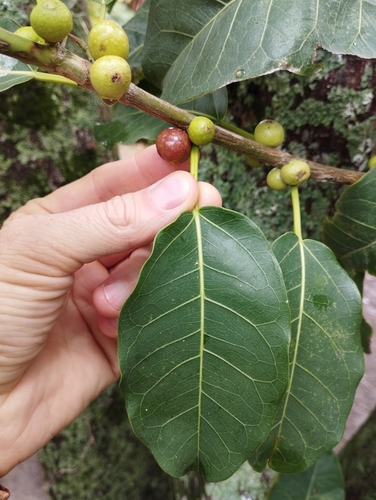
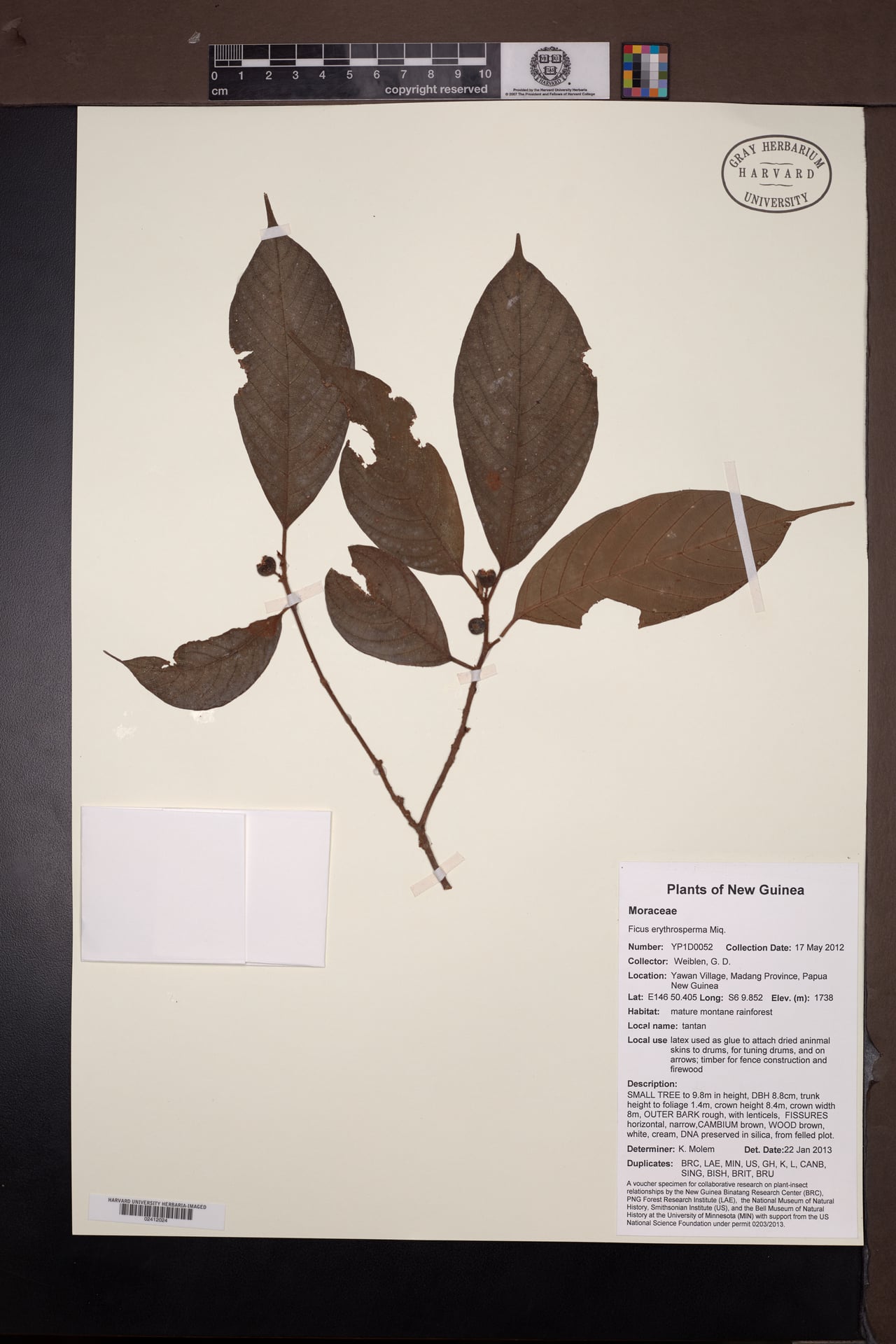
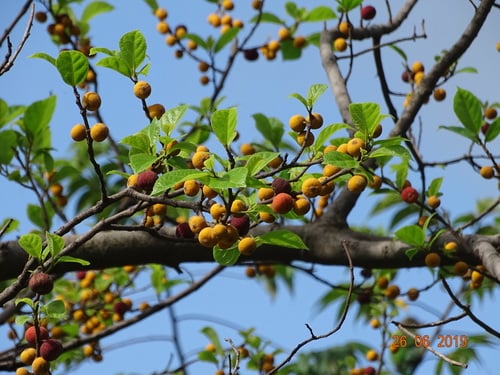
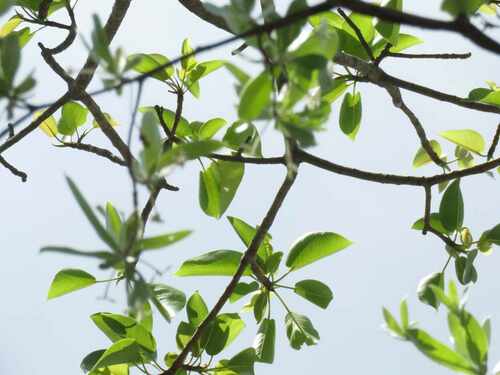
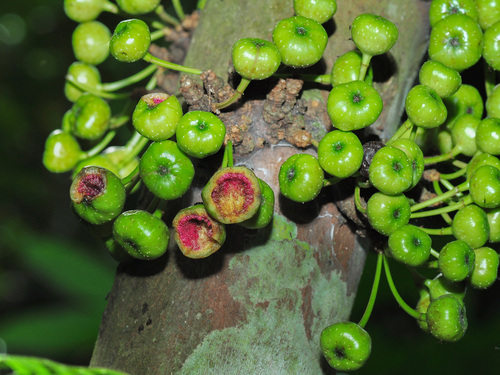
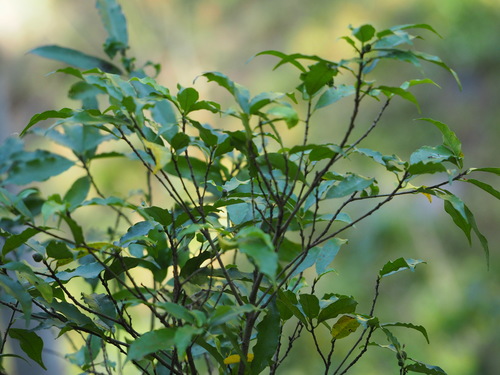
A fig. It is a medium sized tree. It grows up to 25 m tall. The stem often has buttresses. The twigs are hairy. The leaves are papery, flat and covered with long reddish brown hairs. The leaves are oval, entire or sometimes with small small teeth along the edge. The fruit are without stalks and in rounded heads. The fruit are angular and red when ripe. They are produced on the stems.
Edible Uses
The sap is employed as a beverage. Fruit. The red fruit is 20 - 25mm in diameter. The stem is often densely covered with numerous, very long and branched tubercles bearing the figs, the tubercles also arise from the base of the main branches
Traditional Uses
The ripe fruit are eaten raw. The freshly cut stem gives drinking water.
This uses section is brief — help expand it
Medicinal Uses
The leaves are used as an antirheumatic topical. The reddish colour of the decoction of the bark seems to suggest astringent properties.
Distribution
A tropical plant. They are abundant in damp places along creeks and in valleys throughout the islands of the Philippines. It grows in primary forest and up to 1,350 m above sea level.
Where It Grows
Asia, Indonesia, Malaysia, Pacific, Philippines*, SE Asia,
Cultivation
Plants can be grown from seeds.
Other Uses
The bark is used for making various utensils.
Notes
There are about 800-1000 Ficus species. They are mostly in the tropics. There are 120 Ficus species in tropical America.
Synonyms
Also Known As
Agimet, Alomit, Ayumit, Hagimit, Pohon ara kayu merah, Pohon ara merah
References (10)
- Alegado, A. M. & De Guzman, R. B., 2014, Indigenous food crops of the Aetas tribe in the Philippines and their traditional methods of food preparation. in Promotion of Underutilized Indigenous Food Resources for Food Security and Nutrition in Asia and Pacific. FAO. Bangkok p 160
- Ann. Mus. Bot. Lugduno-Batavum 3:231, 296. 1867-1868 ("1867")
- Barcelo, R., 2015, Phytochemical Screening and Antioxidant Activity of Edible Wild Fruits in Benguet, Cordillera Administrative Region, Philippines. Electronic Journal of Biology, 2015, Vol.11(3): 80-89
- Chua-Barcelo, R. T., 2014, Ethnobotanical survey of edible wild fruits in Benguet, Cordillera administrative region, the Philippines. Asian Pac. J. Trop. Biomed. 4(Suppl. 1):S525-S538
- Menisa, A. A., et al, 2012, Survey and characterization of Indigenous Food Plants in Ilocos Norte, Philippines. SEARCA Discussion Paper series No. 2011-2
Show all 10 references Hide references
- Monsalud, M.R., Tongacan, A.L., Lopez, F.R., & Lagrimas, M.Q., 1966, Edible Wild Plants in Philippine Forests. Philippine Journal of Science. p 499
- Reis, S. V. and Lipp, F. L., 1982, New Plant Sources for Drugs and Foods from the New York Botanical Garden herbarium. Harvard. p 43
- Soepadmo, E. and Saw, L. G., 2000, Tree Flora of Sabah and Sarawak. Forestry Malaysia. Volume Three. p 288
- Sukarya, D. G., (Ed.) 2013, 3,500 Plant Species of the Botanic Gardens of Indonesia. LIPI p 287
- World Checklist of Useful Plant Species 2020. Royal Botanic Gardens, Kew