Ficus destruens
F. Muell. ex C. White
Drupe fig, Red fig, Rusty Fig
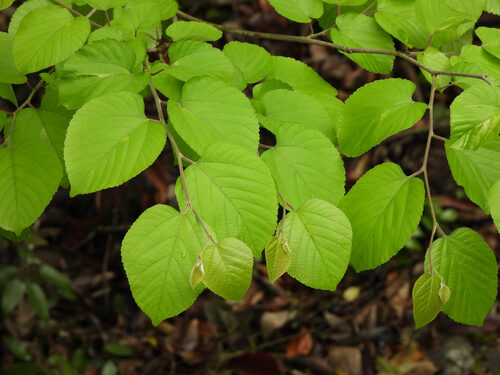
iNaturalist· cc-by-nc
(c) Christopher Mitchell, some rights reserved (CC BY-NC), uploaded by Christopher Mitchell
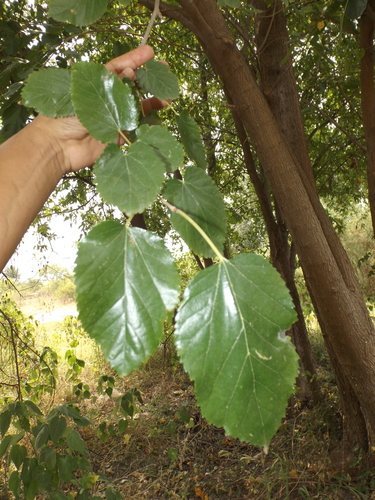
iNaturalist· cc-by-nc
(c) Graham Bell, some rights reserved (CC BY-NC), uploaded by Graham Bell
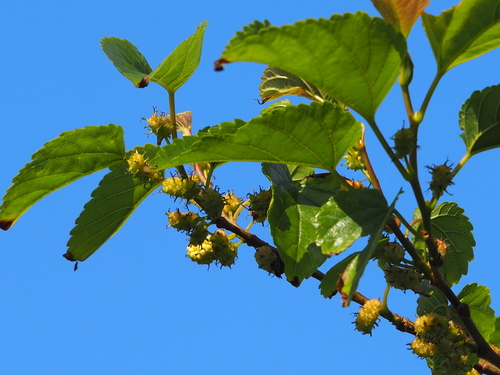
iNaturalist· cc-by-nc-sa
(c) Nemo's great uncle, some rights reserved (CC BY-NC-SA)
Summary
Source: WikipediaFicus destruens is a hemiepiphytic fig that is endemic to the wet tropical rainforests of northeastern Queensland, Australia.
Description
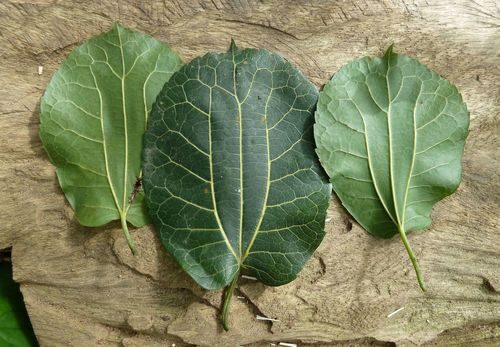
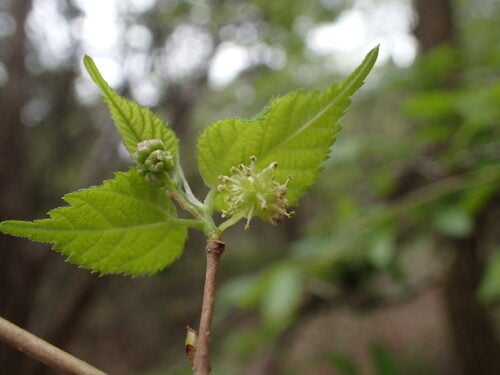
A fig. It is a tree up to 30 m high. It often occurs as a strangler. It has a rounded or spreading bushy crown. It can spread 15-30 m wide. Young branches are covered with rusty hairs. The leaves are simple and 9-25 cm long by 8-10 cm wide. The leaves are leathery and blunt. There are rusty hairs underneath the leaf. The leaves are crowded towards the ends of branches. The leaf stalks are 8-10 cm long. The fruit are 10-17 mm across. They occur singly or in pairs in the axils of leaves. The surface of the fruit is covered with small rusty hairs. The fruit are edible.
Edible Uses
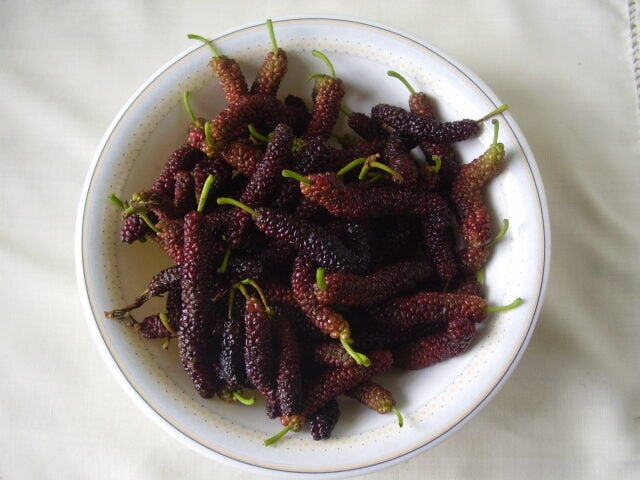
The fruit are edible and eaten fresh.
Distribution
A tropical plant. They grow naturally in rainforests in Queensland in Australia. It grows from sea level to 1200 m altitude. In Townsville palmetum. It suits hardiness zones 10-12.
Where It Grows
Australia*, SE Asia, Singapore,
Cultivation
Plants can be grown from seed or from aerial layers. It can be grown from cuttings.
Notes
There are about 800-1000 Ficus species. They are mostly in the tropics. There are 120 Ficus species in tropical America.
Nutrition
| Part | Moisture | kJ | kcal | Protein | Vit A | Vit C | Iron | Zinc |
|---|---|---|---|---|---|---|---|---|
| Fruit | 60.8 | 657 | 157 | 2.8 | — | — | — | — |
Also Known As
Boonjee fig, Strangler Fig
References (12)
- Beasley, J., 2011, Plants of Tropical North Queensland - the compact guide. Footloose publications. p 96
- Cooper W & Cooper W T, 1994, Fruits of the Rain Forest. RD Press p 130
- Cooper, W. and Cooper, W., 2004, Fruits of the Australian Tropical Rainforest. Nokomis Editions, Victoria, Australia. p 324
- Cundall, P., (ed.), 2004, Gardening Australia: flora: the gardener's bible. ABC Books. p 602
- Elliot, W.R., & Jones, D.L., 1992, Encyclopedia of Australian Plants suitable for cultivation. Vol 4. Lothian. p 282
Show all 12 references Hide references
- Etherington, K., & Imwold, D., (Eds), 2001, Botanica's Trees & Shrubs. The illustrated A-Z of over 8500 trees and shrubs. Random House, Australia. p 327
- Flora of Australia, Volume 3, Hamamelidales to Casuarinales, Australian Government Publishing Service, Canberra (1989) p 42
- Jackes, B.R., 2001, Plants of the Tropics. Rainforest to Heath. An Identification Guide. James Cook University. p 66
- Nicholson, N & H., 1996, Australian Rainforest Plants 2, Terania Rainforest Publishing. NSW. p 29
- Ratcliffe D & P., 1987, Australian Native Plants for Indoors. Little Hills press. p 89
- Townsend, K., 1994, Across the Top. Gardening with Australian Plants in the tropics. Society for Growing Australian Plants, Townsville Branch Inc. p 212
- White, C., 1933, Contributions Arnold Arboretum, 4:16