Acacia coriacea
DC.
Witchety bush, Cork bark wattle
iNaturalist· cc-by-nc-sa
(c) Arthur Chapman, some rights reserved (CC BY-NC-SA), uploaded by Arthur Chapman
wikimedia· cc-by
Hugo Innes (via Wikimedia Commons)
wikimedia· cc-by-sa
Mark Marathon (via Wikimedia Commons)
wikimedia· cc-by
Maurice MacDonald, CSIRO (via Wikimedia Commons)
iNaturalist· cc-by
(c) CSIRO, some rights reserved (CC BY)
iNaturalist· cc-by-sa
(c) Mark Marathon, some rights reserved (CC BY-SA)
Summary
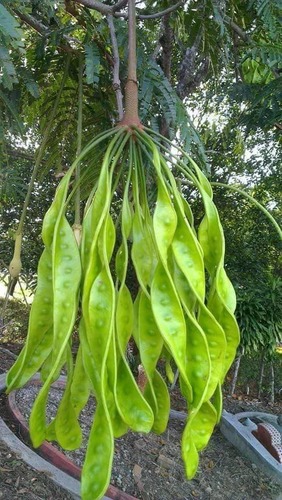
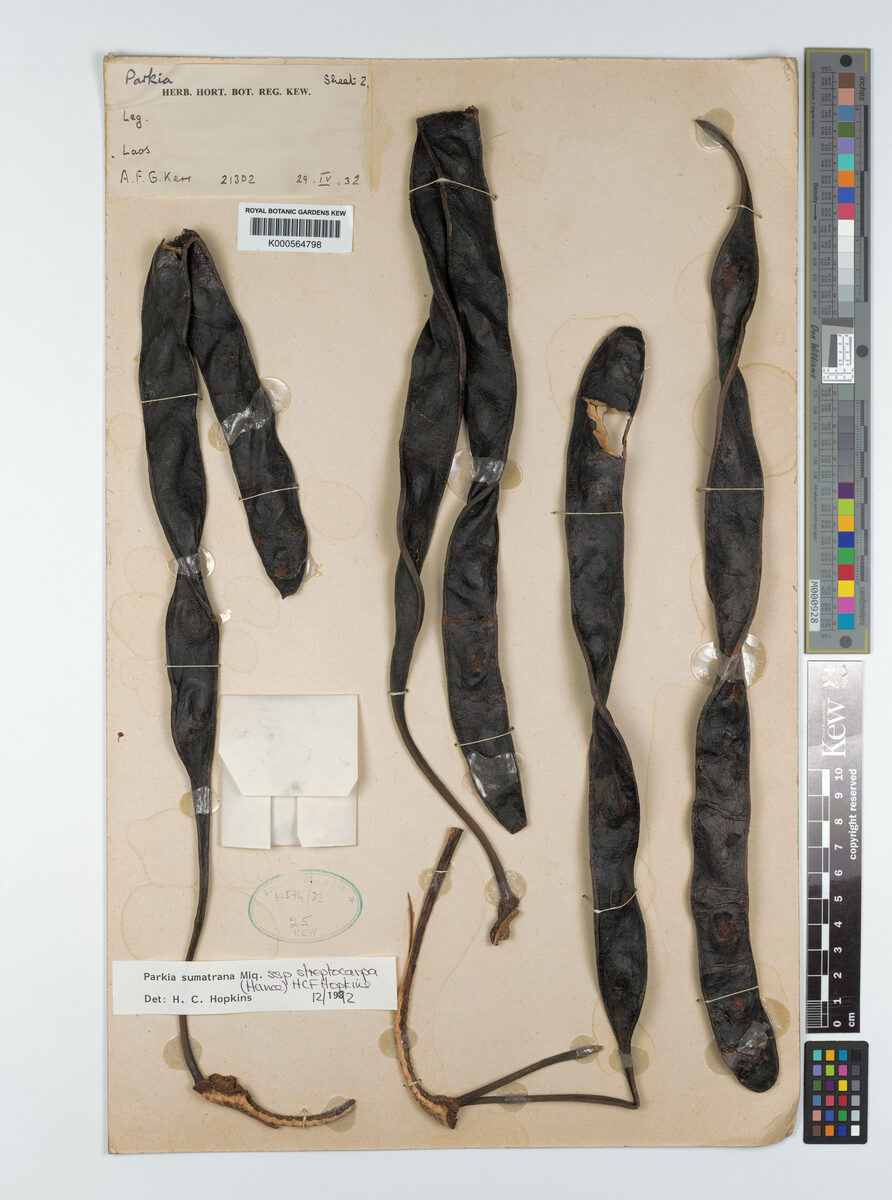
Source: WikipediaAcacia coriacea, commonly known as wirewood, wiry wattle or desert oak, is a species of flowering plant in the family Fabaceae and is endemic to northern Western Australia. It is a spreading shrub or tree with thin bark, linear to very narrowly elliptic phyllodes, spherical heads of pale lemon yellow or cream-coloured flowers and twisted, curved or coiled pods resembling a string of beads. Indigenous Australians know the plant as Gunandru.
Description
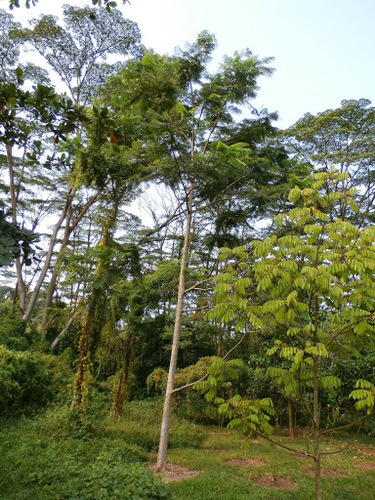
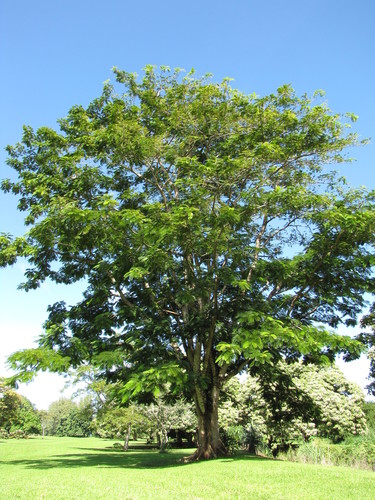
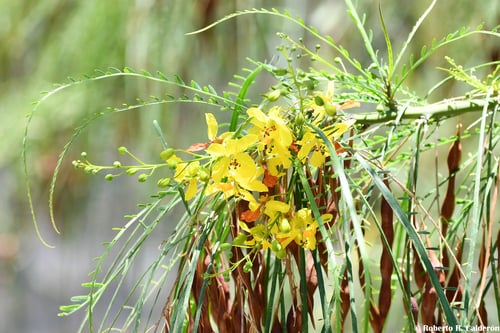
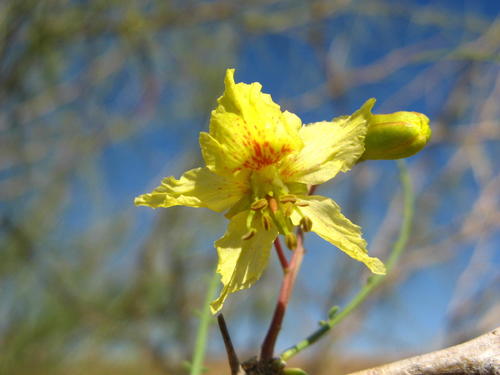
A shrub or small tree. It grows 5 m tall. There are prickles along the stem. The leaves are twice divided and there are 8-18 pairs of pinnae. There are up to 50 pairs of pinnules on each pinnae. The flowers are yellow. They are in large clusters at the ends of branches. The pods are flattened.
Edible Uses
Seeds and flowers are both edible. The seed is cooked and is sweet and nutritious, containing about 20% protein. Seeds range from 4–10mm long and 4–6mm wide. Acacia seeds in general are highly nutritious, containing approximately 26% protein, 26% available carbohydrate, 32% fibre, and 9% fat. The fat content is higher than most legumes, with the aril contributing the bulk of largely unsaturated fatty acids — a health advantage, though these fats oxidise readily in storage. Total mean carbohydrate content of 55.8 ±13.7% is lower than lentils but higher than soybeans, while mean fibre content of 32.3 ±14.3% exceeds that of lentils (11.7%). Energy content averages 1480 ±270 kJ per 100g. Wattle seeds are low glycaemic index foods — starch is digested slowly, producing a small, sustained rise in blood glucose and delaying exhaustion during prolonged exercise. Flowers are cooked; rich in pollen, they are often used in fritters.
Traditional Uses
The seeds are eaten after being crushed into flour. They can be eaten raw when young or roasted when mature. They can also be steamed in the green pods and eaten like peas.
Medicinal Uses
None known.
Known Hazards
The seed of many Acacia species, including this one, is edible and highly nutritious, and can be eaten safely as a fairly major part of the diet. Not all species are edible, however, and some can contain moderate levels of toxins. Especially when harvesting from the wild, especial care should be taken to ensure correct identification of any plants harvested for food. Especially in times of drought, many Acacia species can concentrate high levels of the toxin Hydrogen cyanide in their foliage, making them dangerous for herbivores to eat.
Distribution
It is a warm temperate plant. It grows in deep, red, sandy soils. It grows naturally in arid and semi arid regions. Soils need to be well drained. It is drought tolerant. It can grow in arid places.
Where It Grows
Africa, Australia, Tasmania, Senegal, West Africa,
Cultivation
Prefers a sandy loam and a very sunny position. Succeeds in dry soils. Succeeds in any good garden soil that is not excessively limey. Most species become chlorotic on limey soils. Trees are very tolerant of maritime exposure in their native environment, though they are often severely wind-shaped and can be semi-prostrate. Trees are not very hardy outdoors in Britain, even in the mildest areas of the country they are likely to be killed in excessively harsh winters. This is one of the most drought-tolerant tropical acacias of North and North West Australia, being able to survive years with no more than 50 mm of rain in 20 days in its native area of distribution. Rainfall in its native habitat varies from 200 to 500 mm. This species has a symbiotic relationship with certain soil bacteria, these bacteria form nodules on the roots and fix atmospheric nitrogen. Some of this nitrogen is utilized by the growing plant but some can also be used by other plants growing nearby.
Propagation
Seed is best sown as soon as ripe in a sunny position in a warm greenhouse. Stored seed should be scarified, pre-soaked for 12 hours in warm water, then sown in a warm greenhouse in March. Germination occurs in 3–4 weeks at 25°C. Prick out seedlings into individual pots when large enough to handle and grow on in a sunny greenhouse position for at least their first winter. Plant out in early summer, with some protection from winter cold advisable for the first year or two. Cuttings of half-ripe wood with a heel can be taken in July/August, potted individually in a frame, overwintered in a greenhouse, and planted out in late spring or early summer. Fair success rate.
Other Uses
A yellow dye is obtained from the flowers, and a green dye from the seed pods. The plant's extensive root system helps prevent soil erosion. The wood has been used to make small tools and implements.
Production
Plants can flower within 2 years of planting.
Notes
There are about 1,350 Acacia species. Over 1,000 occur in Australia. Also as Mimosaceae.
Nutrition
| Part | Moisture | kJ | kcal | Protein | Vit A | Vit C | Iron | Zinc |
|---|---|---|---|---|---|---|---|---|
| Seed dry | 8.4 | 1507 | 361 | 23.1 | — | — | 7.7 | 5.8 |
| Seed green | 56.8 | 627 | 150 | 23.7 | — | — | 3.2 | 1 |
| Flowers | — | — | — | — | — | — | — | — |
| Seeds dry | 4.1 | — | — | 20.9 | — | — | 7.7 | 5.8 |
Also Known As
Awenth ntjirrima, Desert Oak, Dogwood, Irrkili, Kunapuka, Mulupuka, Ntjirrima, Pungkuna, Wirewood, Wiry wattle, Yirrkali
References (26)
- Anon., 2003, Native Plants for the Fitzroy basin. Society for Growing Australian Plants Inc. (Rockhampton Branch)
- Bindon, P., 1996, Useful Bush Plants. Western Australian Museum. p 9
- Bonney, N., 1997, Economic Native Trees and Shrubs for South Australia. Greening Australia (SA) inc. Campbelltown SA 5074 p 4
- Cancilla, D., 2018, Ethnobotanical and Ethnozoological Values Desktop Assessment - Eliwana Project. p 9
- Cherikoff V. & Isaacs, J., The Bush Food Handbook. How to gather, grow, process and cook Australian Wild Foods. Ti Tree Press, Australia p 36, 46, 188
Show all 26 references Hide references
- Doran, J.C., & Turnbull, J.W. (Eds), 1997, Australian Trees and Shrubs: species for land rehabilitation and farm plantings in the tropics. ACIAR Monograph No 24. p 132
- Elliot, W.R., & Jones, D.L., 1982, Encyclopedia of Australian Plants suitable for cultivation. Vol 2. Lothian. p 35
- Facciola, S., 1998, Cornucopia 2: a Source Book of Edible Plants. Kampong Publications, p 151
- Hall, N. et al, 1972, The Use of Trees and Shrubs in the Dry Country of Australia, AGPS, Canberra. p 345
- Isaacs, J., 1987, Bush Food, Aboriginal Food and Herbal Medicine. Weldons. p 112
- Latz, P., 1996, Bushfires and Bushtucker. IAD. p 93
- Latz, P & Wightman, G., 1995, Desert Bush Tucker Identikit. Common Native Food Plants of Central Australia. Parks & Wild Commission Northern territory. p 8
- Lazarides, M. & Hince, B., 1993, Handbook of Economic Plants of Australia, CSIRO. p 2
- Lister, P.R., P. Holford, T. Haigh, and D.A. Morrison, 1996, Acacia in Australia: Ethnobotany and potential food crop. p. 228-236. In: J. Janick (ed.), Progress in new crops. ASHS Press, Alexandria, VA.
- Low, T., 1991, Wild Food Plants of Australia. Australian Nature FieldGuide, Angus & Robertson. p 179
- Molyneux, B. and Forrester, S., 1997, The Austraflora A-Z of Australian Plants. Reed. p 33
- Paczkowska, G . & Chapman, A.R., 2000, The Western Australian Flora. A Descriptive Catalogue. Western Australian Herbarium. p 303
- Pennock, A., et al, Australian Dry-zone Acacias for Human Food: Proceedings of a Workshop.
- Plants for a Future database, The Field, Penpol, Lostwithiel, Cornwall, PL22 0NG, UK. http://www.scs.leeds.ac.uk/pfaf/
- Prodr. 2:451. 1825
- Townsend, K., 1994, Across the Top. Gardening with Australian Plants in the tropics. Society for Growing Australian Plants, Townsville Branch Inc. p 50
- Townsend, K., 1999, Field Guide to Plants of the Dry Tropics. Society for Growing Australian Plants, Townsville Branch Inc. p 12
- Self, M., 199, Phoenix Seeds catalogue. p 17
- Urban, A., 1990, Wildflowers of Inland Australia. Portside editions. p 79
- Wheeler, J.R.(ed.), 1992, Flora of the Kimberley Region. CALM, Western Australian Herbarium, p 297
- Williams, K.A.W., 1999, Native Plants of Queensland Volume 4. Keith A.W. Williams North Ipswich, Australia. p 12