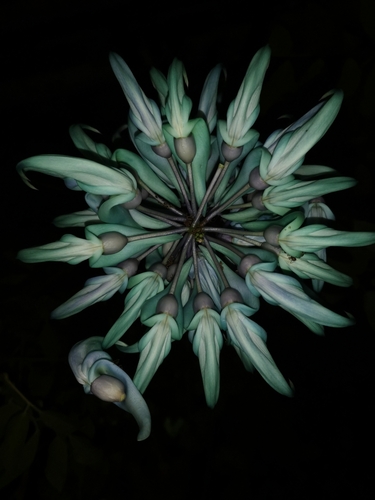
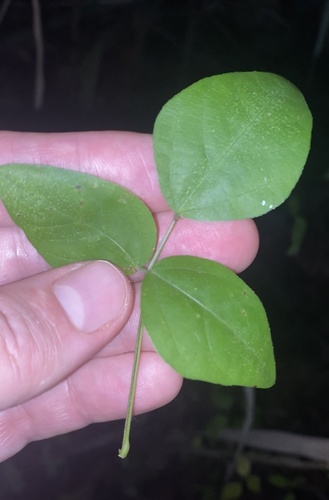
Abrus pulchellus
Wall. ex Thwaites
Malay licorice
iNaturalist· cc-by-nc-sa
(c) Marco Schmidt, some rights reserved (CC BY-NC-SA)
iNaturalist· cc-by-nc-sa
(c) Marco Schmidt, some rights reserved (CC BY-NC-SA)
Description
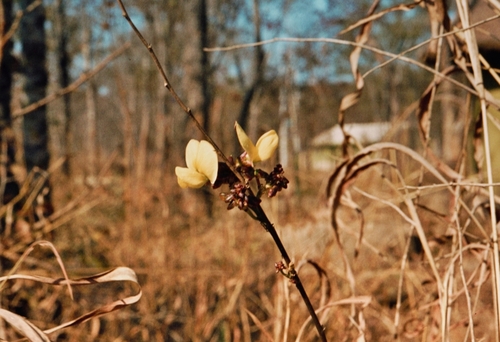
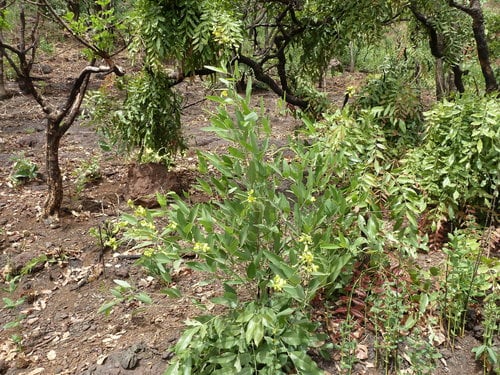
A shrub or small tree. It grows 5 m tall. There are prickles along the stem. The leaves are twice divided and there are 8-18 pairs of pinnae. There are up to 50 pairs of pinnules on each pinnae. The flowers are yellow. They are in large clusters at the ends of branches. The pods are flattened.
Edible Uses
The roots are used as a liquorice substitute, and the stems are used as a sweetener.
Traditional Uses
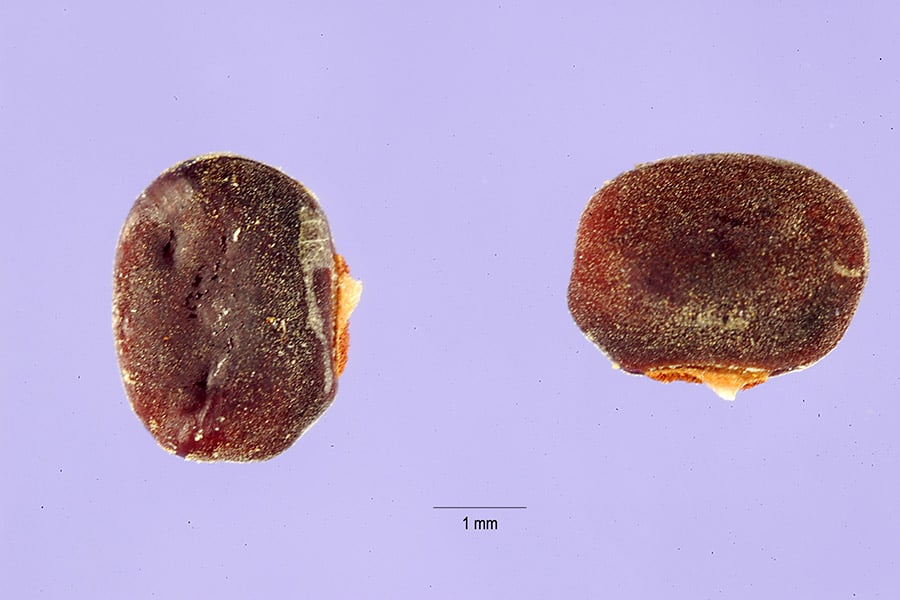
The root are used as a substitute for liquorice. The stems are used as a sweetener. Caution: The seeds are poisonous. They contain pulchellin.
This uses section is brief — help expand it
Medicinal Uses
The roots are traditionally used as a substitute for liquorice.
Known Hazards
The seeds are poisonous and contain pulchellin.
Distribution
A tropical plant. It grows in secondary vegetation in West Africa. It prefers damp locations. It is often along rivers. In southern China it grows between 200-3,000 m above sea level.
Where It Grows
Africa, Andamans, Asia, Australia, Bangladesh, Benin, Bhutan, Burkina Faso, Cambodia, China, Guianas, Guinea, Guinée, Guinea-Bissau, India, Indochina, Indonesia, Himalayas, Laos, Liberia, Malaysia, Myanmar, Nepal, Nigeria, Papua New Guinea, PNG, Philippines, SE Asia, Senegal, Sierra Leone, South America, Sri Lanka, Suriname, Thailand, Vietnam, West Africa,
Notes
There are 26 Abrus species.
Nutrition
| Part | Moisture | kJ | kcal | Protein | Vit A | Vit C | Iron | Zinc |
|---|---|---|---|---|---|---|---|---|
| Root flour | 13.5 | — | — | 0 | — | — | 1.2 | — |
| Roots | — | — | — | — | — | — | — | — |
Synonyms
Also Known As
Benambo, Bunambo, Bu segseg
References (8)
- Bircher, A. G. & Bircher, W. H., 2000, Encyclopedia of Fruit Trees and Edible Flowering Plants in Egypt and the Subtropics. AUC Press. p 3
- Burkill, H. M., 1985, The useful plants of west tropical Africa, Vol. 3. Kew.
- Codjia, J. T. C., et al, 2003, Diversity and local valorisation of vegetal edible products in Benin. Cahiers Agricultures 12:1-12
- Facciola, S., 1998, Cornucopia 2: a Source Book of Edible Plants. Kampong Publications, p 101
- Flora of China @efloras.org Volume 10
Show all 8 references Hide references
- Gallagher, D. E., 2010, Farming beyond the escarpment: Society, Environment, and Mobility in Precolonial Southeastern Burkina Faso. PhD University of Michigan
- G. H. K. Thwaites & J. D. Hooker, Enum. pl. zeyl. 91. 1859
- Usher, G., 1974, A Dictionary of Plants Used by Man. Constable. p 10