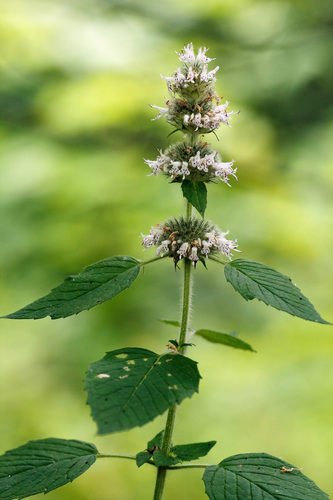
Ajuga reptans
L.
Common bugleweed
iNaturalist· cc-by
(c) Nasser Halaweh, some rights reserved (CC BY), uploaded by Nasser Halaweh
iNaturalist· cc-by-nc
(c) Phil Bendle, some rights reserved (CC BY-NC), uploaded by Phil Bendle
iNaturalist· cc-by-nc
(c) Анна, some rights reserved (CC BY-NC), uploaded by Анна
Summary
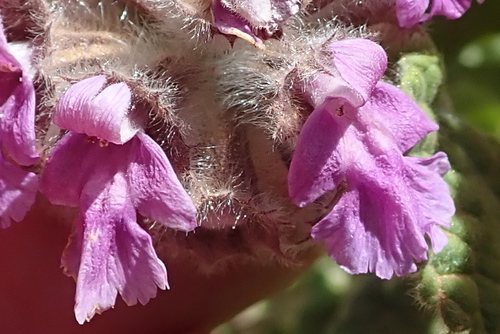
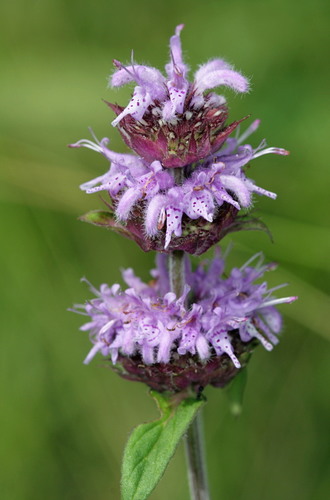
Source: WikipediaAjuga reptans is commonly known as bugle, blue bugle, bugleherb, bugleweed, carpetweed, carpet bugleweed, carpet bugle, and common bugle, and traditionally (although less commonly) as St. Lawrence plant. It is an herbaceous flowering plant in the mint family Lamiaceae, native to Europe. It is also a component of purple moor grass and rush pastures, a Biodiversity Action Plan habitat in the United Kingdom. Ajuga reptans is a dense spreading groundcover with dark green leaves with purple highlights. The leaves grow 5–8 cm (2.0–3.1 in) tall. In spring the plant sends up 10–15 cm (3.9–5.9 in) tall flower stalks bearing many purple flowers. The flowers are frequently visited by flies, such as Rhingia campestris.
Description
A creeping perennial plant. It grows 30 cm high and spreads to 60 cm across. It has stolons or runners. The plant forms roots as it spreads. The leaves are opposite and dark green. The flowers are blue to purple. They occur on short spikes.
Edible Uses
The young shoots can be eaten raw.
Traditional Uses
The young shoots are eaten raw in salads. They are also cooked as a vegetable. CAUTION: The plant has toxic properties. It has mild laxative properties.
Medicinal Uses
Bugle has a long history as a wound herb and, though little used today, is still considered valuable for arresting haemorrhages and treating coughs and spitting of blood in incipient consumption. The plant contains digitalis-like substances — the type commonly found in Digitalis species and used in treating heart complaints — and is thought to have heart tonic properties. It has also been considered useful for countering excessive alcohol intake. The whole plant is aromatic, astringent, and bitter, and is usually applied externally. It is harvested as it comes into flower in late spring and dried for later use, though it is also commonly used fresh in ointments and medicated oils. A homeopathic remedy is prepared from the whole plant. It is widely used in preparations for throat irritations, particularly in the treatment of mouth ulcers.
Distribution
It is a temperate plant. It can grow in shady conditions. Once established the plant is fairly drought tolerant. It does best in a humus rich moist soil. It is frost hardy. Hobart Botanical Gardens. It suits plant hardiness zones 3-9.
Where It Grows
Africa, Albania, Algeria, Australia, Azerbaijan, Balkans, Bosnia, Britain*, Canada, Caucasus, Europe, France, Georgia, Greece, Hawaii, Iran, Italy, Lithuania, Luxembourg, Mediterranean, Middle East, New Zealand, North Africa, North America, Portugal, Russia, Slovenia, South America, Spain, Tasmania, Tunisia, Turkey, Türkiye, USA,
Cultivation
Prefers a humus-rich, moisture retentive soil and partial shade. Does well in marshy soil and in the spring meadow. Grows well in dry shade and is fairly drought tolerant once established, though it shows distress in severe drought. Plants do not always ripen their seeds in Britain, they spread freely by runners, however, and soon form an extensive patch in suitable conditions. A number of forms have been selected for their ornamental value, several of them are variegated and these are used especially as ground cover plants for dry shade. A purple-leafed form, 'Atropurpurea' does well in full sun so long as the soil is not dry. A good bee and butterfly plant. Heat Zone: 9-1.
Propagation
Seed can be sown in spring or autumn in a cold frame. Germination usually takes 3–4 weeks at 10°C, though it can be erratic. Prick out seedlings when large enough to handle and plant them out during summer. Division of runners can be done at almost any time of year and is very easy — divisions can be planted directly into their permanent positions if needed.
Other Uses
Bugle makes a good ground cover in semi-shaded positions, forming a carpet and rooting as it spreads. It is fairly fast-growing but does not always smother weeds and can become bare at the centre if conditions are poor. It is also used as a perennial ground cover for zone 2 firebreaks in the US government's system of fire management zones surrounding buildings, where low-growing plants provide minimal fuel.
Notes
There are about 40 Ajuga species. It is used in medicine.
Also Known As
Bugle, Carpet bugleweed, Ivica, Meryemsaci, Plazeči skrečnik
References (19)
- Bircher, A. G. & Bircher, W. H., 2000, Encyclopedia of Fruit Trees and Edible Flowering Plants in Egypt and the Subtropics. AUC Press. p 15
- Blamey, M and Grey-Wilson, C., 2005, Wild flowers of the Mediterranean. A & C Black London. p 388
- Bodkin, F., 1991, Encyclopedia Botanica. Cornstalk publishing, p 61
- Bremness, L., 1994, Herbs. Collins Eyewitness Handbooks. Harper Collins. p 140
- Brown, D., 2002, The Royal Horticultural Society encyclopedia of Herbs and their uses. DK Books. p 108
Show all 19 references Hide references
- Cundall, P., (ed.), 2004, Gardening Australia: flora: the gardener's bible. ABC Books. p 121
- Ertug, F, Yenen Bitkiler. Resimli Türkiye Florası -I- Flora of Turkey - Ethnobotany supplement
- Facciola, S., 1998, Cornucopia 2: a Source Book of Edible Plants. Kampong Publications, p 125
- Lamberton, K (Ed.), 2004, The Australian gardening encyclodepia. Murdoch Books, NSW Australia. p 154
- Joyce, D., 1998, The Garden Plant Selector. Ryland, Peters and Small. p 202
- Lawton, B.P., 2002, Mints. A Family of Herbs and Ornamentals. Timber Press, Portland, Oregon. p 120
- Plants for a Future database, The Field, Penpol, Lostwithiel, Cornwall, PL22 0NG, UK. http://www.scs.leeds.ac.uk/pfaf/
- Redzic, S. J., 2006, Wild Edible Plants and their Traditional Use in the Human Nutrition in Bosnia-Herzegovina. Ecology of Food and Nutrition, 45:189-232
- Seidemann J., 2005, World Spice Plants. Economic Usage, Botany, Taxonomy. Springer. p 13
- Slocum, P.D. & Robinson, P., 1999, Water Gardening. Water Lilies and Lotuses. Timber Press. p 106
- Sp. pl. 2:561. 1753
- Tasmanian Herbarium Vascular Plants list p 36
- Vermeulen, N, 1998, The Complete Encyclopedia of Herbs. Rebo Publishers. p 30
- www.ediblewildfood.com