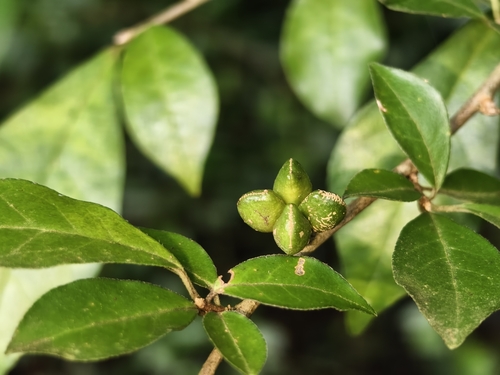
Citrus lucida
(Scheff.) Mabb.
Wood apple
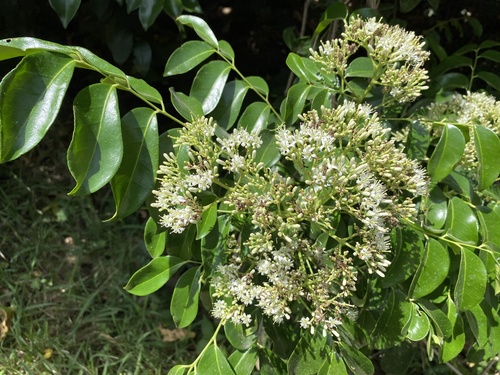
iNaturalist· cc-by-nc
(c) Alexey P. Seregin, some rights reserved (CC BY-NC), uploaded by Alexey P. Seregin
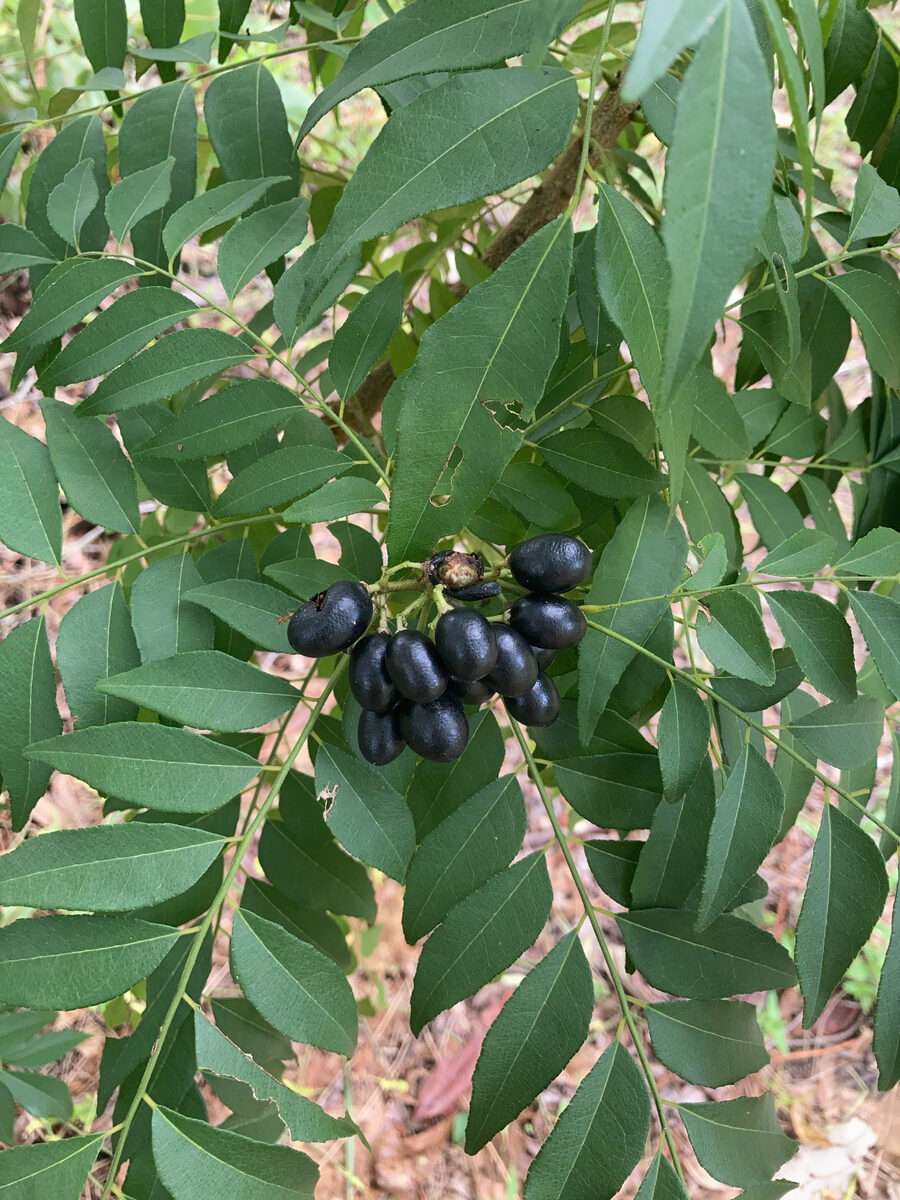
iNaturalist· cc-by-nc
(c) Wangworn Sankamethawee, some rights reserved (CC BY-NC)
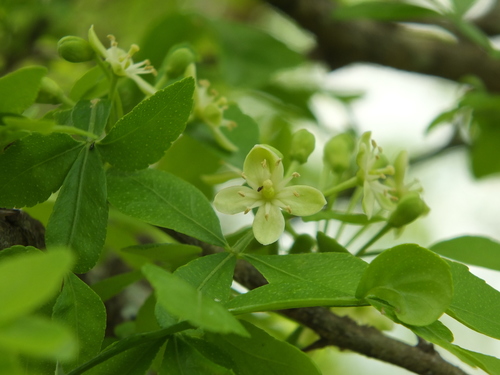
iNaturalist· cc-by-nc
(c) fahmmp, some rights reserved (CC BY-NC)
Description
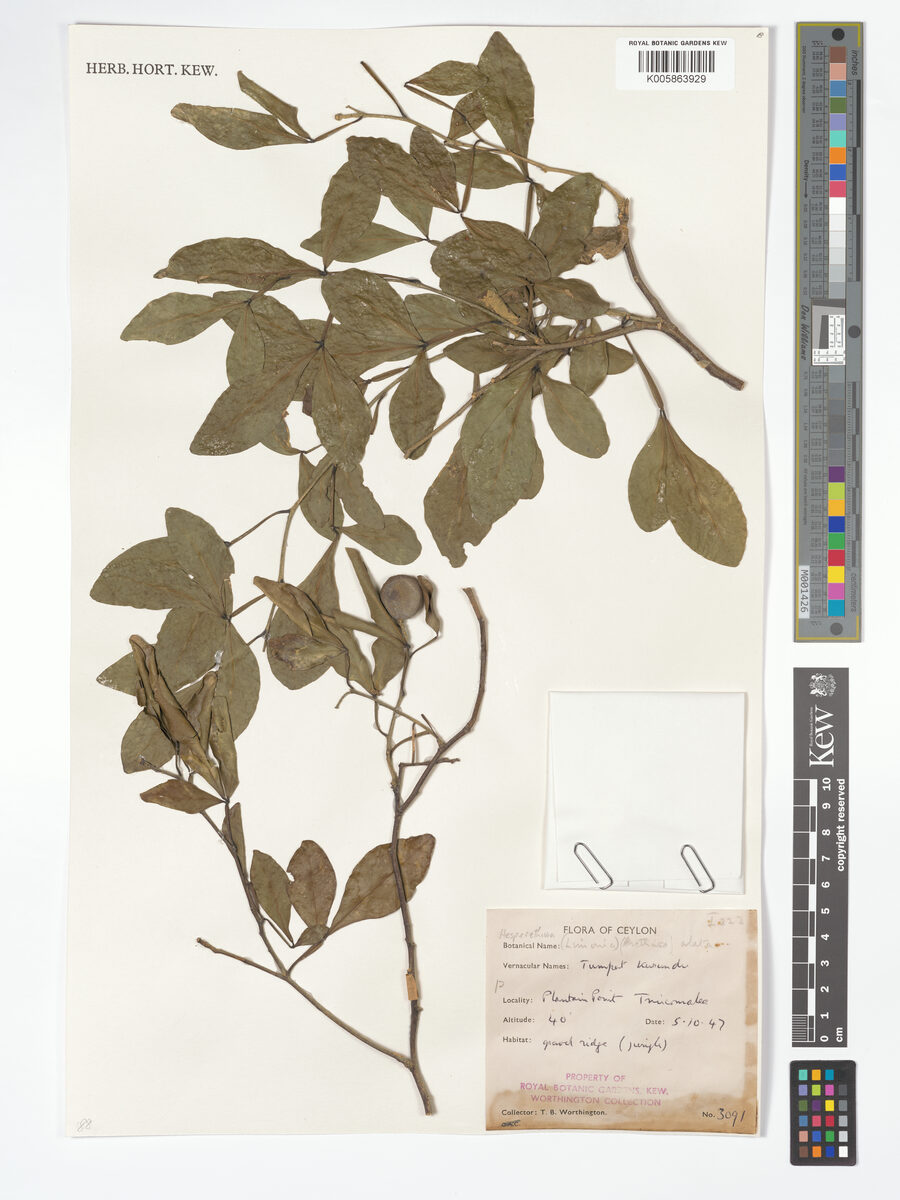
A small tree. It grows 6-15 m tall. It may or may not have thorns. These thorns can be 8 cm long on the branches. The leaves are alternate and 8 cm long. They are compound with a single leaflet at the end. There are 3-4 pairs of leaflets. These are oval and finely irregular along the edge. They have a rough surface and are shiny on the upper surface. They are covered with cottony hairs underneath. The leaflets are 1.5-3.5 cm long by 1-1.5 cm wide. The leaf stalk is hairy. The flowers can be in the axils of leaves or at the ends of branches. Flowers have 5 petals. The fruit is rounded with a hard outer cover. It is green with white flesh. There are many seeds inside.
Edible Uses
In Cambodia and Java, Feroniella lucida is occasionally cultivated as a fruit tree. The pulp of the raw fruits is eaten as a vegetable. The pericarp is used medicinally. The pulp is used as a sour ingredient in Cambodian and Thai cooking. Feroniella lucida can be grown as an indoor bonsai. One of the phytochemicals the plant contains is lichexanthone.
Traditional Uses
The ripe fruit are eaten and give an acid flavour. The fruit is soaked in water for a few minutes before using if it has been dried. The flowers are also used as a vegetable. The raw young shoots and leaves are eaten with sour bamboo shoot salad.
Distribution
A tropical plant. It grows in dense forests and secondary undergrowth. It is also cultivated.
Where It Grows
Asia, Bangladesh, Cambodia, India, Indochina, Indonesia, SE Asia, Sri Lanka, Thailand,
Synonyms
Also Known As
Kawista-krikil, Krasang, Krasang si Phle, Ma sang, Som kaek
References (14)
- Arora, R. K., 2014, Diversity in Underutilized Plant Species - An Asia-Pacific Perspective. Bioversity International. p 70 (As Feroniella lucida)
- Bull. Soc. Bot. France 59:781. 1912
- Burkill, I.H., 1966, A Dictionary of the Economic Products of the Malay Peninsula. Ministry of Agriculture and Cooperatives, Kuala Lumpur, Malaysia. Vol 1 (A-H) p 1015
- Chatterjee, A. S., 1997, Fruit Trees in Cambodian Home Gardens. Trainers' training manual. Home garden series No.3 p 54
- Jacquat, C., 1990, Plants from the Markets of Thailand. D.K. Book House p 73
Show all 14 references Hide references
- Khumgratok, S., Edible Plants in Cultural Forests of Northeastern Thailand. Mahasarakham University Thailand.
- Lembaga Biologi Nasional, 1977, Buah-Buahan, Balai Pustaka, Jakarta. p 58
- Martin, F. W., et al, 1987, Perennial Edible Fruits of the Tropics. USDA Handbook 642 p 74 (Also as Feroniella oblata)
- Martin, M.A., 1971, Introduction L'Ethnobotanique du Cambodge. Centre National de la Recherche Scientifique. Paris.
- Perera, A. H. and Rajapakse, R. M. N., 1991, A baseline study of Kandyan Forest Gardens of Sri Lanka: Structure, composition and utilization. Forest Ecology and Management, 45:269-280
- Phon, P., 2000, Plants used in Cambodia. © Pauline Dy Phon, Phnom Penh, Cambodia. p 297
- Solomon, C., 2001, Encyclopedia of Asian Food. New Holland. p 409
- Srichaiwong, P., et al, 2014, A Study of the Biodiversity of Natural Food Production to Support Community Upstream of Chi Basin, Thailand. Asian Social Science 10 (2): (As Feroniella lucida)
- World Checklist of Useful Plant Species 2020. Royal Botanic Gardens, Kew