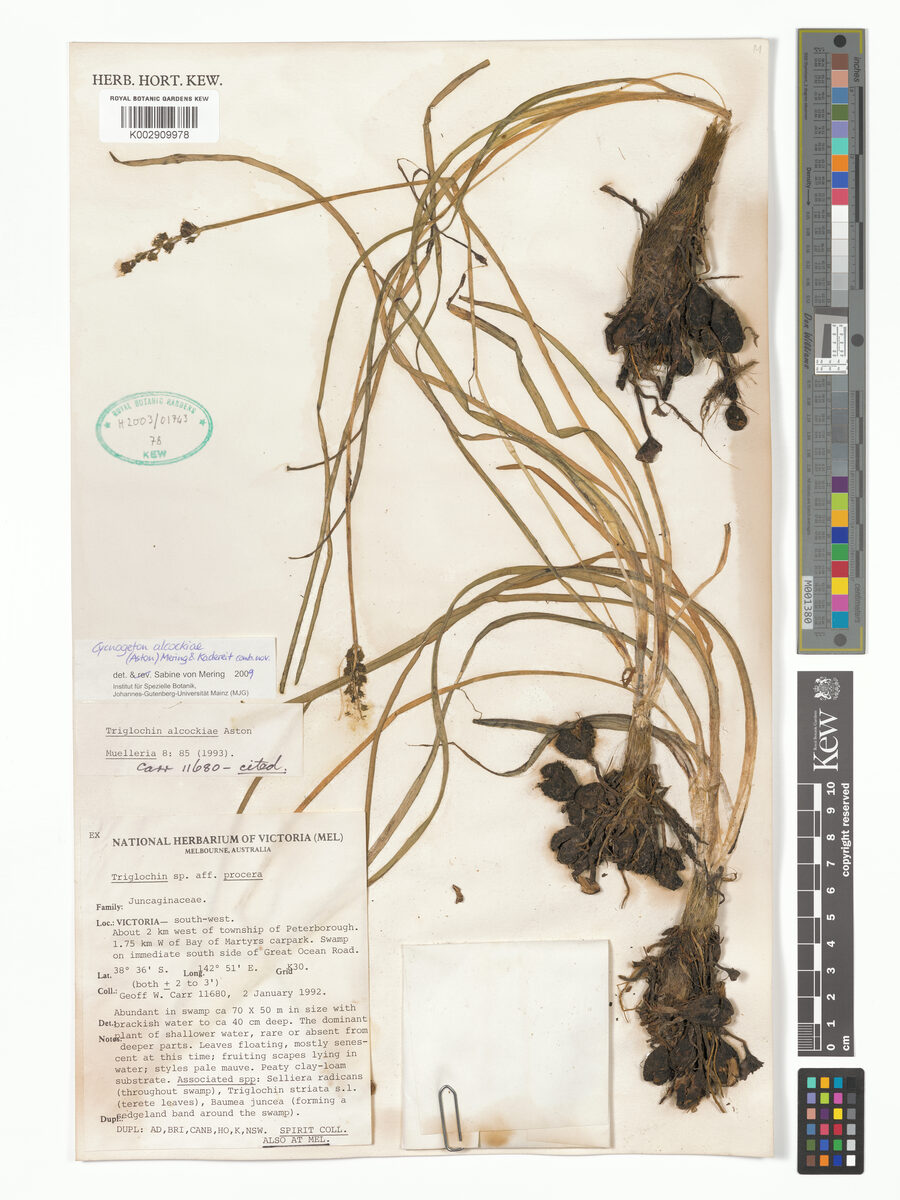
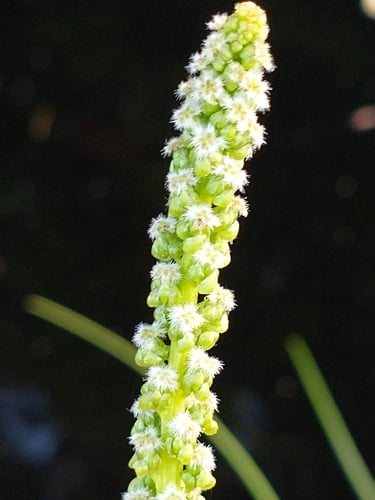
Triglochin procera
R.Br.
Water Ribbons
gbif· cc-by-sa
GBIF
gbif· cc-by-sa
GBIF
gbif· cc-by-sa
GBIF
Description
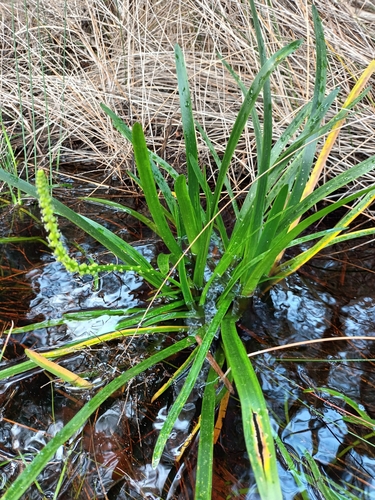
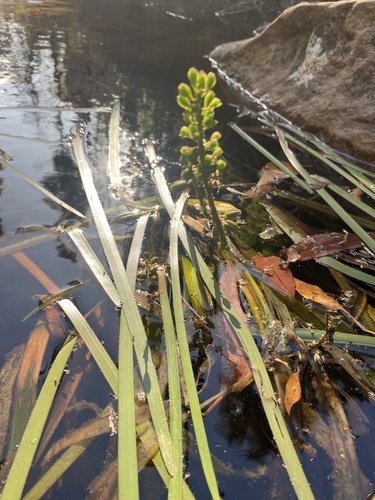
Triglochin procera is a PERENNIAL growing to 0.6 m (2ft). The species is hermaphrodite (has both male and female organs) and is pollinated by Wind. Suitable for: light (sandy), medium (loamy) and heavy (clay) soils. Suitable pH: neutral and basic (mildly alkaline) soils and can grow in very alkaline and saline soils. It cannot grow in the shade. It prefers wet soil and can grow in water. The plant can tolerates strong winds but not maritime exposure.
Edible Uses
Tuber - baked. Fruit - raw or cooked. A pleasant, pea-like flavour.
Known Hazards
The green leaves of plants can contain a toxic cyanogenic glycoside, it is especially present during and just after a drought and is particularly toxic to ruminants. Plants growing in Britain are usually perfectly safe, this is probably due to the climate.
Distribution
Australia - all areas, including Tasmania.
Where It Grows
AUSTRALASIA: Australia (Tasmania, New South Wales, Queensland, South Australia, Victoria)
Cultivation
We have very little information on this species and do not know if it will be hardy outdoors in Britain. However, it is hardy to about -7°c in Australian gardens, though this cannot be applied directly to British gardens due to our cooler summers and longer, colder, wetter winters. The following notes are based on the general needs of the genus. Succeeds in shallow water or a bog garden. Possibly requires saline conditions. 193
Propagation
Seed - we have no information for this species but suggest sowing the seed in a cold frame as soon as it is ripe if this is possible. Stand the pots in about 2cm of water. When they are large enough to handle, prick the seedlings out into individual pots and plant them out in the summer. Division in spring. Larger divisions can be planted out direct into their permanent positions. We have found that it is best to pot up smaller divisions and grow them on in light shade in a greenhouse or cold frame until they are growing away well. Plant them out in the summer or the following spring.