Triglochin maritima
L.
Seaside arrowgrass
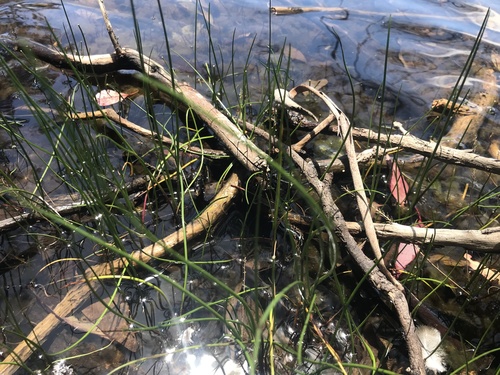
iNaturalist· cc-by
(c) Tom Norton, some rights reserved (CC BY)
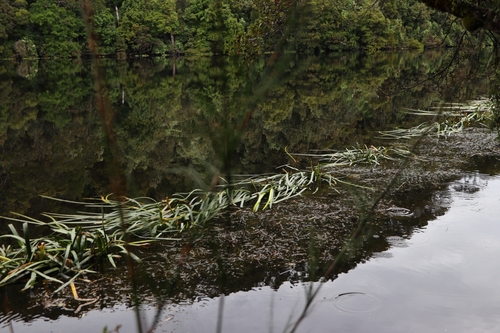
iNaturalist· cc-by
(c) Tom Norton, some rights reserved (CC BY)
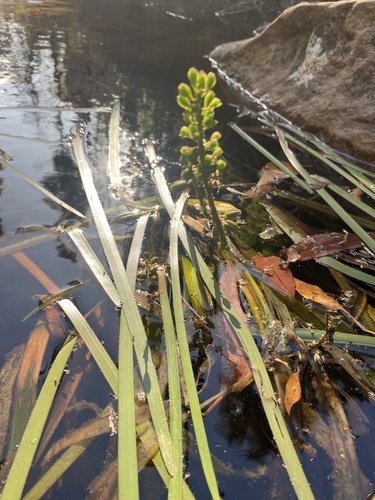
iNaturalist· cc-by
(c) Tom Norton, some rights reserved (CC BY)
Summary
Source: WikipediaTriglochin maritima is a species of flowering plant in the arrowgrass family Juncaginaceae. It is found in brackish marshes, freshwater marshes, wet sandy beaches, fens, damp grassland and bogs. It has a circumboreal distribution, occurring throughout the northern Northern Hemisphere. In the British Isles it is common on the coast, but very rare inland.
Description
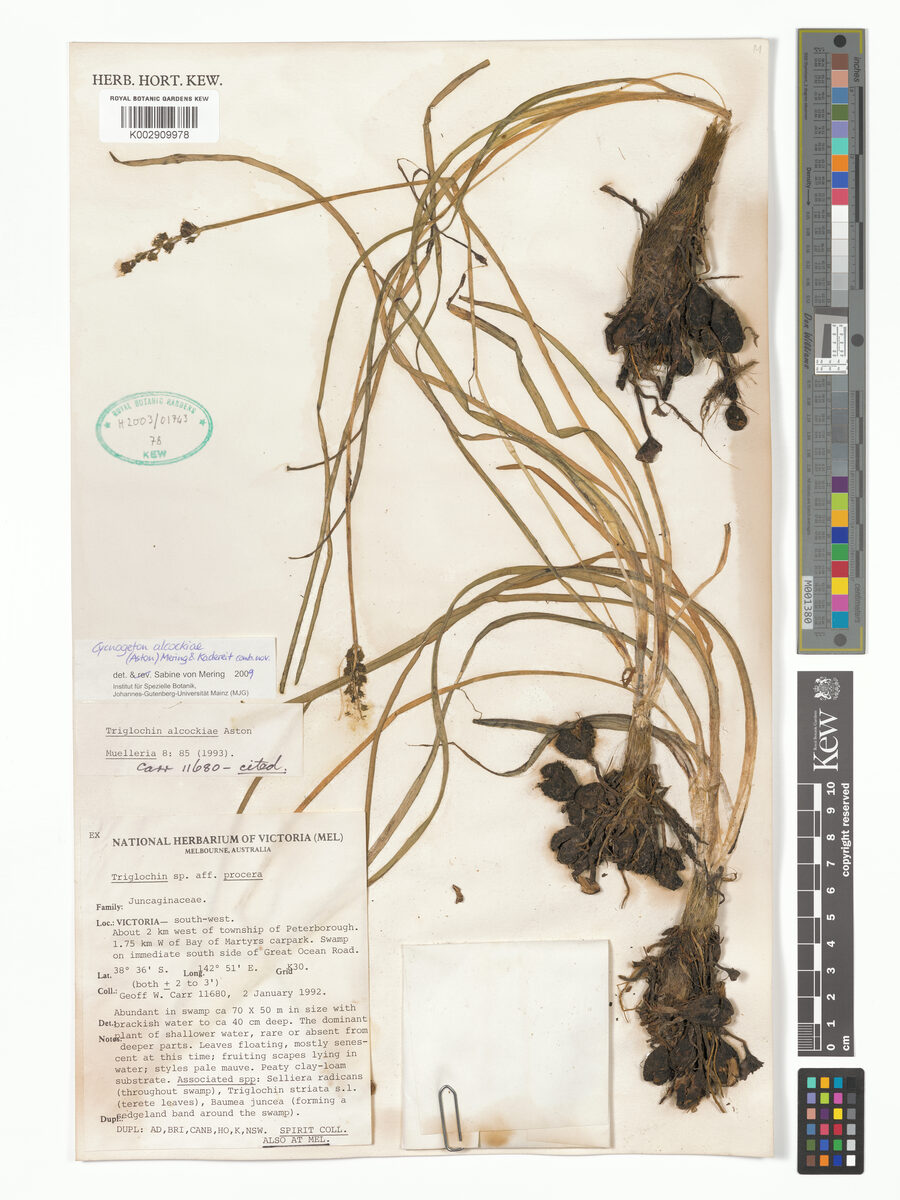
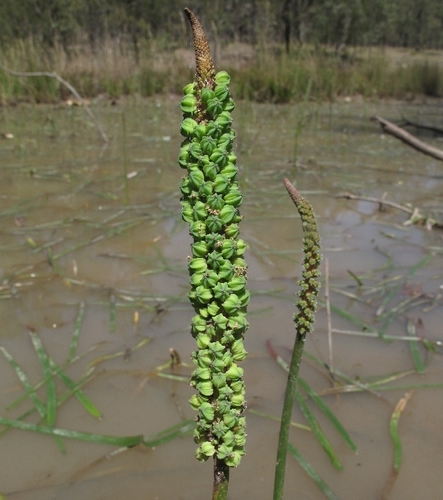
A herb. It keeps growing from year to year. There are small tubers underground. It has a stout underground stem or rhizome. The leaves are narrow and thick. There are about 7 leaves that are 30 cm long by 1-4 mm wide. The flowers are greenish. They are 2-3 mm across. The fruit are 3-4 mm across.
Edible Uses
The white base of the leaf stem can be eaten raw or cooked and is best harvested in late spring. It has a pleasant, mild, sweet taste somewhat like cucumber. An unpleasant odour develops during cooking. The green parts of the plant should not be eaten as they can contain a toxin; only the bases of leaf stems should be used, not the bases of flowering stems. The seed can be parched and ground into a powder, and the roasted seed serves as a coffee substitute.
Traditional Uses
The tubers are eaten after roasting. The young white leaves are cooked and eaten. The seeds are used as food after parching or roasting. Caution: It can contain hydrocyanic acid. This can be removed by cooking.
Medicinal Uses
None known
Known Hazards
The green leaves of plants can contain a toxic cyanogenic glycoside, it is especially present during and just after a drought and is particularly toxic to ruminants. Plants growing in Britain are usually perfectly safe, this is probably due to the climate.
Distribution
It is a temperate plant. It grows in marshes below 5,200 m above sea level in China. It can grow in brackish or salty wet soils. In Sichuan and Yunnan.
Where It Grows
Afghanistan, Alaska, Asia, Balkans, Bhutan, Bosnia, Canada, Central Asia, Europe, Himalayas, India, Japan, Kazakhstan, Korea, Kyrgyzstan, Mongolia, Nepal, North America, Northeastern India, Norway, Pakistan, Russia, Scandinavia, Sikkim, Sweden, Tajikistan, Tibet, USA,
Cultivation
Succeeds in shallow water or a bog garden. Possibly requires saline conditions.
Propagation
Sow seed in a cold frame as soon as it is ripe where possible, standing the pots in about 2cm of water. Prick seedlings out into individual pots when large enough to handle, and plant out during summer. Propagate by division in spring. Larger divisions can go directly into permanent positions; smaller divisions are best potted up and grown on in light shade in a greenhouse or cold frame until establishing well, then planted out in summer or the following spring.
Other Uses
The plant's ashes are rich in potassium and can be used in soap making.
Other Information
The leaves are foraged and eaten in restaurants in Sweden.
Notes
There are about 15 Triglochin species. They grow in marshes in temperate regions.
Synonyms
Also Known As
Chaklamsar, Fjaeresaulok, Gaike, Girge, Morska brulja, Puga
References (13)
- Beckstrom-Sternberg, Stephen M., and James A. Duke. "The Foodplant Database." http://probe.nalusda.gov:8300/cgi-bin/browse/foodplantdb.(ACEDB version 4.0 - data version July 1994)
- Bowser, M., 2017, Handout on Edible Plants of the Kenai Peninsula. USFWS Kenai National Wildlife Refuge p 14
- Flora of Pakistan. www.eFloras.org
- Girard, N. J., 2020, Sustainable Foraging of Wild Edible Plants in Norway. A Biocultural Approach. M. Sc. thesis Norwegian University. p 132
- http://nordicfood lab/org/blog/2102/9/wild-edible-plants-an-overview
Show all 13 references Hide references
- Hwang, H., et al, 2013, A Study on the Flora of 15 Islands in the Western Sea of Jeollanamdo Province, Korea. Journal of Asia-Pacific Biodiversity Vol. 6, No. 2 281-310
- Kaul, M.K. et al, 1985, Ethno-botanic studies in North-West and Trans-Himalaya - contribution to the wild food plants of Ladakh. J.Econo. Tax. Bot. Vol. 6 No. 3 pp 523-527
- Luczaj, L. et al, 2012, Wild food plant use in 21st century Europe: the disappearance of old traditions and the search for new cuisines involving wild edibles. Acta Soc Bot Pol 81(4):359–370
- Moerman, D. F., 2010, Native American Ethnobotany. Timber Press. p 567
- Plants for a Future database, The Field, Penpol, Lostwithiel, Cornwall, PL22 0NG, UK. http://www.scs.leeds.ac.uk/pfaf/
- Sp. pl. 1:339. 1753 "maritimum"
- Turner, N., 1995, Food Plants of Coastal First Peoples. Royal BC Museum Handbook p 36
- Urgamal, M., et al, 2014, Conspectus of the Vascular Plants of Mongolia. Mongolia Academy of Sciences Institute of Botany and National University of Mongolia Department of Biology. p 39