Cycnogeton procerum
(R. Br.) Buchenau
Water-ribbon, Swamp arrowgrass, Creek lily
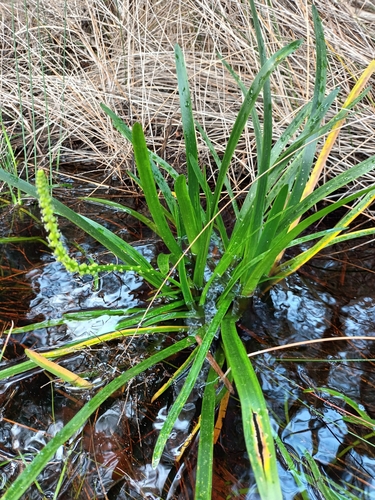
iNaturalist· cc-by-nc-sa
(c) Brendan Kays, some rights reserved (CC BY-NC-SA)
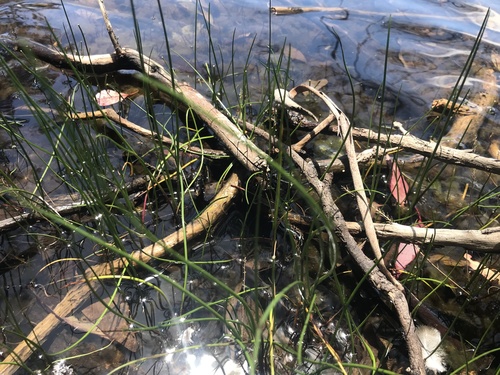
iNaturalist· cc-by-nc-sa
(c) Brendan Kays, some rights reserved (CC BY-NC-SA)
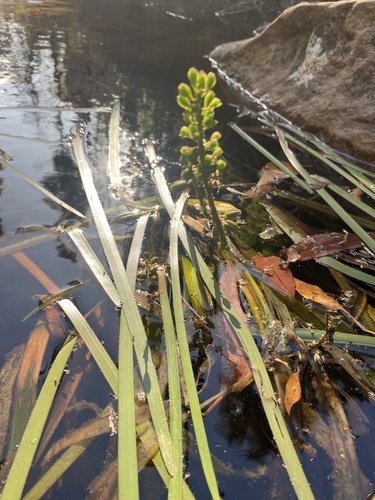
iNaturalist· cc-by-nc-sa
(c) Brendan Kays, some rights reserved (CC BY-NC-SA)
Summary
Source: WikipediaCycnogeton procerum (formerly Triglochin procera), is an aquatic plant species in the family Juncaginaceae. It is commonly referred to as 'water ribbons', but has many other names in Indigenous Australian languages, including Po-lan-go (Koorie name) and Gabirr (Marra name).
Description
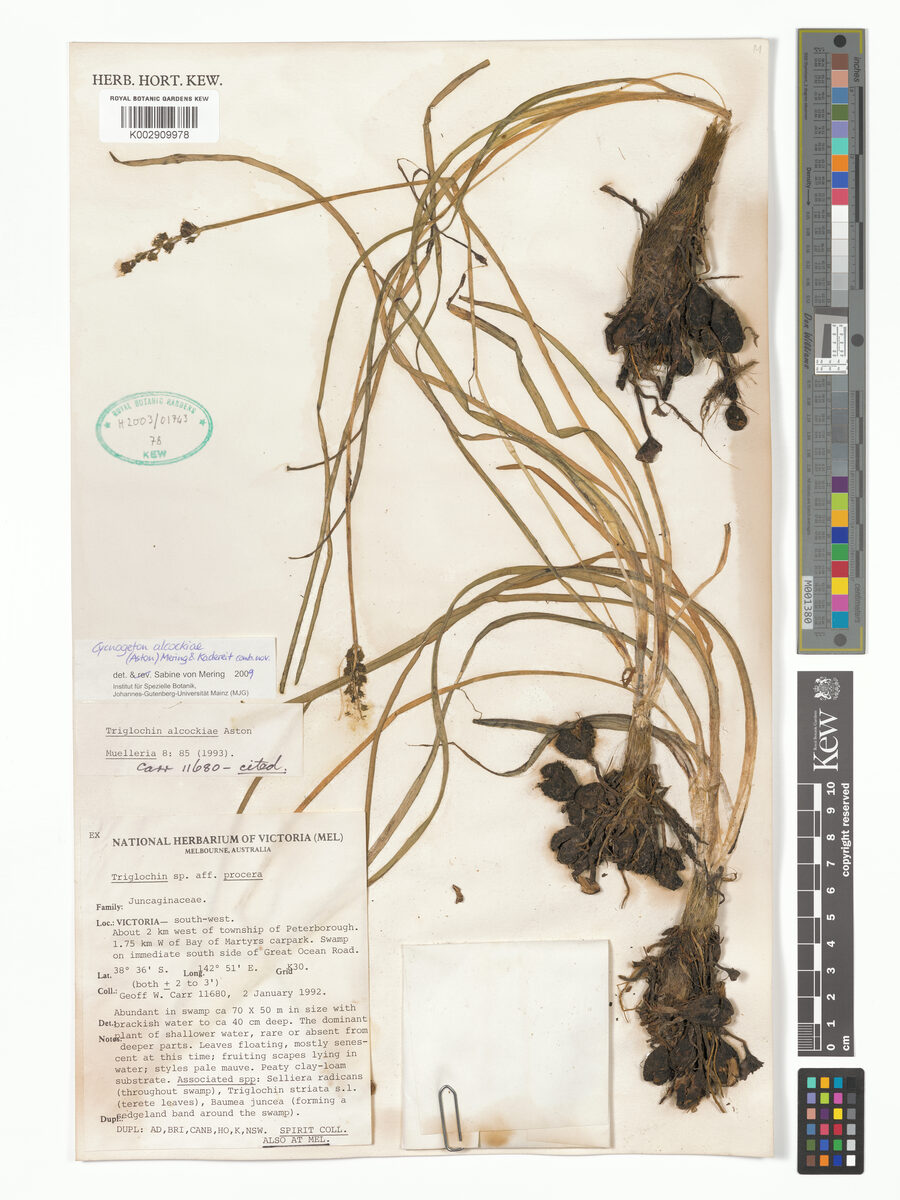
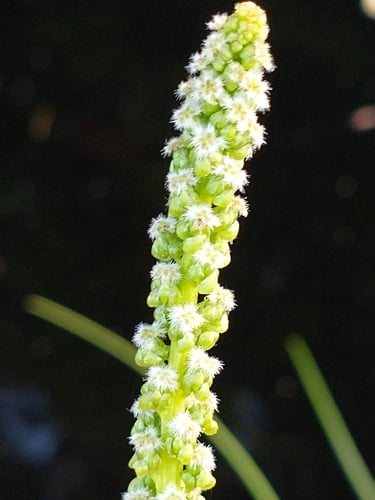
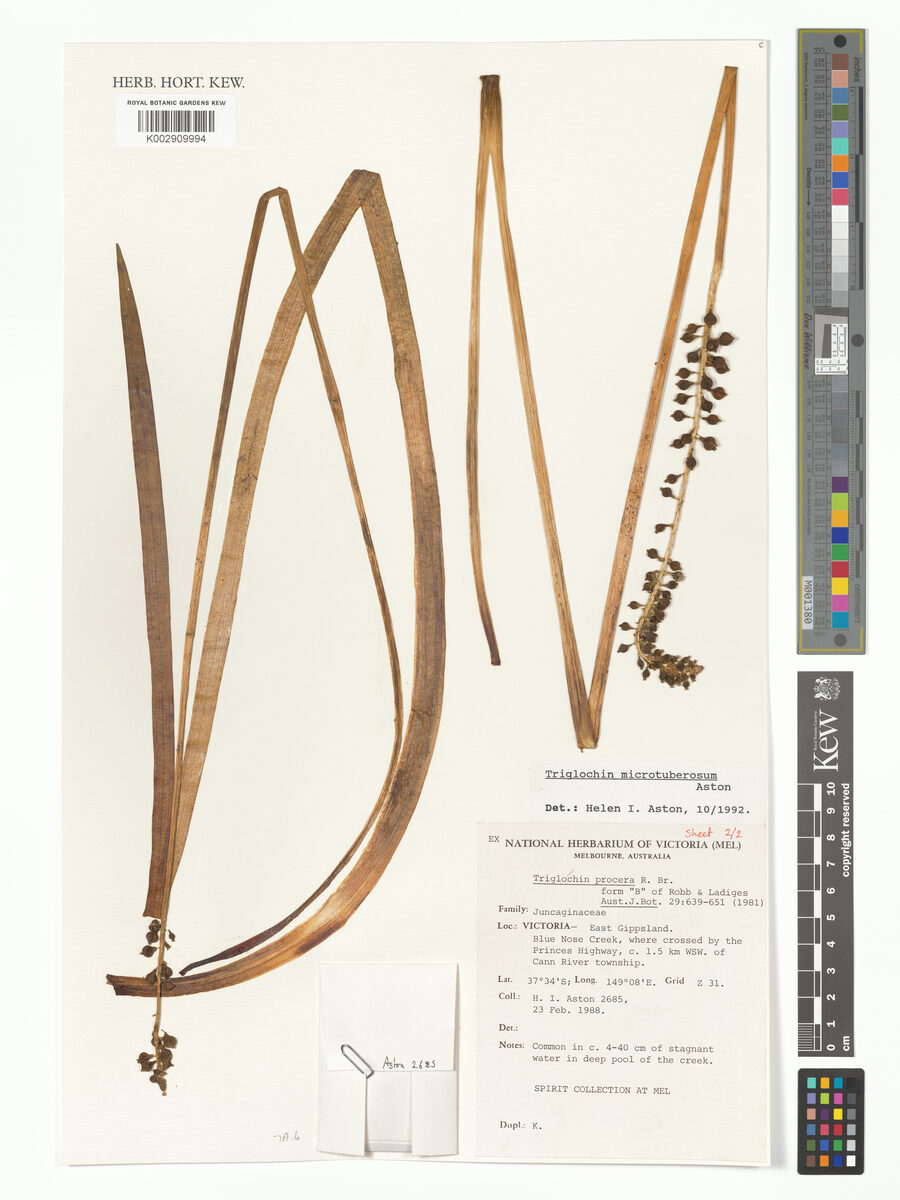
A plant which keeps growing from year to year. It grows to 1.5 m high and floats on the surface of the water. The stem is short and thick. It is round in cross section and solid. The roots end in tubers. These can be 12 mm wide and 4 cm long. The leaves are shaped like straps or ribbons. They can be 2-3.5 m long and 35 mm wide. The upper part of the leaves float. They flowers occur in dense heads at the ends of erect stalks. The flowers are white or green. Flower heads can be 30 cm long. The plant forms tubers in the mud. If the water is flowing the tubers are smaller and more fibrous. These can be 1-5 cm long by 1-1.5 cm wide.
Edible Uses
The tubers are steamed or eaten raw, and very young seeds are also eaten.
Traditional Uses
The tubers are steamed and eaten. They can also be eaten raw. The very young seeds can also be eaten.
This uses section is brief — help expand it
Known Hazards
One sample contained 230 mg of Vitamin C per 100 g.
Distribution
A tropical plant. It grows in temperate to tropical regions. It grows in ponds and in water gardens. It can grow in still water which is either fresh or salt. It needs an open sunny position. It is resistant to frost but cannot tolerate drying out. It grows in wetlands and swamps rather than simply floating in water. It can grow in water up to 2 m deep but can also grow in muddy banks. Tasmania Herbarium.
Where It Grows
Australia, Pacific, Papua New Guinea, PNG, Tasmania,
Cultivation
Plants can be grown from seed or by division of the clump. Seed germinate easily in shallow water.
Production
A plant can produce 5-200 pale crips tubers.
Other Information
The variety of this plant that grows in Papua New Guinea is smaller than the more common one from Australia.
Notes
One sample had 230 mg of Vitamin C per 100 g. There are about 15 Triglochin species. They grow in marshes in temperate regions.
Synonyms
Also Known As
Ankukbam, Birrkarn, Ngareli, Pol-an-go
References (30)
- Bodkin, F., 1991, Encyclopedia Botanica. Cornstalk publishing, p 993 (As Triglochin procera)
- Cherikoff V. & Isaacs, J., The Bush Food Handbook. How to gather, grow, process and cook Australian Wild Foods. Ti Tree Press, Australia p 128, 191, 197 (As Triglochin procera)
- Clarke, P. A., 2013, The Aboriginal Ethnobotany of the Adelaide Region, South Australia. Transactions of the Royal Society of South Australia. (2013), 137(1): 97-126 (As Triglochin procera)
- Cribb, A.B. & J.W., 1976, Wild Food in Australia, Fontana. p 155 (As Triglochin procera)
- Cronin, L., 1989, The Concise Australian Flora. Reed. p 57 (As Triglochin procera)
Show all 30 references Hide references
- Dashorst, G.R.M., and Jessop, J.P., 1998, Plants of the Adelaide Plains & Hills. Botanic Gardens of Adelaide and State Herbarium. p 170 (As Triglochin procera)
- De Angelis, D., 2005, Aboriginal Plant Use of the Greater Melbourne Area. La Trobe University Environment Collective (As Triglochin procera)
- Flora Malesiana Vol 13 p 57 (As Triglochin procera var. dubia ?)
- Garde, M., et al, 2003, A Preliminary List of Kundedjnjenghmi Plant Names. Northern Land Council. (Arnhem Land, Australia) (As Triglochin procera)
- Gott, B & Conran, J., 1991, Victorian Koorie Plants. PO Box 666 Hamilton, Victoria 3300, Australia. p 9 (As Triglochin procera)
- Hardwick, R.J., 2000, Nature's Larder. A Field Guide to the Native Food Plants of the NSW South Coast. Homosapien Books. p 121 (As Triglochin procera)
- Haslam, S., 2004, Noosa's Native Plants. Noosa Integrated Catchment Assn. Inc. p 157 (As Triglochin procera)
- Hastings Advance Community College, 2017, Uses for Native Plants of the Mornington Peninsula. 86pp. p 78 (As Triglochin procera)
- Heywood, V.H., Brummitt, R.K., Culham, A., and Seberg, O., 2007, Flowering Plant Families of the World. Royal Botanical Gardens, Kew. p 378 (As Triglochin procerum)
- Hibbert, M., 2002, The Aussie Plant Finder 2002, Florilegium. p 301 (As Triglochin procera)
- Lamp, C & Collet F., 1989, Field Guide to Weeds in Australia. Inkata Press. p 313 (As Triglochin procera)
- Lazarides, M. & Hince, B., 1993, Handbook of Economic Plants of Australia, CSIRO. p 241 (As Triglochin procera)
- Leach, G.J., & Osborne, P.L., 1985, Freshwater Plants of Papua New Guinea. UPNG Press, p 160 (As Triglochin procera)
- Lim, T. K., 2015, Edible Medicinal and Non Medicinal Plants. Volume 9, Modified Stems, Roots, Bulbs. Springer p 82 (As Triglochin procera)
- Low, T., 1991, Wild Food Plants of Australia. Australian Nature FieldGuide, Angus & Robertson. p 49 (As Triglochin procera)
- Low, T., 1992, Bush Tucker. Australia’s Wild Food Harvest. Angus & Robertson. p 109, 110 (As Triglochin procera)
- Morley, B.D., & Toelken, H.R., (Eds), 1983, Flowering Plants in Australia. Rigby. p 318 (As Triglochin procera)
- Plants for a Future database, The Field, Penpol, Lostwithiel, Cornwall, PL22 0NG, UK. http://www.scs.leeds.ac.uk/pfaf/ (As Triglochin procera)
- Sainty, G.R. & Jacobs, S.W.L., 1981, Waterplants of New South Wales. Water Resources Commission. NSW p 268 (As Triglochin procera)
- Stephens, K.M., & Dowling, R.M., 2002, Wetland Plants of Queensland. A field guide. CSIRO p 40 (As Triglochin procera)
- Tasmanian Herbarium Vascular Plants list p 66 (As Triglochin procera)
- Woolmore, E et al, 2002, King Island Flora: A Field Guide. p 90 (As Triglochin procera)
- www.ceres.org.au/bushfoodcatalogue (As Triglochin procera)
- World Checklist of Useful Plant Species 2020. Royal Botanic Gardens, Kew (As Triglochin procera)
- Zola, N., & Gott, B., 1992, Koorie Plants Koorie People. Koorie Heritage Trust. p 12 (As Triglochin procera)