Ailanthus altissima
(Mill.) Swingle
Tree of heaven, Chinese sumac
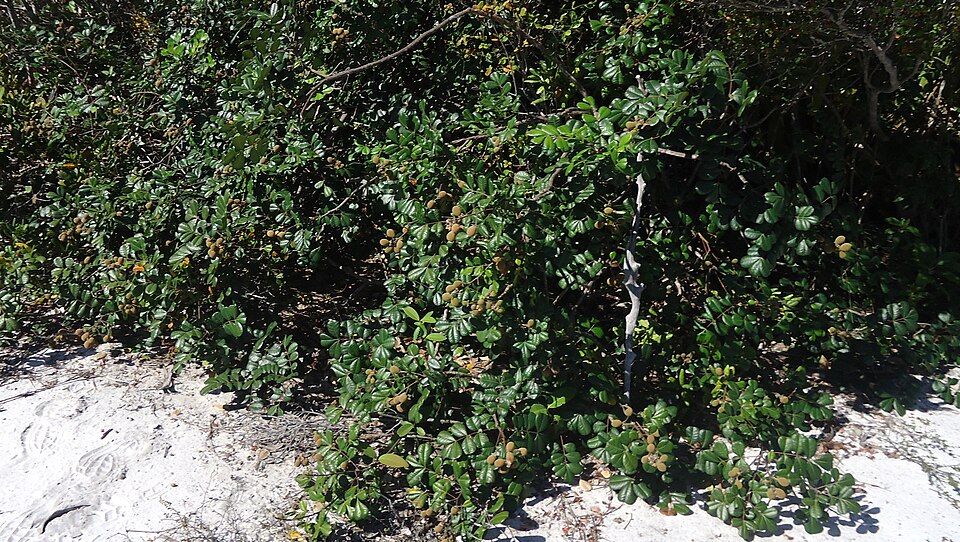
iNaturalist· cc-by-sa
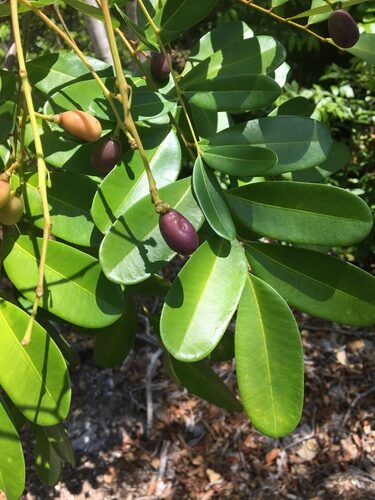
(c) Nicola van Berkel, some rights reserved (CC BY-SA), uploaded by Nicola van Berkel
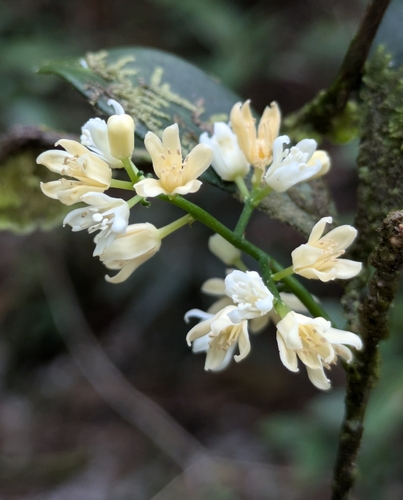
iNaturalist· cc-by-sa
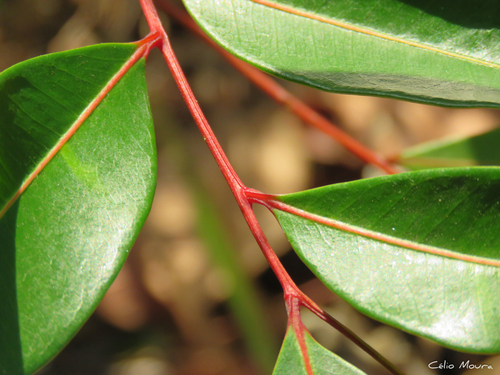
(c) Douglas Goldman, some rights reserved (CC BY-SA), uploaded by Douglas Goldman
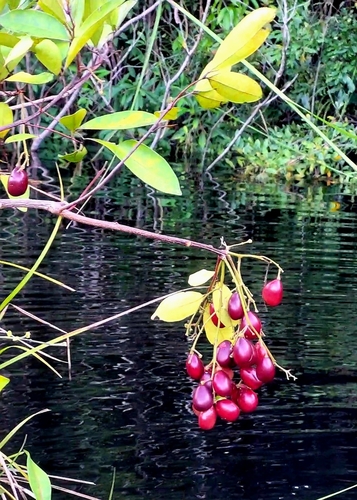
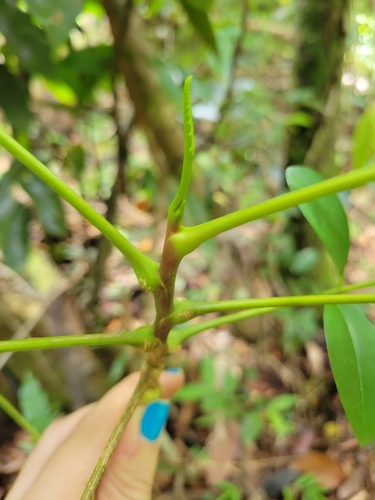
iNaturalist· cc-by
(c) Emily Summerbell, some rights reserved (CC BY), uploaded by Emily Summerbell
Summary
Source: WikipediaAilanthus altissima ( ay-LAN-thəss al-TIH-sim-ə), commonly known as tree of heaven or ailanthus tree, is a deciduous tree in the quassia family. It is native to northeast, central China, and Taiwan. Unlike other members of the genus Ailanthus, it is found in temperate climates rather than the tropics. The tree grows rapidly, and is capable of reaching heights of 15 metres (50 ft) in 25 years. While the species rarely lives more than 50 years, some specimens exceed 100 years of age. It is considered a noxious weed and vigorous invasive species, and one of the worst invasive plant species in Europe and North America. In 21st-century North America, the invasiveness of the species has been compounded by its role in the life cycle of the also destructive and invasive spotted lanternfly.
Description
A deciduous tree. It grows to 25 m high and spreads 15 m across. The stem is stout and erect. The trunk can be 75 cm across. It forms suckers. The bark is smooth and grey. The leaves are dark green and compound. They are 1 m long. They have unequal leaflets along the stalk. There are 11-41 leaflets. The central stalk is 25-75 cm long. The leaflets are 5-15 cm long. They are widest towards the base and pointed at the tip. They have an unpleasant smell when crushed. There are small basal lobes or teeth near the base. The flowers are yellowish-green. They occur in large erect clusters. They are at the tip of the shoot. The male and female flowers are on separate trees. The male flowers have a bad smell. The fruit are red with wings. There is a seed case with one dry seed and a long twisted wing around it.
Edible Uses
The leaves can be cooked and eaten, though they have an offensive odour and are best reserved for use as an emergency food during times of scarcity. Some caution is advised given the plant's toxicity.
Traditional Uses
The young leaves have been cooked and eaten as an emergency food. They possibly contain some poisons. CAUTION: The flowers can irritate the skin. The plant produces a greenish-brown honey.
Medicinal Uses
Tree of heaven sees more use in Oriental herbal medicine than in Western practice. The bark is the most commonly used part, though it contains an incompletely researched glycoside and should be used with caution. The root and stem bark are antispasmodic, astringent, bitter, cardiac depressant, diuretic, emetic, febrifuge, rubefacient, and vermifuge — though these vermifuge properties are ineffective against roundworms or earthworms. As a nauseatingly bitter herb, it is used internally to treat malaria and fevers, slow the heart rate, and relax spasms. Use must be supervised by a qualified practitioner, as the bark readily induces vomiting. In China, the bark is a popular remedy for dysentery and bowel complaints; one clinical trial reported 81 of 82 patients cured of dysentery with this herb. A tincture of the root bark has been used successfully for cardiac palpitations, asthma, and epilepsy. The plant is a folk remedy for a wide range of conditions including asthma, cancer, diarrhoea, dysentery, dysmenorrhoea, dysuria, premature ejaculation, epilepsy, fever, gonorrhoea, haematochezia, leucorrhoea, malaria, metrorrhagia, sores, spasms, spermatorrhoea, stomach complaints, breast tumours (China), and wet dreams. The bark is harvested in spring and dried for later use. The leaves, trunk bark, and roots are prepared as a wash to treat parasitic ulcers, itch, and skin eruptions. In Korea, the root bark is used for coughs and gastric and intestinal upsets. The stem bark is emmenagogue. The leaves are anthelmintic, astringent, and deobstruent. The fruit is used to treat bloody stools and dysentery, and has also been used for ophthalmic diseases. Plant extracts are bactericidal, and the tree features in homeopathic cancer remedies. A resin extracted from the roots and leaves acts as a revulsive or vesicant.
Distribution
It is a temperate plant. It is native to China. It is drought and frost resistant. It will grow on most soils. It has become a problem plant in some areas of Australia. It cannot tolerate shade. It is naturalised in temperate North and South America. In Argentina it grows between sea level and 800 m above sea level. It needs an annual temperature between 10-20°C and areas with an annual rainfall between 300-2,500 mm. It grows in hardiness zones 5-10. Melbourne Botanical gardens.
Where It Grows
Andorra, Argentina, Asia, Australia, Britain, Canada, Central Asia, Chile, China*, Cyprus, Europe, India, Iran, Iraq, Japan, Korea, Mediterranean, Middle East, Morocco, New Zealand, North America, Pakistan, South America, Taiwan, Tajikistan, Tasmania, Turkey, Türkiye, Uruguay, USA,
Cultivation
It is grown from seed or from suckers near the base of the tree. Male and female plants must be grown if seed is required. Seed need 8 weeks cold treatment to enable them to germinate well. Root cuttings can be used.
Propagation
Seed is best sown outdoors as soon as it is ripe. Small quantities are better sown in a cold frame. Germination averages around 56%, though one kilogram of seed typically yields about 6,500 usable plants. A short cold stratification of 8 weeks improves germination. Seed is not usually produced in Britain. Prick seedlings into individual pots when large enough to handle, overwinter in a cold frame, and plant out in late spring. Root cuttings can be taken in December. Suckers can be planted out in late winter.
Other Uses
A yellow dye can be obtained from the leaves. The leaves contain 12% tannin, quercetin, isoquercetin, and the alkaloid linuthine. Both leaves and wood are high in cellulose and are used in paper-making. Crushed leaves and flowers repel insects, and plant parts steeped in water yield an insecticidal solution. An aqueous leaf extract contains a substance toxic to other tree seedlings. When planted in marshy areas, the trees drain the soil, eliminating mosquito breeding sites. The extensive, freely suckering root system makes the plant useful for soil stabilisation, and its tolerance of soil pollution suits it to land reclamation on old mine tips and similar sites. Plants can be grown as a tall hedge. The wood is fairly hard, heavy, coarse-grained, difficult to split, and not particularly durable, but it is easy to work and polish and is suitable for cabinetry, cellulose manufacture, furniture, lumber, pulp, and woodwork. It is also used locally for charcoal and firewood, with yields of around 20 cubic metres per hectare possible.
Production
A tree that is fast growing but short lived. It can live for 75 years.
Other Information
The leaves are a famine food.
Notes
There are 5-10 Ailanthus species. When plants are put into marshy areas they drain the soil and thereby remove mosquito breeding sites. The plants have extensive root systems and sucker freely, they can be used in soil-stabilization programmes . Since the plant is tolerant of soil pollution it can also be used in land reclamation schemes on old mine tips etc. (From PFAF). It can become invasive.
Synonyms
Also Known As
Ailanto, Chouchun, Stinking Chun
References (27)
- Altschul, S.V.R., 1973, Drugs and Foods from Little-known Plants. Notes in Harvard University Herbaria. Harvard Univ. Press. Massachusetts. no. 1960
- Ambasta S.P. (Ed.), 2000, The Useful Plants of India. CSIR India. p 23
- Biocyclopedia Edible Plant Species. biocyclopedia.org
- Blamey, M and Grey-Wilson, C., 2005, Wild flowers of the Mediterranean. A & C Black London. p 124
- Bodkin, F., 1991, Encyclopedia Botanica. Cornstalk publishing, p 60
Show all 27 references Hide references
- Brown, D., 2002, The Royal Horticultural Society encyclopedia of Herbs and their uses. DK Books. p 107
- Coombes, A.J., 2000, Trees. Dorling Kindersley Handbooks. p 296
- Cundall, P., (ed.), 2004, Gardening Australia: flora: the gardener's bible. ABC Books. p 119
- Etherington, K., & Imwold, D., (Eds), 2001, Botanica's Trees & Shrubs. The illustrated A-Z of over 8500 trees and shrubs. Random House, Australia. p 82
- Facciola, S., 1998, Cornucopia 2: a Source Book of Edible Plants. Kampong Publications, p 230
- Farrar, J.L., 1995, Trees of the Northern United States and Canada. Iowa State University press/Ames p 232
- J. Wash. Acad. Sci. 6:495. 1916
- Lamberton, K (Ed.), 2004, The Australian gardening encyclodepia. Murdoch Books, NSW Australia. p 153
- Harris, E & J., 1983, Field Guide to the Trees and Shrubs of Britain. Reader's Digest. p 170
- Hedrick, U.P., 1919, (Ed.), Sturtevant's edible plants of the world. p 31 (As Ailanthus glandulosa)
- Heywood, V.H., Brummitt, R.K., Culham, A., and Seberg, O., 2007, Flowering Plant Families of the World. Royal Botanical Gardens, Kew. p 304
- Lamp, C & Collet F., 1989, Field Guide to Weeds in Australia. Inkata Press. p 8
- Little, E.L., 1980, National Audubon Society Field Guide to North American Trees. Alfred A. Knopf. p 539
- Lord, E.E., & Willis, J.H., 1999, Shrubs and Trees for Australian gardens. Lothian. p 46
- Luo, B., et al, 2019, Wild edible plants collected by Hani from terraced rice paddy agroecosystem in Honghe Prefecture, Yunnan, China. Journal of Ethnobiology and Ethnomedicine 15:56
- Marinelli, J. (Ed), 2004, Plant. DK. p 443
- Paczkowska, G . & Chapman, A.R., 2000, The Western Australian Flora. A Descriptive Catalogue. Western Australian Herbarium. p 534
- Plants for a Future database, The Field, Penpol, Lostwithiel, Cornwall, PL22 0NG, UK. http://www.scs.leeds.ac.uk/pfaf/
- Schuler, S., (Ed.), 1977, Simon & Schuster's Guide to Trees. Simon & Schuster. No. 79
- Valder, P., 1999, The Garden Plants of China. Florilegium. p 263
- www.worldagroforestrycentre.org/treedb/
- Young, J., (Ed.), 2001, Botanica's Pocket Trees and Shrubs. Random House. p 78