Exocarpos aphyllus
R. Br.
Leafless Ballart, Leafless Cherry, Stiff Cherry
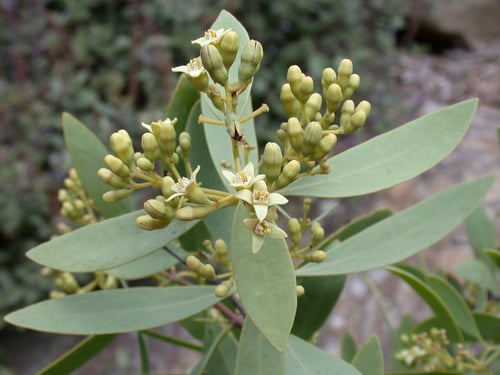
iNaturalist· cc-by-nc
(c) Euan Moore, some rights reserved (CC BY-NC), uploaded by Euan Moore
iNaturalist· cc-by-nc
(c) wilduachilles (Horst Weber), some rights reserved (CC BY-NC), uploaded by wilduachilles (Horst Weber)
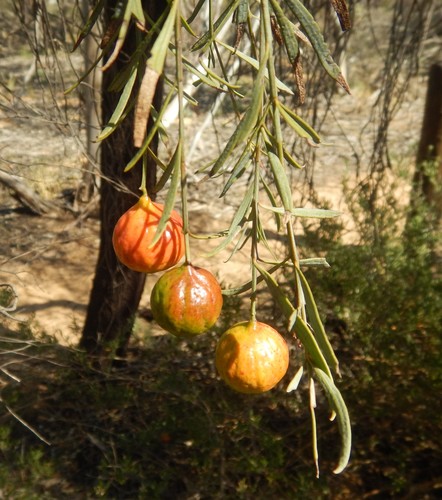
iNaturalist· cc-by-nc
(c) cinclosoma, some rights reserved (CC BY-NC), uploaded by cinclosoma
Summary
Source: WikipediaExocarpos aphyllus commonly known as leafless ballart,or chuk, chukk, dtulya and merrinby Noongar people, is a flowering plant in the family Santalaceae. It is a much-branched perennial with small, yellow-green flowers and is endemic to Australia.
Description
A shrub. It grows 2-5 m high and spreads 3-5 m across. It has many branches, The small branches are rigid and often end in a spine. The leaves are very small or scale like. The flowers are very small. They are cream and do not have a stalk. They occur in dense spikes or clusters. The fruit is attached to the succulent and edible fruit-like stalk. The fruit are about 0.5 cm across. It is a hairy nut on the end of a green or bright red stalk.
Edible Uses
The succulent, edible fruit-like stalks bearing the small nuts are eaten.
Medicinal Uses
Noongar (south-west Western Australian Indigenous Australians) boiled the stems in water to make decoctions for internal use to treat colds, and externally to treat sores. The mixture was also used to make poultices to be applied to the chest to treat "wasting diseases".
Distribution
It grows in arid and semiarid inland regions in Australia. It can grow near the coast. It grows attached to or in association with other plants. It can be in sandy soils or well drained clays.
Where It Grows
Australia*,
Cultivation
Plants are hard to propagate.
Notes
There are about 26 Exocarpus species.
References (11)
- Altschul, S.V.R., 1973, Drugs and Foods from Little-known Plants. Notes in Harvard University Herbaria. Harvard Univ. Press. Massachusetts. no. 786
- Bodkin, F., 1991, Encyclopedia Botanica. Cornstalk publishing, p 467
- Boomsma, C.D., 1972, Native Tree of South Australia. Woods & Forests Department South Australia, Bulletin No.19. p 188
- Clarke, P. A., 2013, The Aboriginal Ethnobotany of the Adelaide Region, South Australia. Transactions of the Royal Society of South Australia. (2013), 137(1): 97-126
- Cribb, A.B. & J.W., 1976, Wild Food in Australia, Fontana. p 75
Show all 11 references Hide references
- Dashorst, G.R.M., and Jessop, J.P., 1998, Plants of the Adelaide Plains & Hills. Botanic Gardens of Adelaide and State Herbarium. p 50
- Elliot, W.R., & Jones, D.L., 1992, Encyclopedia of Australian Plants suitable for cultivation. Vol 4. Lothian. p 268
- Lazarides, M. & Hince, B., 1993, Handbook of Economic Plants of Australia, CSIRO. p 112
- Low, T., 1991, Wild Food Plants of Australia. Australian Nature FieldGuide, Angus & Robertson. p 136
- Paczkowska, G . & Chapman, A.R., 2000, The Western Australian Flora. A Descriptive Calatogue. Western Australian Herbarium. p 526
- Plants for a Future database, The Field, Penpol, Lostwithiel, Cornwall, PL22 0NG, UK. http://www.scs.leeds.ac.uk/pfaf/
More from Santalaceae
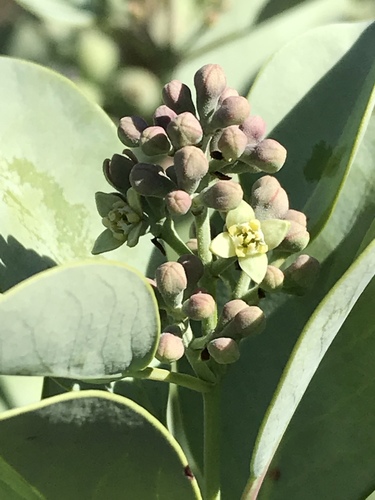
Santalum ellipticum
Hawaiian sandalwood
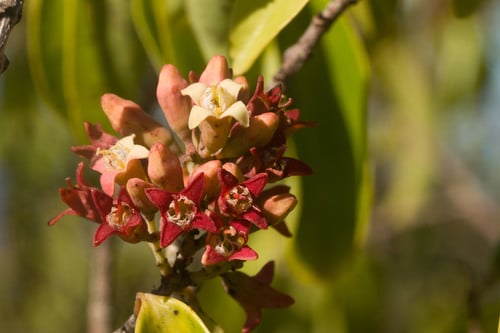
Santalum freycinetianum
Forest sandalwood, Freycinet sandalwood
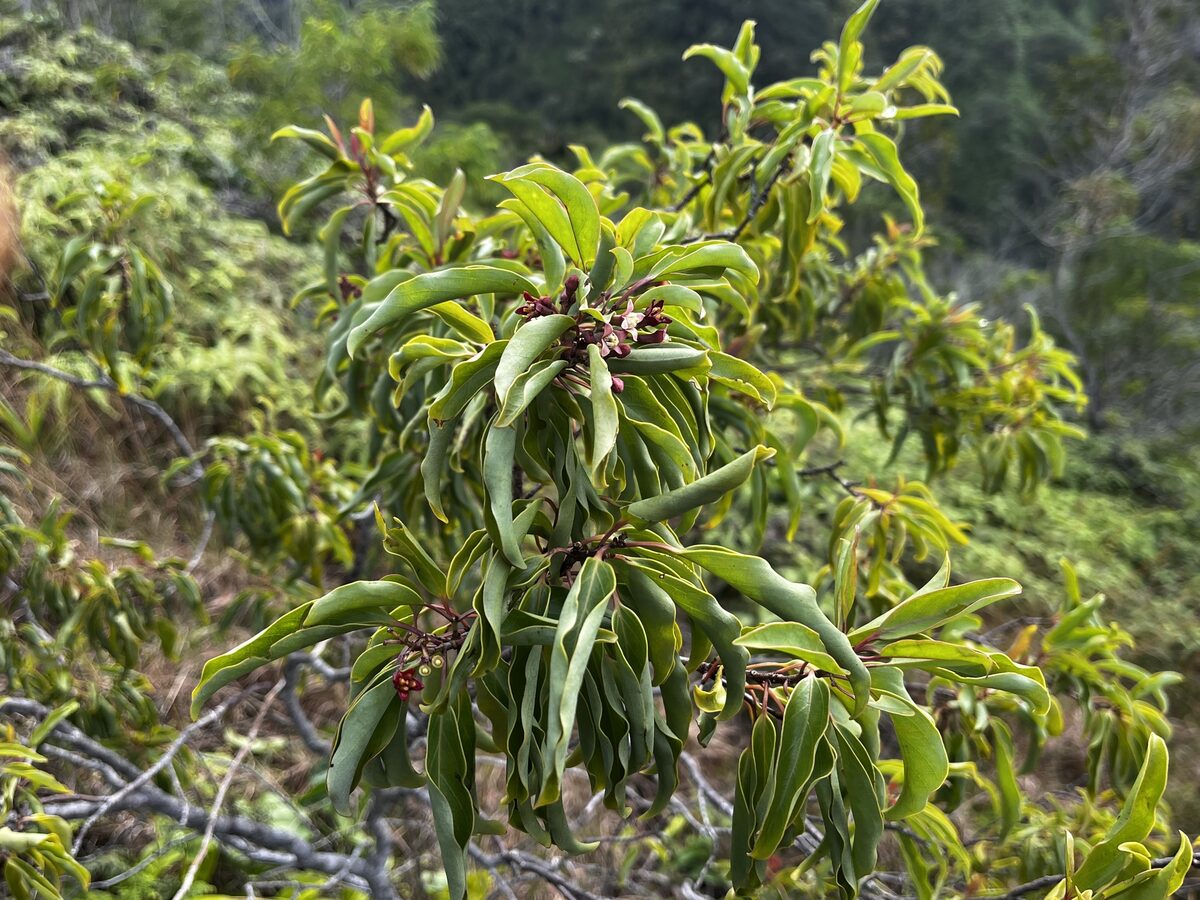
Santalum freycinetianum -
Lanai Sandalwood, Hawaiian Sandalwood
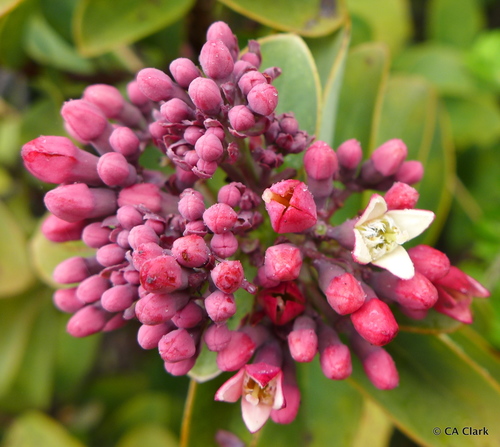
Santalum haleakalae
Haleakalae sandalwood
Santalum lanceolatum
Sandalwood, Northern sandalwood, Bush plum
Santalum murrayanum
Bitter quandong, Ming