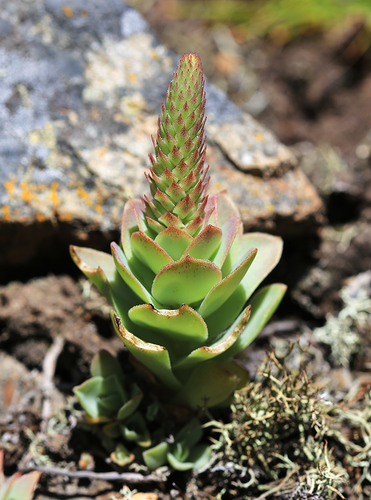
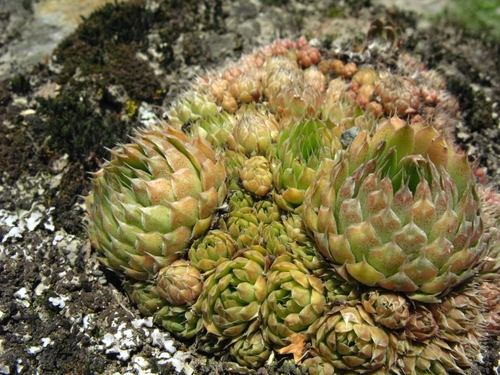
Sedum kamtschaticum
Fisch.&C.A.Mey.
Orange stonecrop, Kamschataka Sedum, Kamschataka Stonecrop
gbif· cc-by
GBIF
gbif· cc0
Patrick Le Mao
gbif· cc0
Patrick Le Mao
Description
Sedum kamtschaticum is an evergreen Perennial growing to 0.1 m (0ft 4in) by 0.3 m (1ft) at a medium rate. See above for USDA hardiness. It is hardy to UK zone 7. It is in leaf all year, in flower from July to August, and the seeds ripen from August to September. The species is hermaphrodite (has both male and female organs) and is pollinated by Insects. The plant is self-fertile. Suitable for: light (sandy), medium (loamy) and heavy (clay) soils and prefers well-drained soil. Suitable pH: mildly acid, neutral and basic (mildly alkaline) soils. It cannot grow in the shade. It prefers dry or moist soil and can tolerate drought.
Edible Uses
Young leaves and stems - cooked.
Medicinal Uses
Anodyne Antiphlogistic Poultice. The whole plant is anodyne and antiphlogistic. It stimulates the circulation. A decoction is used in the treatment of traumatic injuries, bleeding cuts, burns and poisonous snakebites. The fresh plant is crushed and applied externally to cuts, burns, traumatic injuries etc.
Known Hazards
Although not poisonous, if large quantities of this plant are eaten it can cause a stomach upset.
Distribution
E. Asia - Japan to Siberia.
Where It Grows
TEMPERATE ASIA: Russian Federation (Kurile Islands, Primorye, Kamcatskij kraj, Sakhalin), China (Hebei Sheng, Heilongjiang Sheng, Jilin Sheng, Liaoning Sheng, Nei Mongol Zizhiqu), Japan (Hokkaidô)
Cultivation
Succeeds in most soils but prefers a fertile well-drained soil. Requires a sunny position. A very drought tolerant plant once established, it can be grown in crevices on walls. Hardy to about -15°c. This species is closely related to S. hybridum and S. aizoon. All members of this genus are said to have edible leaves, though those species, such as this one, that have yellow flowers can cause stomach upsets if they are eaten in quantity. Plants in this genus seem to be immune to the predations of rabbits.
Propagation
Seed - surface sow in spring in well-drained soil in a sunny position in a greenhouse. Do not allow the soil to dry out. Prick out the seedlings into individual pots when they are large enough to handle. If sufficient growth is made, it is possible to plant them out during the summer, otherwise keep them in a cold-frame or greenhouse for their first winter and plant them out in early summer of the following year. Division is very easy and can be carried out at almost any time in the growing season, though is probably best done in spring or early summer. Larger divisions can be planted out direct into their permanent positions. We have found it best to pot up the smaller divisions and grow them on in a lightly shaded position in a cold frame, planting them out once they are well established in the summer.
Other Uses
Plants can be grown as a ground cover when planted about 30cm apart each way.