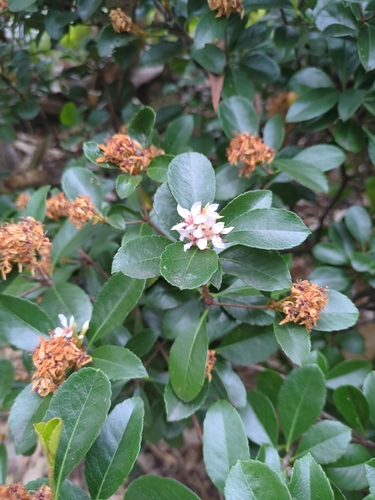
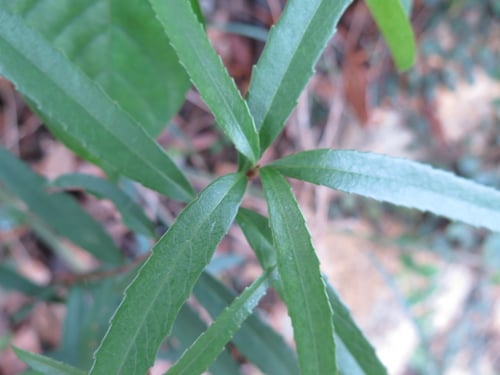
Potentilla fruticosa
L.
Shrubby Cinquefoil, Potentilla
gbif· cc-by-nc-nd
Mi
gbif· cc-by
Jaak Pärtel
gbif· cc-by-nc-nd
Ott Luuk
Description
Potentilla fruticosa is a deciduous Shrub growing to 1.2 m (4ft) by 1.2 m (4ft in) at a medium rate. See above for USDA hardiness. It is hardy to UK zone 6. It is in flower from June to July. The species is dioecious (individual flowers are either male or female, but only one sex is to be found on any one plant so both male and female plants must be grown if seed is required). and is pollinated by Bees, flies. The plant is not self-fertile. It is noted for attracting wildlife. Suitable for: light (sandy), medium (loamy) and heavy (clay) soils and prefers well-drained soil. Suitable pH: mildly acid, neutral and basic (mildly alkaline) soils. It can grow in semi-shade (light woodland) or no shade. It prefers moist soil and can tolerate drought. The plant can tolerates strong winds but not maritime exposure.
Edible Uses
A tea is made from the dried leaves[2, 46, 61, 183, 257, 272]. Used as a substitute for China tea, especially by people living at high elevations in the Himalayas.
Medicinal Uses
Astringent. The leaves are astringent. The juice of the root is used in the treatment of indigestion.
Distribution
Europe, including Britain, from Sweden south and east to the Pyrenees, N. and C. Asia to Japan.
Where It Grows
TEMPERATE ASIA: Russian Federation (Buryatia, Gorno-Altay, Hakasija, Respublika, Tyva, Respublika, Yakutia-Sakha, Altay, Krasnoyarsk, Taymyr, Chita, Irkutsk, Tyumen), Kyrgyzstan, Mongolia, China (Gansu Sheng, Hebei Sheng, Heilongjiang Sheng, Jilin Sheng, Liaoning Sheng, Nei Mongol Zizhiqu, Shaanxi Sheng, Shanxi Sheng, Sichuan Sheng, Xinjiang Uygur Zizhiqu, Xizang Zizhiqu, Yunnan Sheng) TROPICAL ASIA: Bhutan, India (north), Nepal, Pakistan (northeast) EUROPE: United Kingdom, Ireland, Sweden, Estonia, Latvia
Cultivation
Easily grown in a well-drained loam, preferring a position in full sun but tolerating shade. Prefers an alkaline soil but tolerates a slightly acid soil. Prefers a light well-drained soil. Established plants are drought tolerant. A very cold-hardy plant, tolerating temperatures down to at least -25°c. A very ornamental shrub, there are many named varieties. Polymorphic. A good bee plant. Members of this genus are rarely if ever troubled by browsing deer. Dislikes growing under trees, especially Juglans species. Plants are usually dioecious but hermaphrodite forms are also known. Male and female plants must be grown if seed is required.
Propagation
Seed - sow early spring or autumn in a cold frame. When they are large enough to handle, prick the seedlings out into individual pots and grow them on in the greenhouse for at least their first winter. Plant them out into their permanent positions in late spring or early summer, after the last expected frosts. Cuttings of half-ripe wood, 3 - 5cm with a heel, July/August in a frame. Pot up in the autumn if possible and overwinter in a cold frame. Softwood cuttings taken in the early summer. Easy.
Other Uses
Hedge Hedge Incense Packing Soil stabilization Tinder. Can be grown as a medium size informal hedge. Trim in spring. Some forms, notably 'Longacre', 'Elizabeth' and 'Gold Drop' have a dense spreading habit and make good ground cover plants. A useful plant for controlling soil erosion. The dry, flaky bark is used as a tinder for friction fires. (fires started by rubbing 2 pieces of wood together very fast). The powdered plant is used as an incense. The leaves are used as a packing material in pillows.