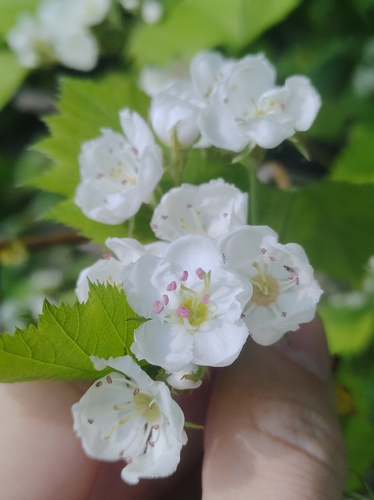
Prunus emarginata
(Douglas ex Hook.) Eaton
Bitter cherry, Oregon cherry
iNaturalist· cc-by-nc
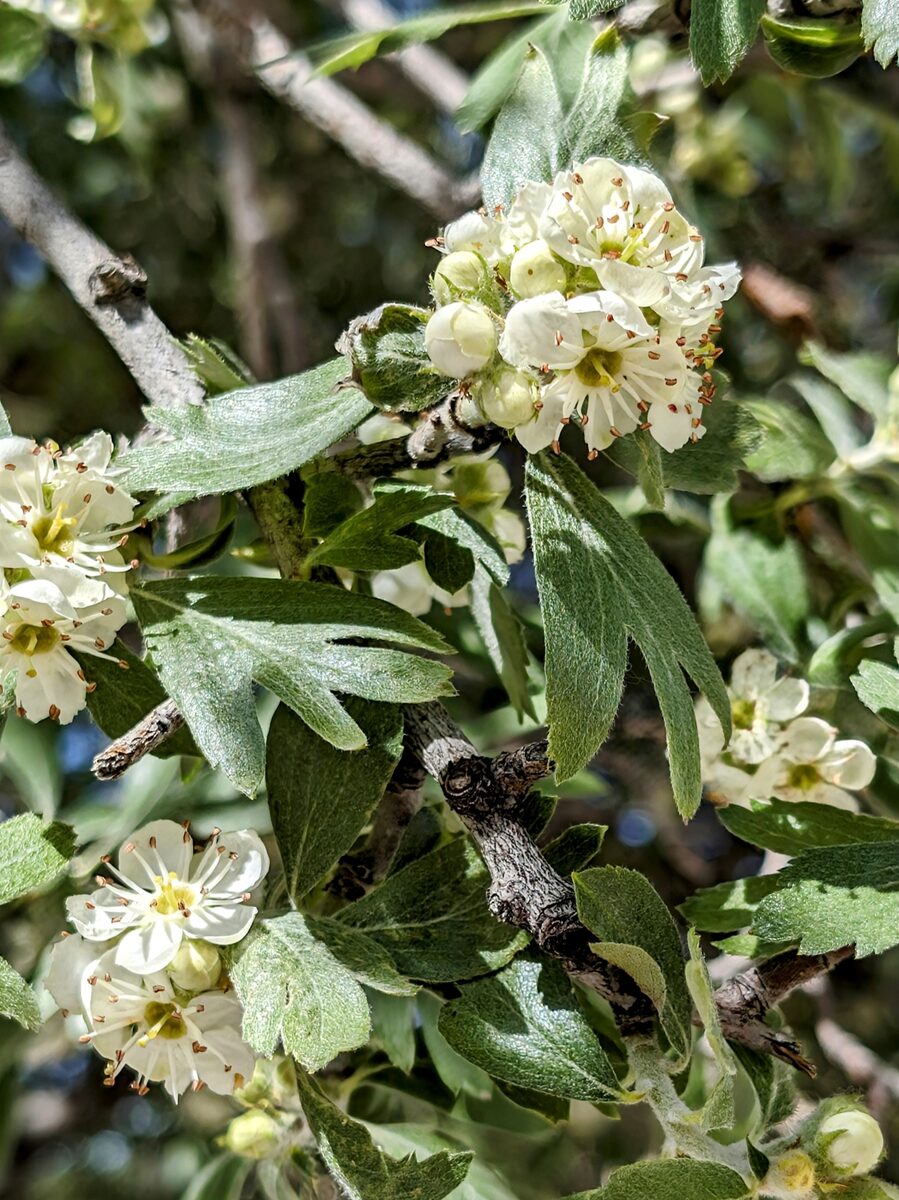
(c) Bob Hansen, some rights reserved (CC BY-NC), uploaded by Bob Hansen
iNaturalist· cc-by-nc
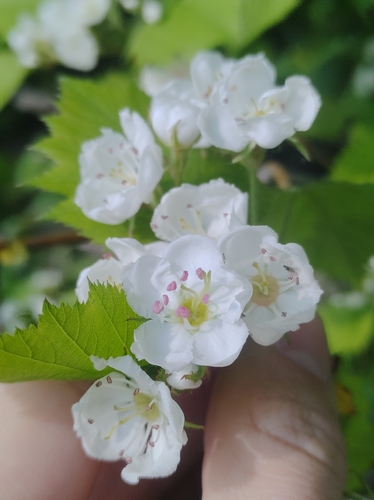
(c) jamie_r222, some rights reserved (CC BY-NC)
Summary
Source: WikipediaPrunus emarginata, the bitter cherry or Oregon cherry, is a species of Prunus native to western North America.
Description
A large tree. It grows up to 20 m high. The trunk is 70 cm across. The leaves are oval and 3-8 cm long. They gradually taper to the base. Both surfaces are dull yellowish-green. The flowers occur in clusters of 5-12. The fruit are 6-15 mm across. They are bright red but become darker red. They are bitter.
Edible Uses
The fruit can be eaten raw or cooked but is intensely bitter. Some native North American Indian tribes considered it a great delicacy and important food source, while others ate it only occasionally because of its bitter taste. The fruit is 8–15mm in diameter with a thick flesh and contains one large seed. The seed is also edible raw or cooked, but should not be eaten if it tastes too bitter.
Traditional Uses
The fruit are occasionally eaten fresh. The fruit are used to make jelly.
This uses section is brief — help expand it
Medicinal Uses
Bitter cherry was used medicinally by several native North American Indian tribes to treat a variety of complaints, though it is little used in modern herbalism. The bark is a blood purifier and acts as a cardiac, laxative and tonic. An infusion of the bark has been used to treat tuberculosis and eczema. A decoction of the root and inner bark has been taken daily for heart troubles. An infusion of the bark combined with crab apple bark (Malus spp.) has been used as a cure-all tonic for colds and other ailments. Bark stuck on with resin has been used as a dressing for wounds and swellings. An infusion of rotten wood has been used as a contraceptive. All members of the genus contain amygdalin and prunasin, compounds that break down in water to release hydrocyanic acid (prussic acid or cyanide). In small amounts this exceedingly poisonous compound stimulates respiration, improves digestion and gives a sense of well-being.
Known Hazards
Seeds contain cyanogenic compounds that break down into cyanide; avoid if excessively bitter.
Distribution
Temperate. It grows in lightly wooded areas and along streams.
Where It Grows
Canada, North America, USA,
Propagation
Seed requires 2–3 months of cold stratification and is best sown in a cold frame as soon as it is ripe. Stored seed should be sown in a cold frame as early in the year as possible and protected from mice. Germination can be slow, sometimes taking 18 months. Prick out seedlings into individual pots when large enough to handle, overwinter them in a greenhouse or cold frame, and plant out in late spring or early summer the following year. Cuttings of half-ripe wood with a heel can be taken in July/August in a frame. Softwood cuttings from strongly growing plants can be taken in spring to early summer in a frame. Layering can be done in spring.
Other Uses
A green dye can be obtained from the leaves, and a dark grey to green dye from the fruit. The bark is used to ornament baskets and can be split into strips for weaving baskets that are watertight and resistant to decay. It is both strong and flexible as well as ornamental. Like birch bark, the thin outer bark can be peeled from the tree and has been used to make baskets, mats and ropes, and as an ornament on bows and arrows. The bark can also be made into string. The wood is close-grained, soft and brittle, but takes a high polish and is sometimes used for furniture. It also makes an excellent fuel.
Other Information
It is a prized fruit.
Notes
There are about 200 Prunus species.
Synonyms
References (10)
- Beckstrom-Sternberg, Stephen M., and James A. Duke. "The Foodplant Database." http://probe.nalusda.gov:8300/cgi-bin/browse/foodplantdb.(ACEDB version 4.0 - data version July 1994)
- Hedrick, U.P., 1919, (Ed.), Sturtevant's edible plants of the world. p 524
- Farrar, J.L., 1995, Trees of the Northern United States and Canada. Iowa State University press/Ames p 378
- Grandtner, M. M., 2008, World Dictionary of Trees. Wood and Forest Science Department. Laval University, Quebec, Qc Canada. (Internet database http://www.wdt.qc.ca)
- INFOODSUpdatedFGU-list.xls
Show all 10 references Hide references
- MacKinnon, A., et al, 2009, Edible & Medicinal Plants of Canada. Lone Pine. p 86
- Man. bot. ed. 7:463. 1836
- Moerman, D. F., 2010, Native American Ethnobotany. Timber Press. p 441
- Plants for a Future, The Field, Penpol, Lostwithiel, Cornwall, PL22 0NG, UK. http://www.scs.leeds.ac.uk/pfaf/
- Turner, N., 1997, Food Plants of Interior First Peoples. Royal BC Museum Handbook p 146