Euphorbia neriifolia
L.
Fleshy spurge, Hedge Euphorbia, Oleander spurge
iNaturalist· cc0
no rights reserved, uploaded by 葉子
iNaturalist· cc-by-sa
(c) Dinesh Valke, some rights reserved (CC BY-SA)
iNaturalist· cc-by-nc
(c) K S Gopi Sundar, some rights reserved (CC BY-NC)
Summary
Source: WikipediaEuphorbia neriifolia, also known as Indian spurge tree, hedge Euphorbia, Oleander spurge and fleshy spurge, is a species of spurge native to India, which was originally described by Carl Linnaeus in 1753. Leaves from the plant are used in traditional kajal making in West Bengal, India.
Description
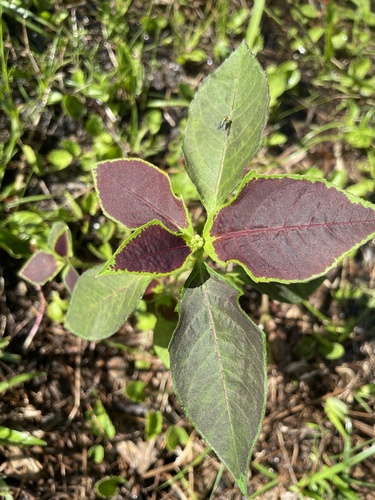
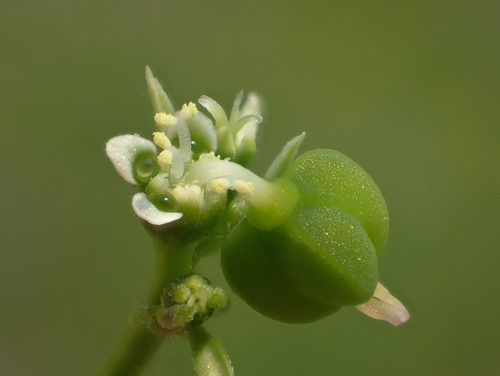
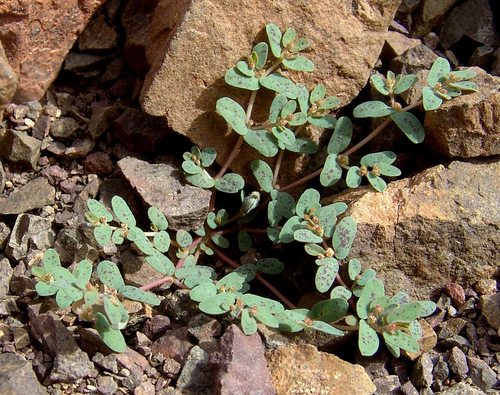
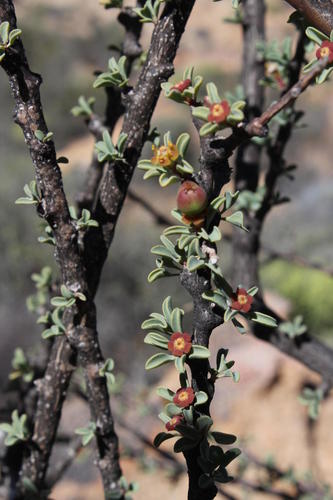
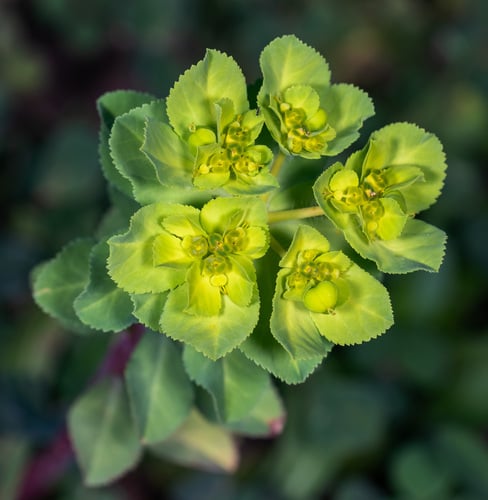
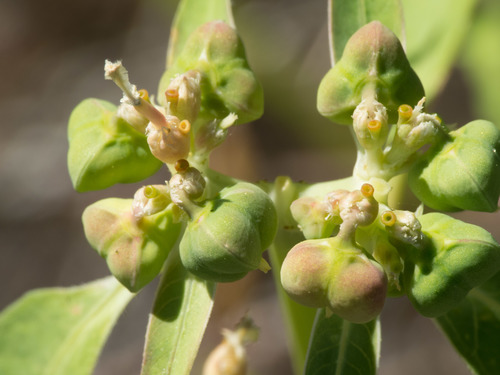
A large succulent plant. It grows 6 m tall and spreads 1.2 m wide. It is erect and with thick stems. The stems are roughly 5 cornered and with lumps along them. The stems occur in rings. The leaves are spoon shaped. They are leathery. The leaves produced raised scars along the stem after they have fallen off. The leaves are bunched towards the ends of the branches. The flowers are in heads with yellowish-green bracts.
Edible Uses
Leaves can be eaten raw or cooked. When boiled with syrup, the leaves and sliced branches can be made into sweetmeats.
Traditional Uses
Caution: All Euphorbias or spurges have irritating sap and many have chemicals that can cause cancer. A sweetmeat is made from the leaves. They are boiled with sugar and the latex removed. The stems are used for a tonic soup.
Medicinal Uses
The latex is diuretic, purgative, rubefacient and vermifuge, and is used in the treatment of asthma. A syrup made of equal parts latex and simple syrup, administered in doses of 10–20 drops three times a day, has been found to relieve asthma attacks completely. Applied externally, the latex treats haemorrhoids, sore throat, cracked lips, gonorrhoea, warts and cutaneous eruptions. The bark acts as a strong purgative. The root is considered antiseptic and, mixed with black pepper, is used both internally and externally for snake bites. The leaves are diuretic and are heated and squeezed, with the sap taken — sometimes with salt — to treat asthma, wheezing in babies, colds and stomach upset. Leaves also treat fevers, coughs, colds and diabetes. Applied externally, the sap treats infected nails and earaches. The plant has been shown to contain terpenes, anthocyanins, alcohols and steroids.
Known Hazards
The plant is poisonous and skin contact with the sap can cause blistering. The leaves and roots have been used as a fish poison.
Distribution
A tropical plant. It grows in dry rocky sites. It suits hardiness zones 10-12. In Yunnan.
Where It Grows
Asia, Australia, Bangladesh, Cambodia, China, Cuba, Dominican Republic, Haiti, Hawaii, India*, Indochina, Indonesia, Iran, Malaysia, Myanmar, Northeastern India, Pacific, Pakistan, Papua New Guinea, PNG, Philippines, Puerto Rico, SE Asia, Thailand, Trinidad-Tobago, USA, Vietnam, West Indies,
Cultivation
Prefers a positition in full sun, but also succeeds in light shade. Requires a well-drained soil, growing well in dry, often rocky places. The plant flowers intermittantly throughout the year.
Propagation
Propagated by seed or cuttings. Cuttings should be allowed to dry for a few days before being potted up in the rooting medium.
Other Uses
Being prickly and easily propagated by cuttings, the plant is grown as a live fence or hedge to keep out livestock. The latex is smeared onto cuts made by tappers in the bark of Borassus flabellifer to prevent attacks by red weevil. The attractively figured, aromatic wood is used for small objects such as knife handles. Identified as a candidate for carbon farming.
Other Information
In Papua New Guinea plants are grown around villages.
Notes
There are about 2000 Euphorbia species. Most Euphorbias have sap which irritates the skin. The sap has been used as a fish poison.
Synonyms
Also Known As
Akujemudu, Gangichu, Hiju, Hildaona, Ilai-kalli, Illakalli, K li ma, Long gua, Mansasij, Mingut, Minguta, Neyadunga, Pattonkisend, Sehund, Shazaung-myin-na, Si lei bo dong, Snuhi, Ta-zaung, Thohar, Thor, Toora, Tuaria, Yalekalli, Zizaung
References (16)
- Ambasta, S.P. (Ed.), 2000, The Useful Plants of India. CSIR India. p 213
- Borrell, O.W., 1989, An Annotated Checklist of the Flora of Kairiru Island, New Guinea. Marcellin College, Victoria Australia. p 75
- Burkill, I.H., 1966, A Dictionary of the Economic Products of the Malay Peninsula. Ministry of Agriculture and Cooperatives, Kuala Lumpur, Malaysia. Vol 1 (A-H) p 993
- Cao, Y., et al, 2020, Ethnobotanical study on wild edible plants used by three trans-boundary ethnic groups in Jiangcheng County, Pu’er, Southwest China. Journal of Ethnobiology and Ethnomedicine (2020) 16:66
- Cundall, P., (ed.), 2004, Gardening Australia: flora: the gardener's bible. ABC Books. p 588
Show all 16 references Hide references
- Flora of Pakistan. www.eFloras.org
- Hedrick, U.P., 1919, (Ed.), Sturtevant's edible plants of the world. p 303 (As Euphorbia edulis)
- Kew Plants of the World Online
- Krishen P., 2006, Trees of Delhi, A Field Guide. DK Books. p 135
- Martin, F.W. & Ruberte, R.M., 1979, Edible Leaves of the Tropics. Antillian College Press, Mayaguez, Puerto Rico. p 192 (Also as Euphorbia edulis)
- Plants of Haiti Smithsonian Institute http://botany.si.edu/antilles/West Indies
- Sp. pl. 1:451. 1753
- Staples, G.W. and Herbst, D.R., 2005, A tropical Garden Flora. Bishop Museum Press, Honolulu, Hawaii. p 286
- Terra, G.J.A., 1973, Tropical Vegetables. Communication 54e Royal Tropical Institute, Amsterdam, p 46 (Also as Euphorbia edulis)
- World Checklist of Useful Plant Species 2020. Royal Botanic Gardens, Kew
- www.nationalherbarium.nl/thaueuph/ Flora of Thailand.