Euphorbia marginata
Pursh.
Snow on the mountain
iNaturalist· cc-by-nc
(c) Doug Grinbergs, some rights reserved (CC BY-NC), uploaded by Doug Grinbergs
iNaturalist· cc-by-nc
(c) charley, some rights reserved (CC BY-NC), uploaded by charley
iNaturalist· cc-by-nc
(c) easmith2, some rights reserved (CC BY-NC), uploaded by easmith2
Summary
Source: WikipediaEuphorbia marginata (commonly known as snow-on-the-mountain, smoke-on-the-prairie, variegated spurge, or whitemargined spurge) is a small annual in the spurge family. It is native to parts of temperate North America, from Eastern Canada to the Southwestern United States. It is naturalized throughout much of China. The type specimen was collected in Rosebud County, Montana from the area of the Yellowstone River by William Clark during the Lewis and Clark Expedition.
Description
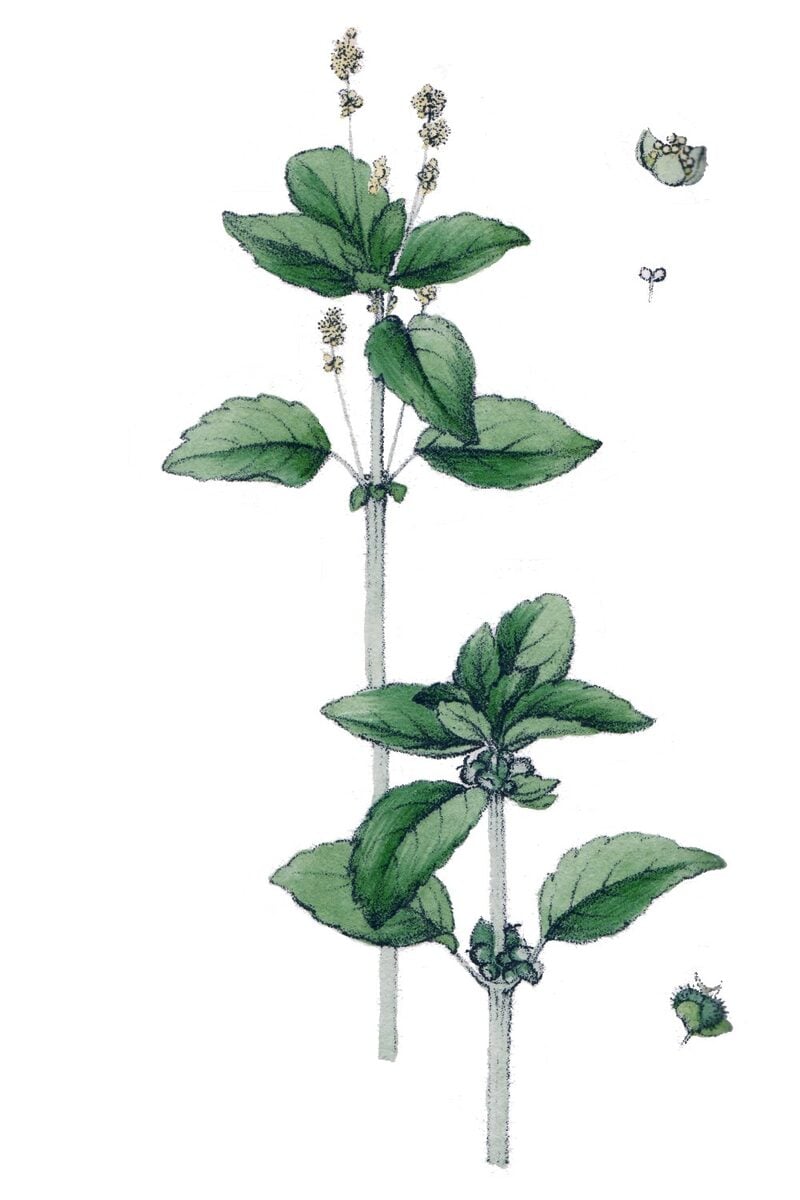
A herb. It grows each year from seeds. It grows 60-90 cm tall. Many stems come from the base. The leaves are alternate and without leaf stalks. The leaves are 5-7 cm long by 3 cm wide.
Edible Uses
A latex from the plant is used for chewing. Caution is advised given the plant's toxicity.
Traditional Uses
The latex is used for chewing gum.
This uses section is brief — help expand it
Medicinal Uses
The plant is astringent and used for women's complaints, including the treatment of leucorrhoea. An infusion of the crushed leaves has been used as a liniment for swellings. An infusion of the plant has been used to increase milk flow in nursing mothers. Any medicinal use should be carried out with great care given the plant's toxicity.
Known Hazards
The sap contains a latex which is toxic on ingestion and highly irritant externally, causing photosensitive skin reactions and severe inflammation, especially on contact with eyes or open cuts. The toxicity can remain high even in dried plant material. Prolonged and regular contact with the sap is inadvisable because of its carcinogenic nature.
Distribution
It is a temperate plant. In Argentina it grows below 500 m above sea level. In Sichuan and Yunnan.
Where It Grows
Argentina, Asia, Brazil, China, North America*, Slovenia, USA,
Cultivation
Prefers a light well-drained moderately rich loam in an open position. Succeeds in dry soils. The ripe seed is released explosively from the seed capsules. Members of this genus are rarely if ever troubled by browsing deer or rabbits.
Propagation
Sow seed in spring in situ. Germination usually takes place within 2–3 weeks at 20°C.
Other Uses
The plant produces a latex and has been noted as a potential rubber source for the temperate zone, though no individual species in the genus has been singled out. It is a highly ornamental plant whose long-lasting flowers are used in buttonholes. It hybridizes with other members of the genus and functions as a dynamic accumulator.
Synonyms
References (2)
- Kermath, B. M., et al, 2014, Food Plants in the Americas: A survey of the domesticated, cultivated and wild plants used for Human food in North, Central and South America and the Caribbean. On line draft. p 361
- Moerman, D. F., 2010, Native American Ethnobotany. Timber Press. p 230