Euphorbia lathyris
L.
Garden Spurge, Caper Spurge
iNaturalist· cc-by-sa
(c) Douglas Goldman, some rights reserved (CC BY-SA), uploaded by Douglas Goldman
iNaturalist· cc-by-nc
(c) nashicles, some rights reserved (CC BY-NC)
iNaturalist· cc-by
(c) Michael J. Papay, some rights reserved (CC BY), uploaded by Michael J. Papay
Summary
Source: WikipediaEuphorbia lathyris, the caper spurge or paper spurge, is a species of spurge native to Asia in western China, Kyrgyzstan and Pakistan and introduced elsewhere. Other names occasionally used include gopher spurge, gopher plant or mole plant.
Description
A herb or shrub. It has a stout erect stem. The leaves are almost opposite. They are dark bluish green and do not have a leaf stalk. The leaf surface is paler underneath. The sap can irritate the skin and is possibly poisonous. The fruit look like capers (Capparis spinosa).
Edible Uses
The seed has been used as a caper substitute, though it is very acrid and requires long steeping first in salt and water and then in vinegar. An oil can also be obtained from the seed. Great caution is advised given the plant's toxicity.
Traditional Uses
The seeds are used as a substitute for capers. They are first steeped in salt water, then in vinegar. The root is used for fermenting beer. CAUTION: The seeds are poisonous. Caution: All Euphorbias or spurges have irritating sap and many have chemicals that can cause cancer.
Medicinal Uses
Caper spurge was historically used as a violent purgative, and the rubefacient action of the leaves was exploited by beggars to raise sores on their skin. All parts of the plant are emetic and purgative and it is now considered too toxic for medicinal use. The latex has been used externally as a depilatory and to remove corns, but is too irritant to be used safely. The seed is diuretic, parasiticide and purgative, and has been used to treat dropsy, oedema, tumours, amenorrhoea, schistosomiasis, scabies and snake bites. Fresh seed has an antitumor action effective against acute lymphocytic and granulocytic leukaemia. The plant also has antiseptic and anticancer activity. One seed capsule is said to cause catharsis; several are said to cause an abortion. Use with caution.
Known Hazards
The sap contains a latex which is toxic on ingestion and highly irritant externally, causing photosensitive skin reactions and severe inflammation, especially on contact with eyes or open cuts. The toxicity can remain high even in dried plant material. Prolonged and regular contact with the sap is inadvisable because of its carcinogenic nature. The seed is also poisonous.
Distribution
It is a temperate plant. It can grow in arid places. It suits hardiness zones 6-10. In Sichuan and Yunnan.
Where It Grows
Africa, Argentina, Armenia, Asia, Australia, Azerbaijan, Azores, Britain, Caucasus, Chile, China, East Africa, Europe*, France, Georgia, Germany, Greece, India, Israel, Italy, Japan, Mediterranean*, Mexico, Middle East, New Zealand, North Africa, North America, Pakistan, Peru, Portugal, Slovenia, Southern Africa, South America, Spain, Switzerland, Tasmania, Tibet, Turkey, Türkiye, USA, Yugoslavia, Zimbabwe,
Cultivation
Prefers a light well-drained soil in an open position. Prefers a dry soil but grows almost anywhere. Often self-sows freely. Formerly cultivated for its fruit - for the oil contained in the fruit according to another report. Members of this genus are rarely if ever troubled by browsing deer or rabbits. This genus has been singled out as a potential source of latex (for making rubber) for the temperate zone, though no individual species has been singled out.
Propagation
Sow seed in spring in situ. Germination usually takes place within 2–3 weeks at 20°C.
Other Uses
A fine clear oil is obtained from the seed, with yields of up to 42%, though it goes rancid rapidly and becomes dangerously acrid. When fresh it can be used medicinally. A latex from the leaves can be converted into vehicle fuel, with reported potential yields ranging from 5 to 125 barrels per hectare. The growing plant is said to repel mice and moles, most effectively in its second year, though many reports cast doubt on this. Functions as a dynamic accumulator.
Other Information
It has been cultivated.
Notes
There are about 2000 Euphorbia species. Most Euphorbias have sap which irritates the skin. It has anticancer properties.
Synonyms
Also Known As
Burg-sadab, Gopher plant, Križnolistni mleček, Mole plant, Myrtle spurge, Sudab
References (21)
- Ambasta, S.P. (Ed.), 2000, The Useful Plants of India. CSIR India. p 213
- Bodkin, F., 1991, Encyclopedia Botanica. Cornstalk publishing, p 463
- Brickell, C. (Ed.), 1999, The Royal Horticultural Society A-Z Encyclopedia of Garden Plants. Convent Garden Books. p 429
- Cundall, P., (ed.), 2004, Gardening Australia: flora: the gardener's bible. ABC Books. p 586 (As Euphorbia lathyris)
- Curtis, W.M., 1993, The Student's Flora of Tasmania. Part 3 St David's Park Publishing, Tasmania, p 628
Show all 21 references Hide references
- Flora of Pakistan. www.eFloras.org
- Hedrick, U.P., 1919, (Ed.), Sturtevant's edible plants of the world. p 303
- Hibbert, M., 2002, The Aussie Plant Finder 2002, Florilegium. p 100
- Hussey, B.M.J., Keighery, G.J., Cousens, R.D., Dodd, J., Lloyd, S.G., 1997, Western Weeds. A guide to the weeds of Western Australia. Plant Protection Society of Western Australia. p 144
- Kintzios, S. E., 2006, Terrestrial Plant-Derived Anticancer Agents and Plant Species Used in Anticancer research. Critical Reviews in Plant Sciences. 25: pp 79-113
- Lazarides, M. & Hince, B., 1993, Handbook of Economic Plants of Australia, CSIRO. p 111
- Menninger, E.A., 1977, Edible Nuts of the World. Horticultural Books. Florida p 81
- Paczkowska, G. & Chapman, A.R., 2000, The Western Australian Flora. A Descriptive Catalogue. Western Australian Herbarium. p 246
- Plants for a Future database, The Field, Penpol, Lostwithiel, Cornwall, PL22 0NG, UK. http://www.scs.leeds.ac.uk/pfaf/
- Plowes, N. J. & Taylor, F. W., 1997, The Processing of Indigenous Fruits and other Wildfoods of Southern Africa. in Smartt, L. & Haq. (Eds) Domestication, Production and Utilization of New Crops. ICUC p 191 (As Euphorbia decussata)
- Royal Botanic Gardens, Kew (1999). Survey of Economic Plants for Arid and Semi-Arid Lands (SEPASAL) database. Published on the Internet; http://www.rbgkew.org.uk/ceb/sepasal/internet [Accessed 16th April 2011]
- Seidemann J., 2005, World Spice Plants. Economic Usage, Botany, Taxonomy. Springer. p 152
- Sp. pl. 1:457. 1753 "E. lathyrus" (corr. Syst. nat. ed. 10, 2:1048. 1759 & Sp. pl. ed. 2, 1:655. 1762)
- Tasmanian Herbarium Vascular Plants list p 28 (As lathyris)
- World Checklist of Useful Plant Species 2020. Royal Botanic Gardens, Kew
- Zeven, A. C. & de West, J. M. J., 1982, Dictionary of cultivated plants and their regions of diversity. Wageningen. p 108
More from Euphorbiaceae
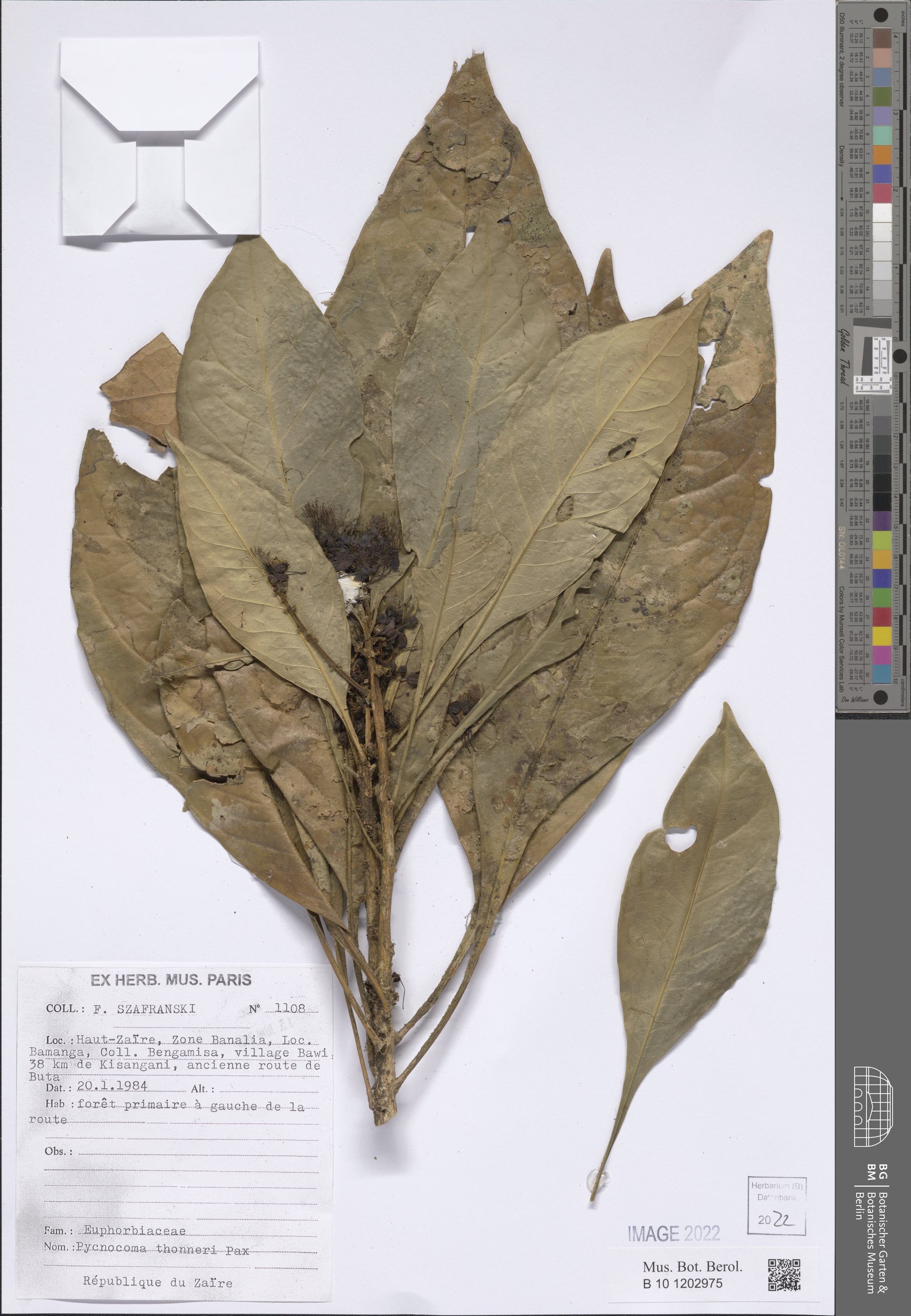
Pycnocoma thonneri
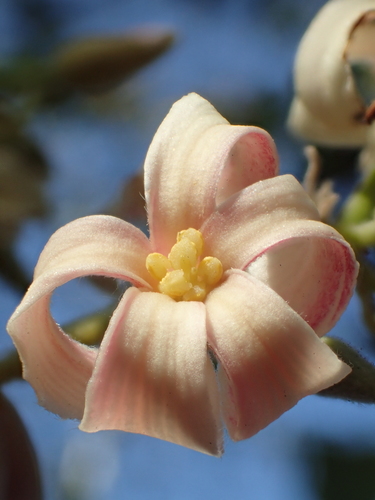
Reutealis trisperma
Soft Lumbang, Banucalag nut, Philippine tung tree
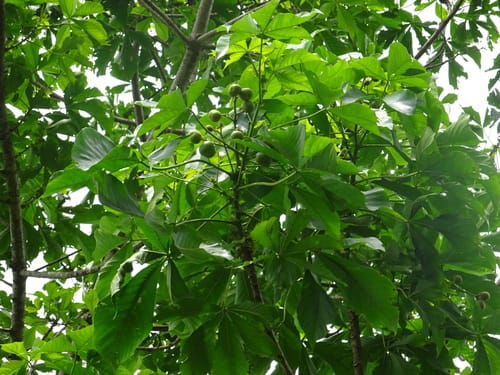
Ricinodendron heudelotii
Manketti nut, Zambezi almond
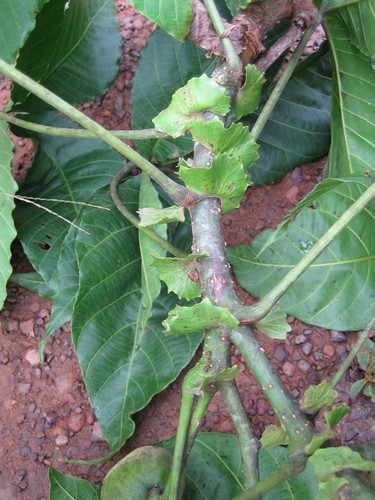
Ricinodendron heudelotii subsp. africanum
Zambezi Almond, Mugongo Nut
Ricinus communis
Castor bean, Castor Oil Plant
Sapium glandulosum
Brazil sapium, Bolivia rubber