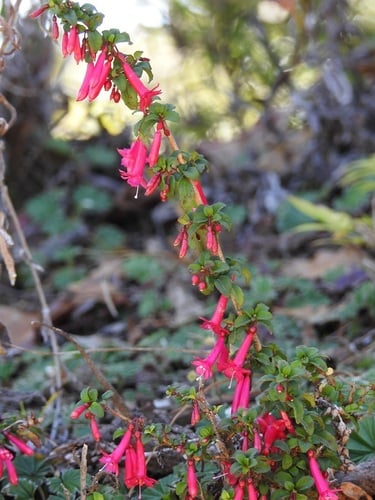
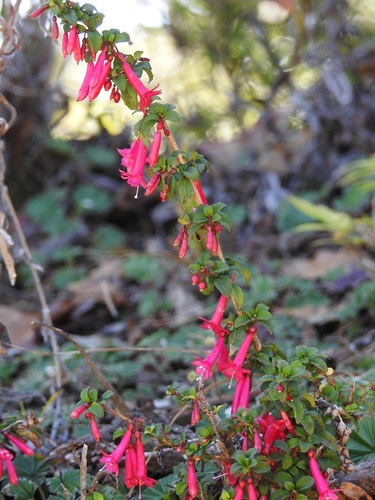
Epilobium hirsutum
L.
Great hairy Willow Herb, Salt of the Shepherds
iNaturalist· cc-by-nc
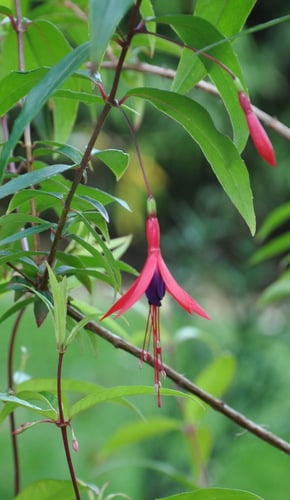
(c) Sergey Mayorov, some rights reserved (CC BY-NC), uploaded by Sergey Mayorov
iNaturalist· cc-by-nc
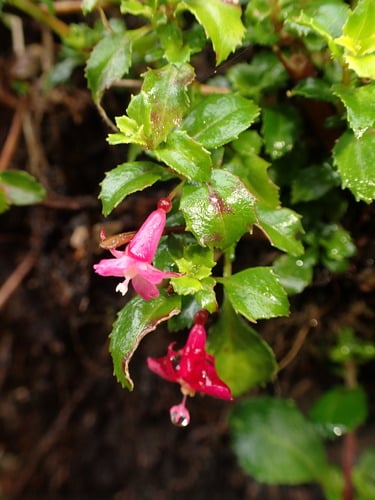
(c) AB, some rights reserved (CC BY-NC), uploaded by AB
iNaturalist· cc-by
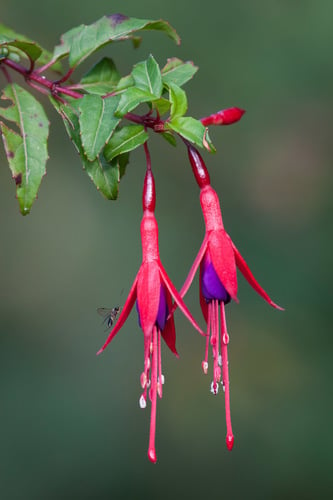
(c) Kai Löhr, some rights reserved (CC BY), uploaded by Kai Löhr
Summary
Source: WikipediaEpilobium hirsutum is a flowering plant belonging to the willowherb genus Epilobium in the family Onagraceae. It is commonly known as the great willowherb, great hairy willowherb or hairy willowherb. Local dialectal names include codlins and cream, apple pie and cherry pie.
Description
A robust, softly hairy herb. It grows to 2 m tall and keeps growing from year to year. The leaves are opposite and can be in rings. They are oblong or sword shaped and do not have stalks. They partly clasp the stems. They are coarsely toothed and have leaf like bracts. The flowers are bright purplish-pink. They are 15-25 mm across and born in leafy racemes. The petals have notches. The stigma has 4 lobes.
Edible Uses
The leaves are used to make a tea, commonly drunk in Russia where it is known as 'kaporie tea'. The leaves are also sometimes sucked for their salty taste. The leaves are edible, though caution is advised given the toxicity notes.
Traditional Uses
CAUTION: Violent poisoning with epileptiform convulsions has been reported caused by these leaves. The leaves have been eaten as well as used for tea. The fresh young leaves are used in salads together with chili. Usually the leaves are simply licked fro their salty taste. The flowers are eaten.
Medicinal Uses
The leaves have been used as astringents, but there are reports of violent poisoning with epileptic-like convulsions as a result of their use.
Known Hazards
There are reports of violent poisoning with epileptic-like convulsions following use of the leaves.
Distribution
It is a temperate plant. It grows in damp and waste places. It can grow in arid places. In Sichuan and Yunnan.
Where It Grows
TEMPERATE ASIA: Afghanistan, Iran, Iraq, Israel, Jordan, Lebanon, Syria, Turkey, Russian Federation-Ciscaucasia (Ciscaucasia), Armenia, Azerbaijan, Georgia, Russian Federation (Dagestan), Russian Federation-Western Siberia (Western Siberia), Kazakhstan, Kyrgyzstan, Tajikistan, Turkmenistan, Mongolia, China (Anhui Sheng, Gansu Sheng, Guangdong Sheng, Guizhou Sheng, Hebei Sheng, Henan Sheng, Hubei Sheng, Hunan Sheng, Jiangsu Sheng, Jiangxi Sheng, Jilin Sheng, Liaoning Sheng, Nei Mongol Zizhiqu, Ningxia Huizi Zizhiqu (south), Shaanxi Sheng, Shandong Sheng, Shanxi Sheng, Sichuan Sheng, Xinjiang Uygur Zizhiqu, Xizang Zizhiqu, Yunnan Sheng, Zhejiang Sheng), Korea, Japan (Honshu) TROPICAL ASIA: Nepal, Pakistan EUROPE: Denmark, Finland, United Kingdom, Ireland, Norway, Sweden, Czechoslovakia, Austria, Belgium, Switzerland, Germany, Hungary, Netherlands, Poland, Russian Federation (European part), Belarus, Estonia, Lithuania, Latvia, Ukraine (incl. Krym), Former Yugoslavia, Albania, Bulgaria, Greece (incl. Crete), Italy (incl. Sardinia, Sicily), Romania, Spain (incl. Baleares), France (incl. Corsica), Portugal AFRICA: Spain (Canarias), Algeria, Egypt, Libya, Morocco, Tunisia, Sudan, Chad, Kenya, Tanzania, Uganda, Burundi, Democratic Republic of the Congo, Rwanda, Angola, Zambia, Lesotho, South Africa (Cape Province, Free State, Kwa. Zulu-Natal, Transvaal)
Cultivation
Succeeds in most soils. Prefers a well-drained but moisture retentive soil in a sunny position or in partial shade. A vigorous and invasive plant, only really suitable for larger areas in the wild garden where this habit is not a nuisance. The stems and leaves are covered with a soft down that emits the smell of the Moss Rose and Eglantine. The plants have the refreshing scent of ripe apples. A good late source of nectar for bees. In garden design, as well as the above-ground architecture of a plant, root structure considerations help in choosing plants that work together for their optimal soil requirements including nutrients and water.
Propagation
Sow seed in early spring in situ, or as soon as it is ripe. Divide in spring or autumn — larger clumps can be replanted directly into permanent positions, though smaller clumps are best potted up and grown on in a cold frame until rooting well, then planted out in spring.
Other Uses
Noted for attracting wildlife. Scented.
Synonyms
Also Known As
Codlins and cream, Dlakavi vrbovec, Greater willowherb, Hasanhüseyinçiçeği, Icikiciki, Itswayi lentaba, Letswai-la-badisane, Mosika nokana, Noha
References (19)
- Ambasta, S.P. (Ed.), 2000, The Useful Plants of India. CSIR India. p 197
- Blamey, M and Grey-Wilson, C., 2005, Wild flowers of the Mediterranean. A & C Black London. p 152
- Bodkin, F., 1991, Encyclopedia Botanica. Cornstalk publishing, p 384
- Ertug, F, Yenen Bitkiler. Resimli Türkiye Florası -I- Flora of Turkey - Ethnobotany supplement
- Facciola, S., 1998, Cornucopia 2: a Source Book of Edible Plants. Kampong Publications, p 163
Show all 19 references Hide references
- Flora of Pakistan. www.eFloras.org
- Fox, F. W. & Young, M. E. N., 1982, Food from the Veld. Delta Books. p 283
- Guillarmod, J., 1966, 1971,
- Heywood, V.H., Brummitt, R.K., Culham, A., and Seberg, O. 2007, Flowering Plant Families of the World. Royal Botanical Gardens, Kew. p 237
- OLIVER,
- Peters, C. R., O'Brien, E. M., and Drummond, R.B., 1992, Edible Wild plants of Sub-saharan Africa. Kew. p 157
- Plants for a Future database, The Field, Penpol, Lostwithiel, Cornwall, PL22 0NG, UK. http://www.scs.leeds.ac.uk/pfaf/
- READ,
- Royal Botanic Gardens, Kew (1999). Survey of Economic Plants for Arid and Semi-Arid Lands (SEPASAL) database. Published on the Internet; http://www.rbgkew.org.uk/ceb/sepasal/internet [Accessed 4th May 2011]
- Ruiters-Welcome, A. K., 2019, Food plants of southern Africa. Ph.D. thesis. Univ. of Johannesburg p 83
- Sp. pl. 1:347. 1753
- Swaziland's Flora Database http://www.sntc.org.sz/flora
- Weckerle, C. S., et al, 2006, Plant Knowledge of the Shuhi in the Hengduan Mountains, Southwest China. Economic Botany 60(1):2-23
- Welcome, A. K. & Van Wyk, B.-E., 2019, An inventory and analysis of the food plants of southern Africa. South African Journal of Botany 122 (2019) 136–179