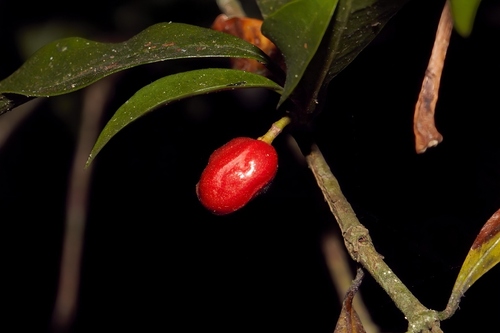
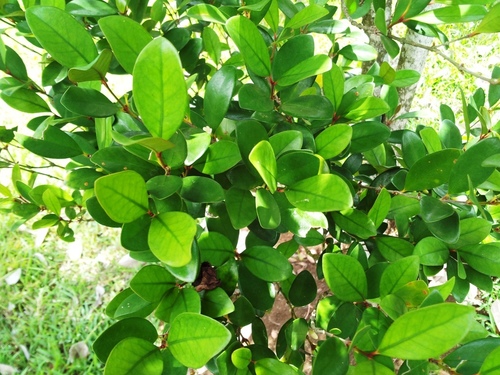
Nertera granadensis - (Mutis. ex L.f.)Druce.
(Mutis. ex L.f.)Druce.
Bead Plant
gbif· cc-by
Emily Franzen
gbif· cc-by-nc
Rowan Hindmarsh-Walls
gbif· cc-by-nc
Rowan Hindmarsh-Walls
Description
Nertera granadensis is a PERENNIAL. See above for USDA hardiness. It is hardy to UK zone 9. The species is hermaphrodite (has both male and female organs). Suitable for: light (sandy) and medium (loamy) soils and prefers well-drained soil. Suitable pH: mildly acid, neutral and basic (mildly alkaline) soils. It can grow in semi-shade (light woodland). It prefers moist soil.
Edible Uses
Fruit - raw. The fruit is a berry about 5mm in diameter with a single seed.
Distribution
New Zealand.
Where It Grows
TEMPERATE ASIA: Taiwan (higher elevations) TROPICAL ASIA: Papua New Guinea (higher elevations), Indonesia (higher elevations), Malaysia (higher elevations), Philippines (higher elevations) NORTHERN AMERICA: Mexico (San Luis Potosí), Mexico (Chiapas, Guerrero, Hidalgo, Michoacán de Ocampo, Oaxaca, Puebla, Querétaro, Veracruz de Ignacio de la Llave) SOUTHERN AMERICA: Costa Rica, Guatemala, Honduras, Nicaragua, Panama, El Salvador, Venezuela (Andes), Bolivia, Colombia, Ecuador, Peru, Argentina, Chile AUSTRALASIA: Australia (Tasmania, New South Wales, South Australia (southeast), Victoria)
Cultivation
Requires a light well-drained soil in semi-shade and shelter from cold winds. Plants are intolerant of excessive winter wet. A prostrate mat-forming plant that forms roots at the nodes of stems, it grows well in a rock garden in areas where frosts are light and short-lived. It is almost hardy in Britain, merely covering it with a pane of glass in the winter is usually ample protection. A very ornamental plant.
Propagation
Seed - sow spring in a shaded part of a cool greenhouse or cold frame. When they are large enough to handle, prick the seedlings out into individual pots and grow them on in a lightly shaded position in the greenhouse for at least their first winter. Plant them out into their permanent positions in late spring or early summer, after the last expected frosts. Consider giving the plants some protection from the cold for their first winter outdoors. Division in spring.