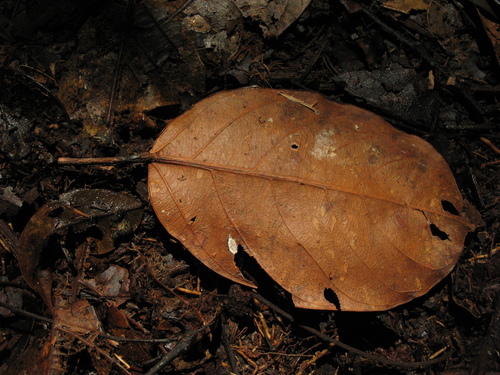
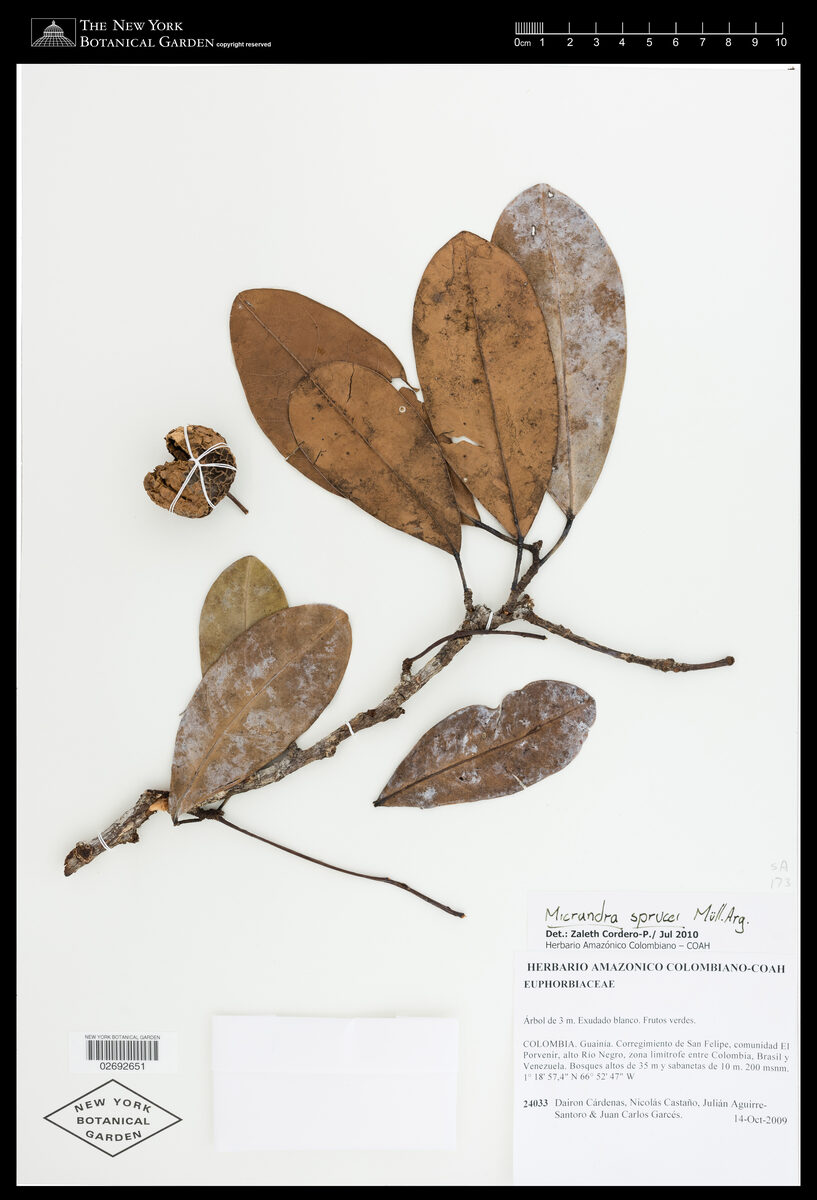
Acalypha caturus
Blume
Joseph's coat
wikimedia· cc-by-sa
Wikimedia Commons - John Tasirin
wikimedia· cc-by-sa
Wikimedia Commons - Douglas Goldman
Description
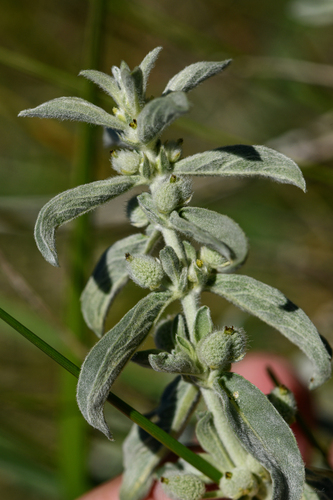
A shrub or small tree. It grows 5 m tall. There are prickles along the stem. The leaves are twice divided and there are 8-18 pairs of pinnae. There are up to 50 pairs of pinnules on each pinnae. The flowers are yellow. They are in large clusters at the ends of branches. The pods are flattened.
Edible Uses
A. hispida, the chenille plant or red-hot cat's tail, is cultivated as a houseplant for its interesting flowers. It earned the Royal Horticultural Society's Award of Garden Merit, as has A. hispaniolae, the Hispaniola cat's tail. Others are grown for their foliage and a number of cultivars have been developed, such as A. wilkesiana 'Obovata Cristata' and A. wilkesiana 'Hoffmannii'. A. bipartita is eaten as a vegetable in some parts of Africa, and it is used in basketry and as animal fodder.
Traditional Uses
The leaves are steamed and eaten. The fruit are also cooked and eaten as a vegetable.
This uses section is brief — help expand it
Distribution
A tropical plant. It grows in open places in forests. It grows below 100-200 m above sea level. It is usually in seasonally dry climates. It grows on limestone.
Where It Grows
Asia, Indochina, Indonesia, Malaysia, Pacific, Papua New Guinea, PNG, Philippines, SE Asia, Tropical, Taiwan,
Cultivation
Plants can be grown from seeds or cuttings.
Notes
There are over 450 Acalypha species. They are tropical. There are 225 in tropical America.
Synonyms
Also Known As
Akalifa hanjawan, Ambugtunong, Bunga halaman, Goprak, Jian wei tie cai, Kalangkongan, Kanjawan, Malasapsap, Migtanong, Pohon hanjawan
References (8)
- Bircher, A. G. & Bircher, W. H., 2000, Encyclopedia of Fruit Trees and Edible Flowering Plants in Egypt and the Subtropics. AUC Press. p 5
- Flora Taiwan Vol 3:419
- Kuo, W. H. J., (Ed.) Taiwan's Ethnobotanical Database (1900-2000), http://tk.agron.ntu.edu.tw/ethnobot/DB1.htm
- Martin, F.W. & Ruberte, R.M., 1979, Edible Leaves of the Tropics. Antillian College Press, Mayaguez, Puerto Rico. p 190
- Slik, F., www.asianplant.net
Show all 8 references Hide references
- Sukarya, D. G., (Ed.) 2013, 3,500 Plant Species of the Botanic Gardens of Indonesia. LIPI p 576
- Terra, G.J.A., 1973, Tropical Vegetables. Communication 54e Royal Tropical Institute, Amsterdam, p 18
- World Checklist of Useful Plant Species 2020. Royal Botanic Gardens, Kew