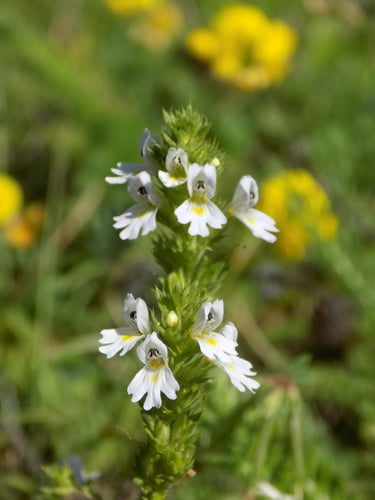
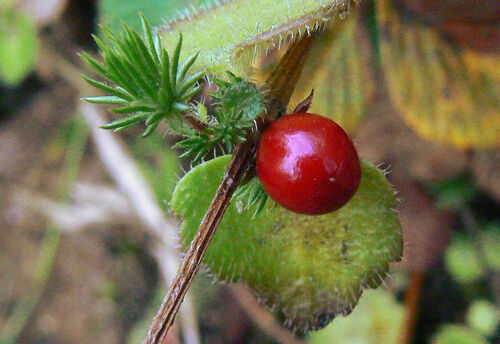
Mazus pumilus - (N.L.Burman)Steenis.
(N.L.Burman)Steenis.
Japanese mazus
gbif· cc-by
Dan Johnson
gbif· cc-by-nc
Suhani Raj
gbif· cc-by-nc
Suhani Raj
Description
Mazus pumilus is a ANNUAL growing to 0.2 m (0ft 8in). It is in flower from May to October, and the seeds ripen from May to October. The species is hermaphrodite (has both male and female organs) and is pollinated by Insects. Suitable for: light (sandy), medium (loamy) and heavy (clay) soils and prefers well-drained soil. Suitable pH: mildly acid, neutral and basic (mildly alkaline) soils. It cannot grow in the shade. It prefers moist soil.
Edible Uses
Young leaves - cooked.
Medicinal Uses
Aperient Emmenagogue Febrifuge Tonic. The plant is aperient, emmenagogue, febrifuge and tonic. The juice of the plant is used in the treatment of typhoid.
Distribution
E. Asia - Himalayas from Kashmir to China, Japan, Korea and eastern Russia.
Where It Grows
TEMPERATE ASIA: China (Anhui Sheng, Fujian Sheng, Gansu Sheng, Guangdong Sheng, Guangxi Zhuangzu Zizhiqu, Guizhou Sheng, Hebei Sheng, Heilongjiang Sheng, Henan Sheng, Hubei Sheng, Hunan Sheng, Jiangsu Sheng, Jiangxi Sheng, Jilin Sheng, Liaoning Sheng, Shaanxi Sheng, Shandong Sheng, Shanxi Sheng, Sichuan Sheng, Xizang Zizhiqu, Yunnan Sheng, Zhejiang Sheng), Korea, Japan (Hokkaidô, Honshu, Kyushu, Ryukyu Islands, Shikoku), Taiwan TROPICAL ASIA: Bhutan, India (Jammu and Kashmir), New Guinea, Thailand, Vietnam, Indonesia, Philippines
Cultivation
We have very little information on this species and do not know if it will be hardy in Britain, though judging by its native range it could succeed outdoors in many parts of this country. The following notes are based on the general needs of the genus. Succeeds in any moderately fertile well-drained but moisture-retentive loamy soil in a sunny position.
Propagation
Seed - we have no information on this species but suggest sowing the seed in a cold frame in the spring. When they are large enough to handle, prick the seedlings out into individual pots and grow them on in the greenhouse for at least their first winter. Plant them out into their permanent positions in late spring or early summer, after the last expected frosts. Division in spring.