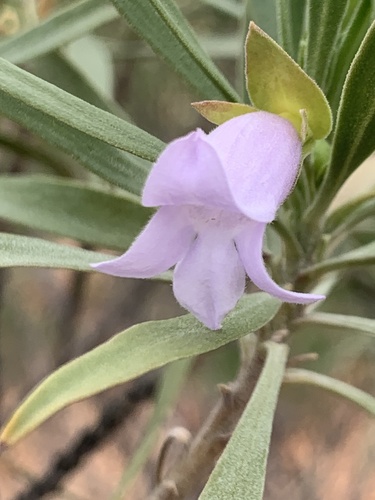
Pedicularis kanei
Durand.
gbif· cc-by
Natural History Museum of Utah
gbif· cc-by-nc-sa
University of Colorado Museum of Natural History Herbarium Vascular Plant Collection (COLO-V)
gbif· cc-by-nc-sa
University of Colorado Museum of Natural History Herbarium Vascular Plant Collection (COLO-V)
Description
Pedicularis kanei is a PERENNIAL. The species is hermaphrodite (has both male and female organs). Suitable for: light (sandy) and medium (loamy) soils and prefers well-drained soil. Suitable pH: mildly acid, neutral and basic (mildly alkaline) soils. It can grow in semi-shade (light woodland) or no shade. It prefers dry or moist soil.
Edible Uses
Young shoots and stems - cooked. Flowers - raw. Roots - raw or cooked. The taste is somewhat like young carrots. The roots can be used from the autumn to the spring.
Distribution
North-western N. America.
Where It Grows
Coming Soon
Cultivation
We have very little information on this species and do not know if it will succeed in Britain, though judging by its native range it should succeed outdoors in most parts of the country. This species is possibly no more than a part of P. lanata, though P. kanei might be the correct name for both species. The following notes are based on the general needs of the genus. A semi-parasitic plant, growing on grass roots. Rather difficult to establish in cultivation, it is best grown in conditions that approximate to its native habitat. It requires a moist peaty soil and the presence of host grasses. Requires a partially shaded to sunny site in a well-drained gritty but moist soil.
Propagation
Seed - sow in pots of turf collected from the proximity of wild colonies or sow directly onto the sites where the plants are to remain. Division of established plants might be possible in the spring. Establish the divisions near the parent plants