Paulownia tomentosa
(Thunb.) Steud.
Foxglove tree, Hairy Paulownia, Empress tree, Princess tree
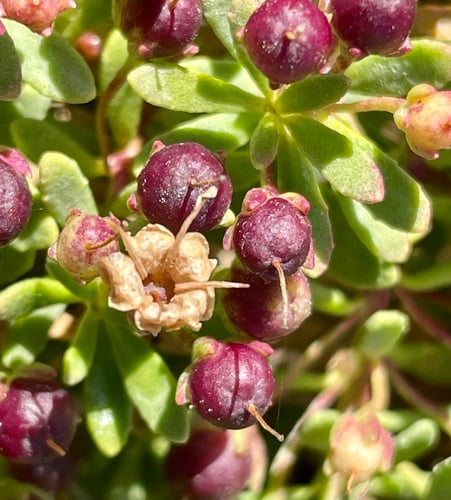
iNaturalist· cc-by-nc
(c) robinabull, some rights reserved (CC BY-NC)
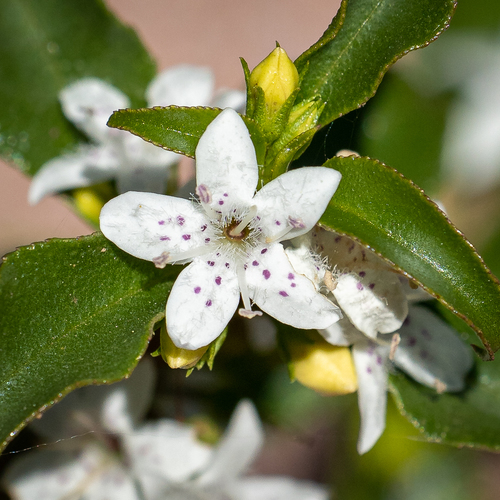
iNaturalist· cc-by-nc
(c) Jordan Haber, some rights reserved (CC BY-NC), uploaded by Jordan Haber
iNaturalist· cc-by-nc
(c) alexcm, some rights reserved (CC BY-NC), uploaded by alexcm
Summary
Source: WikipediaPaulownia tomentosa, common names princess tree, empress tree, or foxglove-tree, is a deciduous hardwood tree in the family Paulowniaceae, native to central and eastern China and the Korean Peninsula. It is an extremely fast-growing tree with seeds that disperse readily and is considered an invasive exotic species in North America that has undergone naturalisation in large areas of the Eastern US, even though it might be able to successfully get established through seeds only under ideal conditions. P. tomentosa has also been introduced to Western and Central Europe, and is establishing itself as a naturalised species there as well.
Description
A small deciduous tree. It grows 7-15 m high. The bark is grey and broken by orange blisters. The leaves are opposite and are felted underneath. They are oval and grow 36 cm long by 25 cm wide. They are heart shaped at the base and taper to a point. Sometimes they have lobes. The leaf stalk is hairy. The flowers are purple and like foxglove flowers. They occur on the tree before the leaves appear. They flowers are 5 cm long. They occur in upright panicles 40 cm long. The fruit is green to brown and oval and woody. It is 5 cm long. They contain winged seeds. There can be 2,000 seeds in a capsule.
Edible Uses
Leaves can be cooked and eaten, though they are considered an emergency food used only when all else fails. Flowers are eaten with miso.
Traditional Uses
The leaves and fruit are used to preserve health. The flowers are eaten with miso. The leaves are parboiled and used as an emergency food.
This uses section is brief — help expand it
Medicinal Uses
A decoction of the leaves is used to wash foul ulcers and is said to promote hair growth and prevent greying. The leaves are also poulticed onto bruises, and the leaf juice is applied in the treatment of warts. Flowers are used to treat skin ailments. A tincture of the inner bark is used in the treatment of fevers and delirium; it is astringent and vermifuge.
Distribution
It is a temperate plant. It is native to China. It grows in the mountains. Buds can be damaged by late spring frosts. It can grow in poor soil. Hobart Botanical Gardens. It suits hardiness zones 5-10. Arboretum Tasmania. In Sichuan.
Where It Grows
Asia, Australia, Britain, Central Asia, China, Europe, France, Himalayas, India, Japan, Korea, Mediterranean, Netherlands, North America, Slovenia, Tajikistan, Tasmania, USA,
Cultivation
It can spread by seeds, root suckers or resprouting. It can be heavily pruned back and shoot again.
Propagation
Seed is best sown as soon as it is ripe in a cold frame. Stored seed can be sown in late winter in a greenhouse at 15–20°C. The seed requires light to germinate. Germination is fair to good. Prick seedlings out into individual pots when large enough to handle and grow on in the greenhouse for their first winter. Plant out in late spring or early summer after the last expected frosts. Take half-ripe wood cuttings (5–8cm with a heel) in July or August in a frame, overwintering in a cold frame before planting out the following late spring. Root cuttings 4cm long can be taken in December at a good success rate.
Other Uses
The wood is not attacked by insects and is used for making boxes, clogs, furniture, and musical instruments, and is suitable for posts and beams in construction. It is also a source of charcoal.
Production
It grows rapidly.
Notes
There are 6-17 Paulownia species. They occur in warm temperate to subtropical Asia. It can be invasive.
Synonyms
Also Known As
Mao Paotong, Kiri, Tung
References (17)
- Ambasta, S.P. (Ed.), 2000, The Useful Plants of India. CSIR India. p 434
- Blamey, M and Grey-Wilson, C., 2005, Wild flowers of the Mediterranean. A & C Black London. p 407
- Coombes, A.J., 2000, Trees. Dorling Kindersley Handbooks. p 296
- Cundall, P., (ed.), 2004, Gardening Australia: flora: the gardener's bible. ABC Books. p 993
- Etherington, K., & Imwold, D., (Eds), 2001, Botanica's Trees & Shrubs. The illustrated A-Z of over 8500 trees and shrubs. Random House, Australia. p 513
Show all 17 references Hide references
- Facciola, S., 1998, Cornucopia 2: a Source Book of Edible Plants. Kampong Publications, p 229
- Harris, E & J., 1983, Field Guide to the Trees and Shrubs of Britain. Reader's Digest. p 46
- Hibbert, M., 2002, The Aussie Plant Finder 2002, Florilegium. p 220
- http://www.botanic-gardens-ljubljana.com/en/plants
- Krishen P., 2006, Trees of Delhi, A Field Guide. DK Books. p 121
- Little, E.L., 1980, National Audubon Society Field Guide to North American Trees. Alfred A. Knopf. p 661
- Marinelli, J. (Ed), 2004, Plant. DK. p 465
- Morley, B. & Everard, B., 1970, Wild Flowers of the World. Ebury press. Plate 103
- Nomencl. bot. ed. 2, 2:278. 1841
- Plants for a Future database, The Field, Penpol, Lostwithiel, Cornwall, PL22 0NG, UK. http://www.scs.leeds.ac.uk/pfaf/
- Tanaka,
- Valder, P., 1999, The Garden Plants of China. Florilegium. p 318