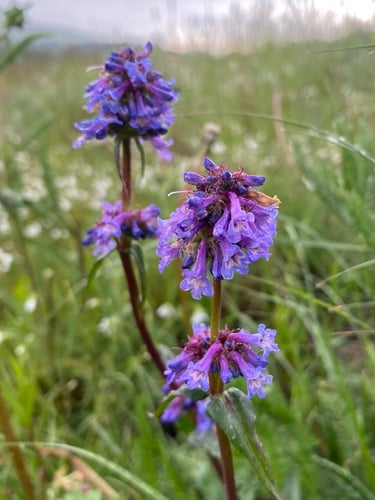
Nemesia fruticans
(Thunb.) Benth.
iNaturalist· cc-by-sa
(c) Tony Rebelo, some rights reserved (CC BY-SA), uploaded by Tony Rebelo
iNaturalist· cc-by-sa
(c) Tony Rebelo, some rights reserved (CC BY-SA)
Description
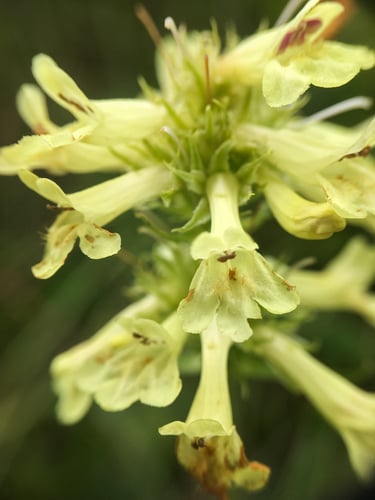
An annual herb. It is an erect plant. It grows 40-60 cm high. It can have many branches. The stems are angled and red-purple. The leaves are narrow and small and usually opposite. There can be teeth along the edge. The flowers are like snapdragons with 2 lips and a spur. They are 15 mm long. They occur singly in the axils of leaves or at the ends of branches. The fruit are flat capsules. They have 2 chambers and split open to reveal small seeds. Each seed has a membranous wing.
Edible Uses
The leaves are cooked as a vegetable and added as a relish to porridge. Both leaves and stems are edible.
Traditional Uses
The leaves are cooked as a vegetable. They are added as a relish to porridge.
This uses section is brief — help expand it
Distribution
It is a tropical plant. It often grows along streams. It is damaged by frost.
Where It Grows
Africa, Botswana, East Africa, Eswatini, Namibia, South Africa, Southern Africa, Swaziland, Zimbabwe,
Cultivation
Plants are grown by seeds. It can also be grown by cuttings.
Synonyms
References (4)
- Fox, F. W. & Young, M. E. N., 1982, Food from the Veld. Delta Books. p 341
- Long, C., 2005, Swaziland's Flora - siSwati names and Uses http://www.sntc.org.sz/flora/
- Ruiters-Welcome, A. K., 2019, Food plants of southern Africa. Ph.D. thesis. Univ. of Johannesburg p 102
- Welcome, A. K. & Van Wyk, B.-E., 2019, An inventory and analysis of the food plants of southern Africa. South African Journal of Botany 122 (2019) 136–179