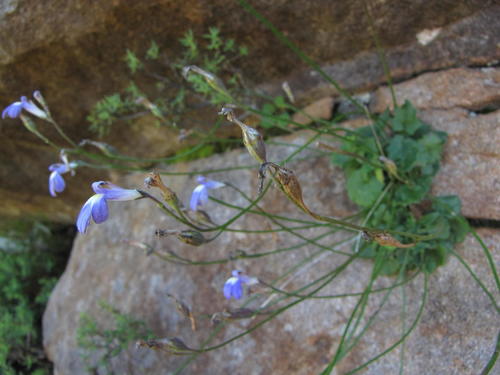
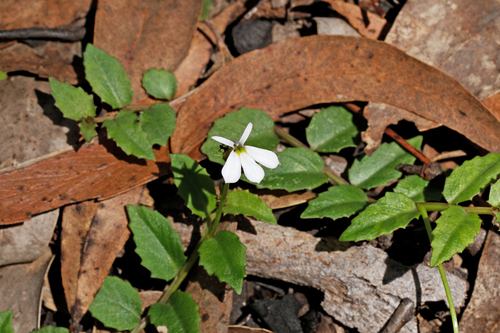
Lobelia sessilifolia
Lamb.
iNaturalist· cc-by-nc
(c) arosawa, some rights reserved (CC BY-NC)
Description
Lobelia sessilifolia is a PERENNIAL growing to 0.7 m (2ft 4in) by 0.3 m (1ft). See above for USDA hardiness. It is hardy to UK zone 5. It is in flower in August. The species is hermaphrodite (has both male and female organs). Suitable for: light (sandy), medium (loamy) and heavy (clay) soils. Suitable pH: mildly acid, neutral and basic (mildly alkaline) soils. It can grow in semi-shade (light woodland) or no shade. It prefers moist or wet soil.
Edible Uses
The buds and young plants are cooked and used as a famine food. Caution is advised because they contain a toxic alkaloid.
Known Hazards
The plant contains a toxic alkaloid. It contains the alkaloid lobeline which has a similar effect upon the nervous system as nicotine.
Distribution
E. Asia - Japan.
Where It Grows
TEMPERATE ASIA: Russian Federation (Chita, Yakutia-Sakha (south)), Russian Federation (Kurile Islands (south), Habarovskij kraj, Primorye, Amur, Kamcatskij kraj, Sakhalin), China (Anhui Sheng, Guangxi Zhuangzu Zizhiqu (north), Heilongjiang Sheng, Hunan Sheng, Jilin Sheng, Liaoning Sheng, Shandong Sheng, Sichuan Sheng, Yunnan Sheng (northwest), Zhejiang Sheng), Korea, Japan (Hokkaidô, Honshu, Kyushu)
Cultivation
Requires a wet soil.
Propagation
Seed - best sown as soon as it is ripe in a cold frame. When they are large enough to handle, prick the seedlings out into individual pots and grow them on in the greenhouse for their first winter. Plant them out into their permanent positions in late spring or early summer, after the last expected frosts. Division in spring. Basal cuttings in spring. Harvest the shoots when they are about 10cm long with plenty of underground stem. Pot them up into individual pots and keep them in light shade in a cold frame or greenhouse until they are rooting well. Plant them out in the summer. Layering in moist sand, it forms roots at the nodes.