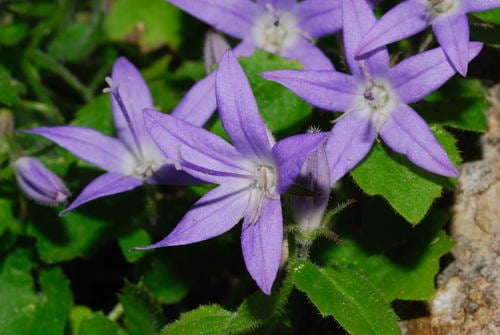
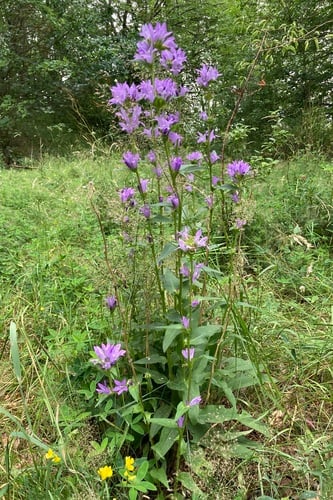
Adenophora remotiflora
(Siebold. & Zucc.) Miq.
Moshidae, Panicled lady bells
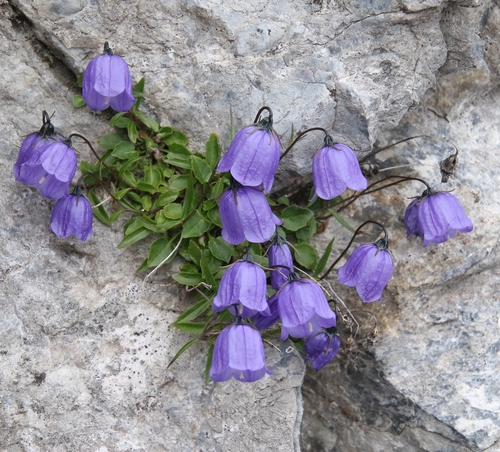
iNaturalist· cc-by-nc
(c) Lee, seong-won, some rights reserved (CC BY-NC), uploaded by Lee, seong-won
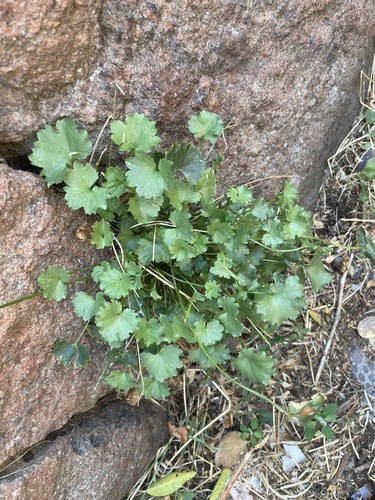
iNaturalist· cc-by-nc
(c) onidiras-iNaturalist, some rights reserved (CC BY-NC), uploaded by onidiras-iNaturalist
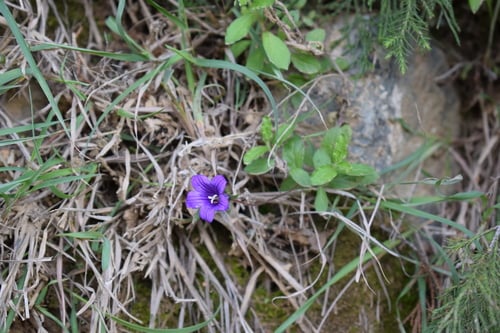
iNaturalist· cc-by
(c) belvedere04, some rights reserved (CC BY), uploaded by belvedere04
Summary
A taller perennial reaching 1 m, hardy to UK zone 6. Flowers from July to August; seeds mature August to September. Hermaphroditic and insect-pollinated. Prefers full sun, moist conditions, and light to medium soils across mildly acidic to basic pH ranges.
Description
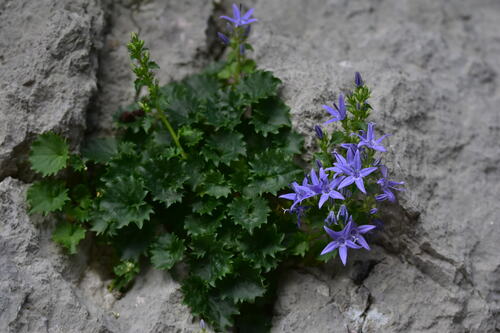
A herb that keeps growing from year to year. It grows 1 m high. The leaves on the stem have leaf stalks. The leaves are oval and 5-13 cm long by 2-7 cm wide. The flowers are blue.
Edible Uses
The root can be eaten raw or cooked. Buds are also edible when cooked, though it is unclear whether this refers to the flower buds or leaf buds.
Traditional Uses
The root is eaten raw or cooked. The young shoots are eaten cooked. They are fried and eaten in soup. The root is often cooked with 2 changes of water.
Medicinal Uses
The root is antidote, demulcent, and expectorant. It is used medicinally in the treatment of poisonous bites and medicinal poisoning.
Distribution
It grows best in a light rich slightly alkaline soil. It needs a sunny position. It does not like having its roots disturbed.
Where It Grows
Asia, China, Japan, Korea, Mongolia, Russia,
Cultivation
Plants can be grown from seed. Seeds germinate in 1-3 months at 10°C. They can be transplanted or sown direct. Plants can also be grown from cuttings.
Propagation
Seed is best sown in a cold frame as soon as it is ripe, though spring sowing also works. Surface sow 2–3 seeds per pot in spring to avoid the need for transplanting. If transplanted as very small seedlings, they grow away without difficulty. Germination takes 1–3 months at 10°C. Plant out into permanent positions while still young. Basal cuttings can be taken in spring. Division in spring is possible but very difficult, as the plant dislikes root disturbance.
Other Uses
None known.
Notes
There are about 40 Adenophora species. They are temperate plants.
Synonyms
Also Known As
Tu dang shen, Uhilahu nogug-a, Wai bo cai
References (9)
- Chen, B. & Qiu, Z., Consumer's Attitudes towards Edible Wild Plants, Ishikawa Prefecture, Japan. p 22 www.hindawi.com/journals/ijfr/aip/872413.pdf
- https://en.wikipedia.org/wiki/List of wild edible plants in Mongolian cuisine
- Hwang, H., et al, 2013, A Study on the Flora of 15 Islands in the Western Sea of Jeollanamdo Province, Korea. Journal of Asia-Pacific Biodiversity Vol. 6, No. 2 281-310
- Hwang, HS, et al, 2014, Distribution characteristics of plant in the Ungseokbong Mountain, Gyeongsangnam-do, Korea. Journal of Asia-Pacific Biodiversity. 7(2014) e164-e178
- Lim, T. K., 2015, Edible Medicinal and Non Medicinal Plants. Volume 9, Modified Stems, Roots, Bulbs. Springer p 3
Show all 9 references Hide references
- Pemberton, R. W. & Lee, N. S., 1996, Wild Food Plants in South Korea: Market Presence, New Crops, and Exports to the United States. Economic Botany, Vol. 50, No. 1, pp. 57-70
- Plants for a Future database, The Field, Penpol, Lostwithiel, Cornwall, PL22 0NG, UK. http://www.scs.leeds.ac.uk/pfaf/
- READ
- Sachula, et al, 2020, Wild edible plants collected and consumed by the locals in Daqinggou, Inner Mongolia, China. Journal of Ethnobiology and Ethnomedicine (2020) 16:60