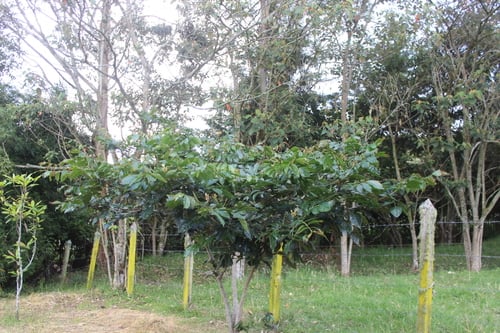
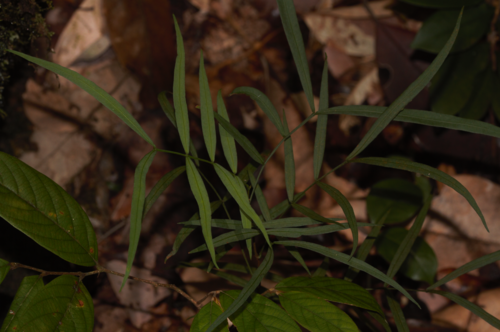
Lens ervoides - (Brign.)Grande.
(Brign.)Grande.
gbif· cc-by-nc-nd
Othmar Ortner
gbif· cc-by-nc-nd
Othmar Ortner
gbif· cc-by-nc-nd
Othmar Ortner
Description
Lens ervoides is a ANNUAL growing to 0.3 m (1ft). The species is hermaphrodite (has both male and female organs) and is pollinated by Cleistogomy (self-pollinating without flowers ever opening). The plant is self-fertile. It can fix Nitrogen. Suitable for: light (sandy), medium (loamy) and heavy (clay) soils, prefers well-drained soil and can grow in nutritionally poor soil. Suitable pH: mildly acid, neutral and basic (mildly alkaline) soils. It cannot grow in the shade. It prefers dry or moist soil.
Edible Uses
Seed.
Distribution
Europe - Mediterranean to West Asia.
Where It Grows
TEMPERATE ASIA: Cyprus, Israel, Lebanon, Syria, Turkey (w. & c.), Azerbaijan, Georgia EUROPE: Former Yugoslavia, Albania, Bulgaria, Greece (incl. Crete), Italy (incl. Sardinia, Sicily), Spain (Baleares (Mallorca)) AFRICA: Algeria, Morocco, Ethiopia, Uganda, Democratic Republic of the Congo (northeast)
Cultivation
We have very little information on this species and do not know if it will succeed outdoors in Britain, though judging by its native range it is likely to succeed outdoors when treated as a spring-sown annual. The plant is likely to require a sunny position and a well-drained soil.
Propagation
Seed - pre-soak for 12 hours in warm water then sow late April in situ.