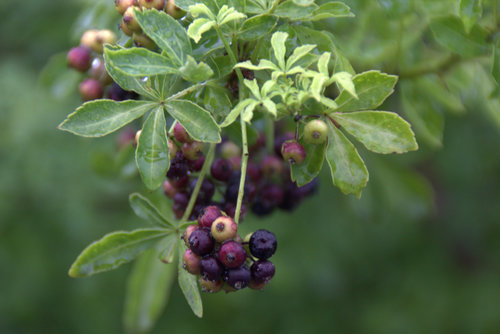
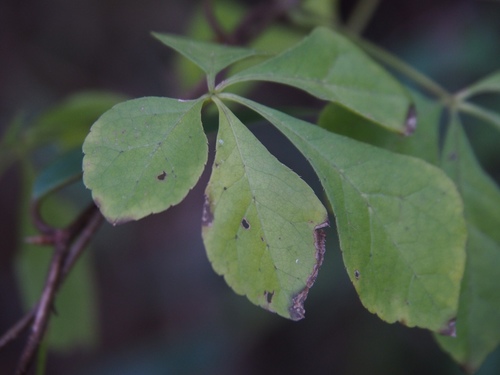
Kalopanax sciadophylloides - (Franch.&Sav.)Harms.
(Franch.&Sav.)Harms.
No photos yet for Kalopanax sciadophylloides - (Franch.&Sav.)Harms.
Sign in to contribute a photoDescription
Kalopanax sciadophylloides is a deciduous Tree. The species is hermaphrodite (has both male and female organs). Suitable for: light (sandy), medium (loamy) and heavy (clay) soils and can grow in nutritionally poor soil. Suitable pH: mildly acid, neutral and basic (mildly alkaline) soils. It can grow in semi-shade (light woodland) or no shade. It prefers moist soil. It can tolerate atmospheric pollution.
Edible Uses
Young leaves and budlings - cooked.
Distribution
E. Asia - Japan.
Where It Grows
TEMPERATE ASIA: Japan (Hokkaidô, Honshu, Kyushu, Shikoku)
Cultivation
Succeeds in an open loamy soil, preferring a well-drained humus-rich soil in full sun. Tolerates poor soils and atmospheric pollution. Plants are hardy to at least -10 to -15°c if they are sheltered from cold winds. The name of this species is somewhat confused. It has been included under Kalopanax in line with the treatment in but has also been included in Acanthopanax and considered for inclusion in Eleutherococcus.
Propagation
Seed - best sown as soon as it is ripe in the autumn in a cold frame. Stored seed probably requires a period of cold stratification and should be sown as soon as possible. When they are large enough to handle, prick the seedlings out into individual pots and grow them on in the greenhouse for at least their first winter. Plant them out into their permanent positions in late spring or early summer, after the last expected frosts. Cuttings of half-ripe wood, July/August in a frame. Root cuttings in late winter.