Hymenoxys hoopesii - (A.Gray.)Bierner.
(A.Gray.)Bierner.
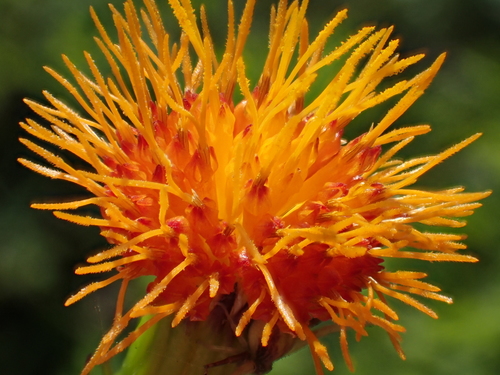
Owls Claws
gbif· cc-by-nc
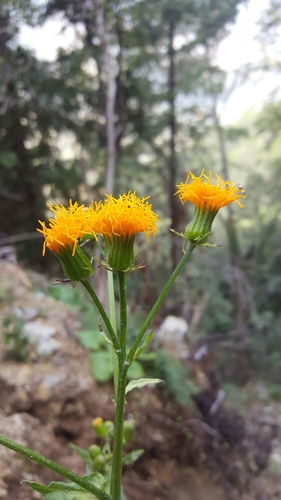
Sophia Todorov
gbif· cc-by-nc
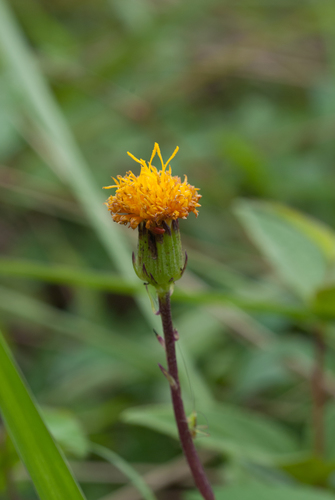
scanm
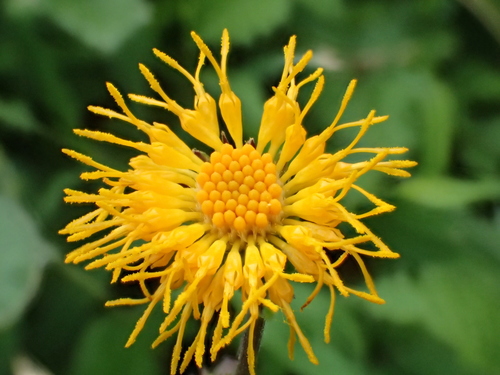
gbif· cc-by-nc
Abby Orosz
Description
Hymenoxys hoopesii is a PERENNIAL growing to 0.9 m (3ft) by 0.6 m (2ft in). See above for USDA hardiness. It is hardy to UK zone 5 and is not frost tender. The flowers are pollinated by Bees, Lepidoptera (Moths & Butterflies). Suitable for: light (sandy), medium (loamy) and heavy (clay) soils and prefers well-drained soil. Suitable pH: mildly acid, neutral and basic (mildly alkaline) soils. It cannot grow in the shade. It prefers moist soil.
Edible Uses
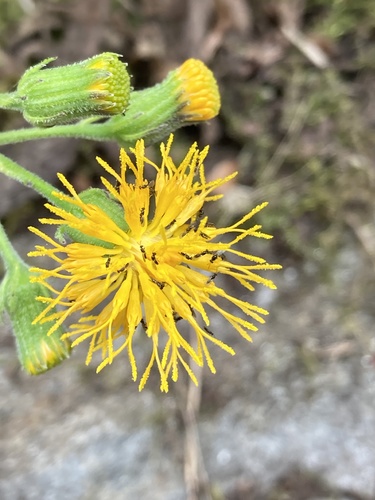
Chewing gum is obtained from the roots. Orange sneezeweed (Hymenoxys hoopesii), also called owl’s claws, is a perennial member of the sunflower family (Asteraceae), native to the mountains of the western United States. Like other sneezeweeds and rubberweeds, it contains toxic sesquiterpene lactones (such as hymenoxon and hymenovin), compounds known to poison grazing animals—especially sheep—causing a condition referred to as “spewing sickness.” For this reason, no parts of the plant are recommended as food. The roots of orange sneezeweed are sometimes aromatic, but they rarely exude enough resin to be used as chewing gum, unlike some other species in the genus. When chewed, the roots break apart easily, with a mildly starchy undertone but dominated by acrid, resinous, latex-like flavors. Soft fibers may linger briefly, but they do not provide the gum-like texture sought by foragers. The plant’s flowers, despite the name “orange sneezeweed,” are not orange and have no reported edible use. Overall, orange sneezeweed embodies the less desirable traits of its family and offers negligible food value, with considerable risks if consumed improperly.
Medicinal Uses
The plant is used as a remedy for vomiting. A snuff made from the crushed blossoms and leaves of Psoralidium lanceolatum has been inhaled to treat headaches and hay fever.
Known Hazards
This species is said to be poisonous to sheep. Although no mention of any toxicity to people has been seen it is wise to assume that it is toxic.
Distribution
South-western N. America - Oregon to Wyoming, south to California and New Mexico.
Where It Grows
Native to the US: Arizona, California, Colorado, Idaho, Nevada, New Mexico, Oregon, Utah, Wyoming.
Cultivation
It grows well in ordinary garden soil and succeeds in most conditions other than boggy soils. It prefers fertile moisture-retentive soil in a sunny position and dislikes dry soil. This species is hardy to about -25°c. Plants seem to be immune to rabbit predation. It is a good bee and butterfly plant.
Propagation
Seed - sow spring in a greenhouse. When they are large enough to handle, prick the seedlings out into individual pots and grow them in the greenhouse for their first winter. Plant them out into their permanent positions in late spring or early summer after the last expected frosts. If you have sufficient seed it might be worthwhile trying a sowing in mid to late spring in situ outdoors. Cuttings of soft wood from the base of the plant, early summer/July in a frame. Basal cuttings in spring. Harvest the shoots when they are about 10 - 15cm long with plenty of underground stems. Pot them into individual pots and keep them in light shade in a cold frame or greenhouse until they root well. Plant them out in the summer. Division in spring or autumn. This must be done fairly regularly because the clumps soon become congested. Very easy, larger clumps can be replanted direct into their permanent positions, though it is best to pot up smaller clumps and grow them on in a cold frame until they are rooting well. Plant them out in the spring.
Other Uses
A yellow dye is obtained from the flowers. They are usually boiled up with juniper ash to obtain the dye.
Synonyms
Also Known As
Orange sneezeweed or Owl’s claws (Hymenoxys hoopesii = Helenium hoopesii)