Calendula arvensis
L.
Field marigold
iNaturalist· cc-by-sa
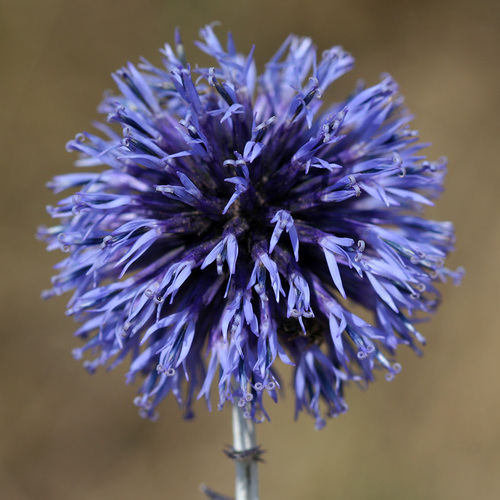
(c) ishaip, some rights reserved (CC BY-SA)
iNaturalist· cc-by
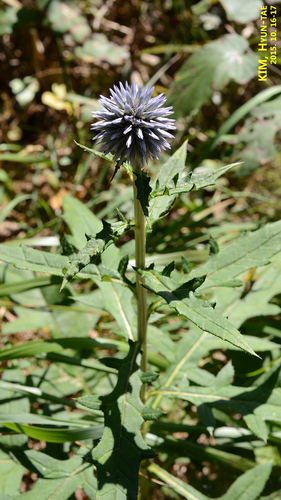
(c) Kostas Zontanos, some rights reserved (CC BY), uploaded by Kostas Zontanos
iNaturalist· cc-by
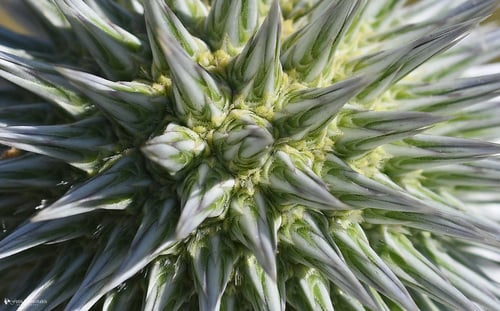
(c) Daniel Heras González, some rights reserved (CC BY), uploaded by Daniel Heras González
Summary
Source: WikipediaCalendula arvensis is a species of flowering plant in the daisy family known by the common name field marigold. It is native to central and southern Europe, North Africa and the Middle East and it is known across the globe as an introduced species. Calendula arvensis is an annual or biennial herb 10 to 50 cm (3.9 to 19.7 in) tall. The leaves are lance-shaped and borne on petioles from the slender, hairy stem. The inflorescence is a single flower head up to four centimeters wide with bright yellow to yellow-orange ray florets around a center of yellow disc florets. The fruit is an achene which can take any of three shapes, including ring-shaped, that facilitate different methods of dispersal.
Description
A herb. It is an annual plant. It grows 30 cm high and spreads 30 cm wide. In poor and dry areas it is smaller. The leaves are oblong and slightly downy. They do not have leaf stalks. The flowers are yellow or orange and 25 mm across. They grow singly at the ends of branches.
Edible Uses
Edible Parts: Flowers Leaves Shoots Edible Uses: Young shoots and leaves - raw or cooked. The leaves are very rich in vitamins and minerals, they are similar to Taraxacum officinale (Dandelion) in nutritional value. Flower heads - pickled.
Traditional Uses
The young shoots and leaves are boiled and eaten. They are also used in stews. The flower heads are pickled. The leaves are used as a condiment for clarified butter.
Medicinal Uses
Antiphlogistic Antiseptic Antispasmodic Aperient Astringent Cholagogue Diaphoretic Emmenagogue Homeopathy Skin Stimulant Vulnerary Warts The leaves are diaphoretic. The flowers are said to be antispasmodic, emmenagogue and stimulant. The plant seems to have similar therapeutic properties to pot marigold, C. officinalis. These properties are:- Pot marigold is one of the best known and versatile herbs in Western herbal medicine and is also a popular domestic remedy. It is, above all, a remedy for skin problems and is applied externally to bites and stings, sprains, wounds, sore eyes, varicose veins etc. It is also a cleansing and detoxifying herb and is taken internally in treating fevers and chronic infections. Only the common deep-orange flowered variety is considered to be of medicinal value. The whole plant, but especially the flowers and the leaves, is antiphlogistic, antiseptic, antispasmodic, aperient, astringent, cholagogue, diaphoretic, emmenagogue, skin, stimulant and vulnerary. The leaves can be used fresh or dried, they are best harvested in the morning of a fine sunny day just after the dew has dried from them. The flowers are also used fresh or dried, for drying they are harvested when fully open and need to be dried quickly in the shade. A tea of the petals tones up the circulation and, taken regularly, can ease varicose veins. An application of the crushed stems to corns and warts will soon render them easily removable. The leaves, blossoms and buds are used to make a homeopathic remedy. It is used internally in order to speed the healing of wounds.
Distribution
It is a temperate plant. It suits hardiness zones 6-10. In Bahrain it grows in gravelly soils. Tasmania Herbarium.
Where It Grows
Africa, Argentina, Asia, Australia, Bahrain, Belgium, Britain, Central Asia, Chile, Cyprus, Egypt - Sinai, Europe, France, Greece, Israel, Italy, Korea, Luxembourg, Mediterranean, Middle East, Morocco, North Africa, Portugal, Sicily, Sinai, Slovenia, South America, Spain, Tajikistan, Tasmania, Turkey, Türkiye, Uruguay,
Cultivation
An easily grown and very ornamental plant, it succeeds in any well-drained soil, though it prefers a good loam and does best in a sunny or at least partially sunny position. The plant flowers best when it is grown in a poor soil. Plants usually self-sow quite freely in the garden.
Propagation
Seed - sow in situ from spring to early summer and again in September. The seed germinates best in darkness and usually within 1 - 2 weeks at 21°c.
Other Uses
None known Special Uses
Notes
There are between 20 and 30 Calendula species.
Also Known As
Calendula, Ciuri aranciu, Hanuwa, Jemra, Kinsen-ka, Margherita russa, Njivski ognjič, Pata gallina, Souci des Champs
References (20)
- Bailey, C. and Danin, A., 1981, Bedouin Plant Utilization in Sinai and the Negev. Economic Botany 35(2): 145-162
- Biscotti, N. et al, 2018, The traditional food use of wild vegetables in Apulia (Italy) in the light of Italian ethnobotanical literature. Italian Botanist 5:1-24
- Blamey, M and Grey-Wilson, C., 2005, Wild flowers of the Mediterranean. A & C Black London. p 446
- Blanco-Salas, J., et al, 2019, Wild Plants Potentially Used in Human Food in the Protected Area “Sierra Grande de Hornachos” of Extremadura (Spain). Sustainability 2019, 11, 456
- Cundall, P., (ed.), 2004, Gardening Australia: flora: the gardener's bible. ABC Books. p 280
Show all 20 references Hide references
- Dashorst, G.R.M., and Jessop, J.P., 1998, Plants of the Adelaide Plains & Hills. Botanic Gardens of Adelaide and State Herbarium. p 156
- Della, A., et al, 2006, An ethnobotanical survey of wild edible plants of Paphos and Larnaca countryside of Cyprus. J. Ethnobiol. Ethnomed. 2:34
- Facciola, S., 1998, Cornucopia 2: a Source Book of Edible Plants. Kampong Publications, p 35
- Geraci, A., et al, 2018, The wild taxa utilized as vegetables in Sicily (Italy): a traditional component of the Mediterranean diet. Journal of Ethnobiology and Ethnomedicine (2018) 14:14
- Ghanimi, R., et al, 2022, Ethnobotanical study on wild edible plants traditionally used by Messiwa people, Morocco. Journal of Ethnobiology and Ethnomedicine. 18:16
- Hadjichambis, A. C., et al, 2007, Wild and semi-domesticated food plant consumption in seven circum-Mediterranean areas. International Journal of Food Sciences and Nutrition. 2007, 1-32.
- Kunkel,
- Licata, M., et al, 2016, A survey of wild plant species for food use in Sicily (Italy) – results of a 3-year study in four Regional Parks. Journal of Ethnobiology and Ethnomedicine 12:12
- Pasta, S., et al, 2020, An Updated Checklist of the Sicilian Native Edible Plants: Preserving the Traditional Ecological Knowledge of Century-Old Agro-Pastoral Landscapes. Frontiers in Plant Science. Volume 11|Article 388
- Phillips, D.C., 1988, Wild Flowers of Bahrain. A Field Guide to Herbs, Shrubs, and Trees. Privately published. p 68
- Plants for a Future database, The Field, Penpol, Lostwithiel, Cornwall, PL22 0NG, UK. http://www.scs.leeds.ac.uk/pfaf/
- Sp. pl. ed. 2, 2:1303. 1763
- Tanaka,
- Tasmanian Herbarium Vascular Plants list p 6
- Tardio, J., et al, Ethnobotanical review of wild edible plants in Spain. Botanical J. Linnean Soc. 152 (2006), 27-71