Calendula officinalis
(L.) T. Norl.
Pot marigold, English marigold, Garden Marigold
iNaturalist· cc-by-nc
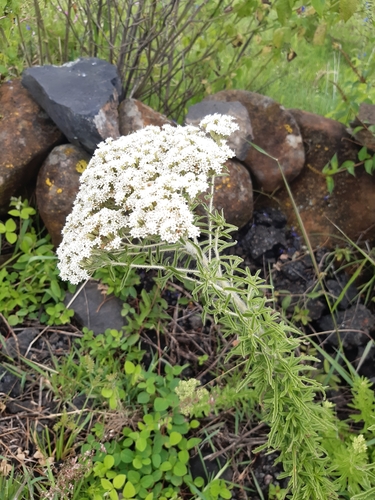
(c) Rosalind Helfand, some rights reserved (CC BY-NC)
iNaturalist· cc-by-nc
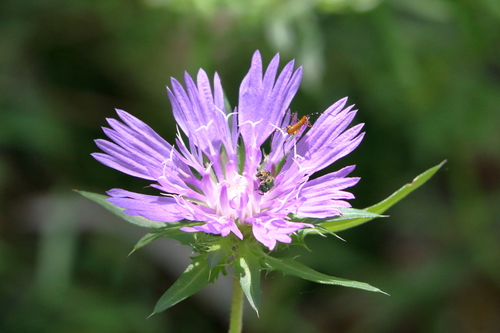
(c) jessytirol, some rights reserved (CC BY-NC)
iNaturalist· cc-by-nc
(c) Σάββας Ζαφειρίου (Savvas Zafeiriou), some rights reserved (CC BY-NC)
Summary
Source: WikipediaCalendula officinalis, Mary's gold, common marigold, the pot marigold, Scotch marigold, or ruddles, is a flowering plant in the daisy family, Asteraceae. It is probably native to southern Europe, but its long history of cultivation makes its precise origin unknown, and it is widely naturalised. The florets are edible and the plant has historically been used as medicine. The names marigold and Mary's gold were given by the English people to honour Mary, mother of Jesus, who was said to wear "a crown of gold that circles the earth".
Description
An bushy annual herb. It grows 30-70 cm high and 30-45 cm wide. The leaves are spoon shaped or sword shaped. The flower heads are daisy like. They can be 10 cm across. Flowers are yellow or orange. There are cultivated varieties.
Edible Uses
Edible Parts: Flowers Leaves Edible Uses: Colouring Tea Leaves - raw. When eaten they first of all impart a viscid sweetness, followed by a strong penetrating taste of a saline nature. They are very rich in vitamins and minerals and are similar to Taraxacum officinale (Dandelion) in nutritional value. Fresh petals are chopped and added to salads. The dried petals have a more concentrated flavour and are used as a seasoning in soups, cakes etc. High in vitamins A and C. An edible yellow dye is obtained from the petals. A saffron substitute, it is used to colour and flavour rice, soups etc. It is also used as a hair rinse, adding golden tints to brown or auburn hair. A tea is made from the petals and flowers, that made from the petals is less bitter. There is no record of the seed being edible, but it contains up to 37% protein and 46% oil.
Traditional Uses
Leaves eaten with oil and salt. The leaves are dried to concentrate the flavour then used to flavour soups. The flowers and the colouring from them is used as a substitute for saffron. It can be used to colour rice or orange cake. It has also been used to colour cheeses. The petals are sometimes used in soup and salads. The flowers are petals are used for tea.
Medicinal Uses
Antiphlogistic Antiseptic Antispasmodic Aperient Astringent Cholagogue Diaphoretic Emmenagogue Homeopathy Skin Stimulant Vulnerary Warts Pot marigold is one of the best known and versatile herbs in Western herbal medicine and is also a popular domestic remedy. It is, above all, a remedy for skin problems and is applied externally to bites and stings, sprains, wounds, sore eyes, varicose veins etc. It is also a cleansing and detoxifying herb and is taken internally in treating fevers and chronic infections. Only the common deep-orange flowered variety is considered to be of medicinal value. The whole plant, but especially the flowers and the leaves, is antiphlogistic, antiseptic, antispasmodic, aperient, astringent, cholagogue, diaphoretic, emmenagogue, skin, stimulant and vulnerary. The leaves can be used fresh or dried, they are best harvested in the morning of a fine sunny day just after the dew has dried from them. The flowers are also used fresh or dried, for drying they are harvested when fully open and need to be dried quickly in the shade. A tea of the petals tones up the circulation and, taken regularly, can ease varicose veins. An application of the crushed stems to corns and warts will soon render them easily removable. The leaves, blossoms and buds are used to make a homeopathic remedy. It is used internally in order to speed the healing of wounds. The German Commission E Monographs, a therapeutic guide to herbal medicine, approve Calendula officinalis for inflammation of the mouth and pharynx (throat), wounds and burns(see for critics of commission E).
Known Hazards
Low potential for sensitization and contact dermatitis. Possible allergies if allergic to daisy family plants. Topical use may cause rash.
Distribution
It is a temperate plant. It needs fertile soil. It suits moist conditions. It can grow in full sun or partial sunlight. They can withstand frost. It suits hardiness zones 6-10. It can grow in arid places. Tasmania Herbarium.
Where It Grows
Afghanistan, Africa, Andorra, Argentina, Asia, Australia, Austria, Azores, Balkans, Bhutan, Britain, Central Asia, Chile, China, Cuba, East Africa, Egypt, Europe, Fiji, France, Hawaii, Himalayas, Hungary, India, Iran, Italy, Japan, Korea, Lebanon, Lithuania, Macedonia, Mediterranean, Middle East, Morocco, Myanmar, Netherlands, New Zealand, North Africa, North America, Norway, Pacific, Portugal, Romania, Rotuma, Russia, Scandinavia, SE Asia, Serbia, Slovenia, South America, Spain, Switzerland, Syria, Tajikistan, Tasmania, Turkey, Türkiye, USA, Uzbekistan, West Indies, Zambia,
Cultivation
An easily grown plant, it succeeds in any well-drained soil, though it prefers a good loam and requires a sunny or at least partially sunny position. Plants flower best when they are grown in a poor soil. Tolerates a pH in the range 4.5 to 8.3. The pot marigold is a very ornamental plant that is commonly grown in the flower garden, and occasionally as a culinary herb, there are some named varieties. When well-sited it usually self-sows freely and will maintain itself if allowed. The flowers are sensitive to variations in temperature and dampness, closing when it is dark and when rain is expected. All parts of the plant are pungently scented. The growing plant attracts hoverflies to the garden, the young of which are fairly efficient eaters of aphids. The flowers are attractive to bees. Marigolds are good companion plants, they grow well with tomatoes. Cucumber mosaic disease and powdery mildew can cause problems with this plant. In garden design, as well as the above-ground architecture of a plant, root structure considerations help in choosing plants that work together for their optimal soil requirements including nutrients and water.
Propagation
Seed - sow in situ from spring to early summer and again in September. The seed germinates best in darkness and usually within 1 - 2 weeks at 21°c. The plant often self-sows freely.
Other Uses
Compost Cosmetic Dye Essential Repellent Weather forecasting The growing plant acts as an insect deterrent, it reduces the soil eelworm population. The flowers are used cosmetically. They can be used in skin lotions and when added to hair shampoos will lighten the hair colour. The flowers are an alternative ingredient of 'Quick Return' compost activator. This is a dried and powdered mixture of several herbs that can be added to a compost heap in order to speed up bacterial activity and thus shorten the time needed to make the compost. A yellow dye is obtained from the boiled flowers. An essential oil is obtained from the plant. It is used rather sparingly, in view of the difficulty in obtaining it, in perfumes that have a rather sharp tang. The flowers close when wet weather is likely to occur and they can therefore be used as a rough means of weather forecasting. Special Uses Attracts Wildlife Dynamic accumulator Food Forest Scented Plants
Production
They are fast growing.
Other Information
It is cultivated.
Notes
There are between 20 and 30 Calendula species.
Synonyms
Also Known As
Calendula, Golden cup flower, Jinzhanhua, Marigold, Ringblom, Ringelblume, Vrtni ognjič
References (40)
- Abbet, C., et al, 2014, Ethnobotanical survey on wild alpine food plants in Lower and Central Valais (Switzerland). Journal of Ethnopharmacology 151 (2014) 624–634
- Benvenuti, S. & Mazzoncini, M., 2021, The Biodiversity of Edible Flowers: Discovering New Tastes and New Health Benefits. Frontiers in Plant Science Article 569499.
- Bircher, A. G. & Bircher, W. H., 2000, Encyclopedia of Fruit Trees and Edible Flowering Plants in Egypt and the Subtropics. AUC Press. p 73
- Blamey, M and Grey-Wilson, C., 2005, Wild flowers of the Mediterranean. A & C Black London. p 446
- Bodkin, F., 1991, Encyclopedia Botanica. Cornstalk publishing, p 192
Show all 40 references Hide references
- Bremness, L., 1994, Herbs. Collins Eyewitness Handbooks. Harper Collins. p 236
- Brickell, C. (Ed.), 1999, The Royal Horticultural Society A-Z Encyclopedia of Garden Plants. Convent Garden Books. p 204
- Brouk, B., 1975, Plants Consumed by Man. Academic Press, London. p 322
- Brown, D., 2002, The Royal Horticultural Society encyclopedia of Herbs and their uses. DK Books. p 150
- Burnie, G. (Ed.), 2003, Annuals and Bulbs. The Gardener's Handbooks. Fog City Press. p 132
- Cundall, P., (ed.), 2004, Gardening Australia: flora: the gardener's bible. ABC Books. p 281
- Curtis, W.M., 1963, The Students Flora of Tasmania Vol 2 p 418
- Dashorst, G.R.M., and Jessop, J.P., 1998, Plants of the Adelaide Plains & Hills. Botanic Gardens of Adelaide and State Herbarium. p 156
- Esperanca, M. J., 1988. Surviving in the wild. A glance at the wild plants and their uses. Vol. 2. p 69
- Facciola, S., 1998, Cornucopia 2: a Source Book of Edible Plants. Kampong Publications, p 35
- Famine foods
- Fowler, D. G., 2007, Zambian Plants: Their Vernacular Names and Uses. Kew. p 76
- Girard, N. J., 2020, Sustainable Foraging of Wild Edible Plants in Norway. A Biocultural Approach. M. Sc. thesis Norwegian University. p 128
- Hedrick, U.P., 1919, (Ed.), Sturtevant's edible plants of the world. p 142
- Hermandez Bermejo, J.E., and Leon, J. (Eds.), 1994, Neglected Crops. 1492 from a different perspective. FAO Plant Production and Protection Series No 26. FAO, Rome. p 263
- Hibbert, M., 2002, The Aussie Plant Finder 2002, Florilegium. p 49
- Janaćković, P. et al, 2019, Traditional knowledge on plant use from Negotin Krajina (Eastern Serbia): An ethnobotanical study. Indian Journal of Traditional Knowledge Vol 18 (1), pp 25-33
- Joyce, D., 1998, The Garden Plant Selector. Ryland, Peters and Small. p 314
- Kiple, K.F. & Ornelas, K.C., (eds), 2000, The Cambridge World History of Food. CUP p 433, 1810
- Kybal, J., 1980, Herbs and Spices, A Hamlyn Colour Guide, Hamlyn Sydney p 60
- Petrova, I., et al, 2016, Five Edible Flowers – Valuable Source of Antioxidants in Human Nutrition. International Journal of Pharmacognosy and Phytochemical Research 2016; 8(4); 604-610
- Plants for a Future database, The Field, Penpol, Lostwithiel, Cornwall, PL22 0NG, UK. http://www.scs.leeds.ac.uk/pfaf/
- READ
- Royal Botanic Gardens, Kew (1999). Survey of Economic Plants for Arid and Semi-Arid Lands (SEPASAL) database. Published on the Internet; http://www.rbgkew.org.uk/ceb/sepasal/internet [Accessed 11th April 2011]
- Sansanelli, S., et al, 2014, Wild food plants traditionall consumed in the area of Bologna (Emilia Romagna region, Italy). Journal of Ethnobiology and Ethnomedicine 10:69
- Schunko, C., et al, 2012, Intracultural variation of knowledge about wild plant uses in the Biosphere Reserve Grosses Walsertal (Austria). Journal or Ethnobiology and Ethnomedicine, 8:23
- Seidemann J., 2005, World Spice Plants. Economic Usage, Botany, Taxonomy. Springer. p 75
- Skinner, G. & Brown, C., 1981, Simply Living. A gatherer's guide to New Zealand's fields, forests and shores. Reed. p 48
- Sp. pl. 2:921. 1753
- Staples, G.W. and Herbst, D.R., 2005, A tropical Garden Flora. Bishop Museum Press, Honolulu, Hawaii. p 167
- Tasmanian Herbarium Vascular Plants list p 6
- Valder, P., 1999, The Garden Plants of China. Florilegium. p 354
- Wiersema, J. H. & Leon, B., 2013, World Economic Plants. A Standard Reference CRC Press. 2nd Ed. p 129
- World Checklist of Useful Plant Species 2020. Royal Botanic Gardens, Kew
- Zeven, A. C. & de West, J. M. J., 1982, Dictionary of cultivated plants and their regions of diversity. Wageningen. p 105